
Insect
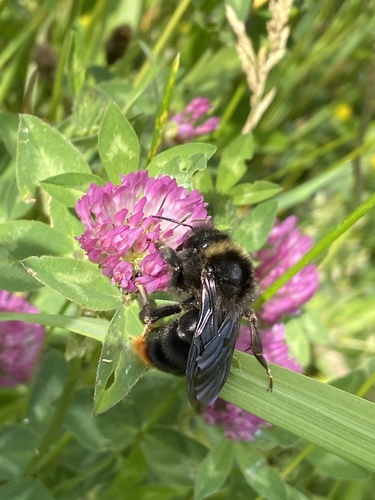
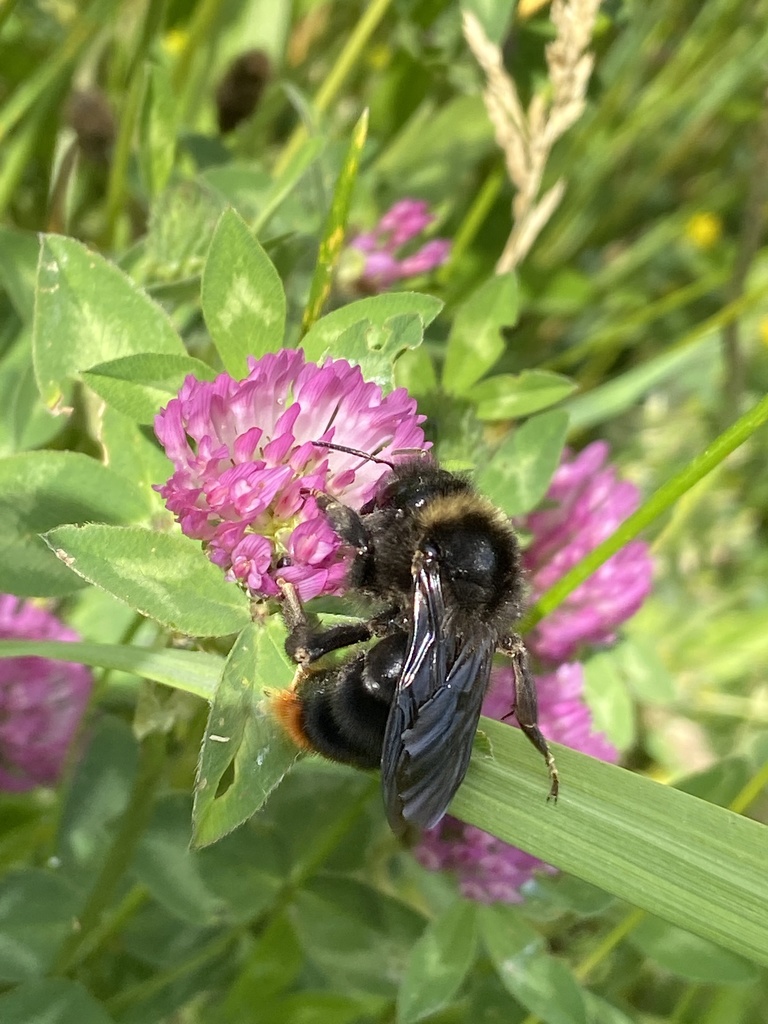
Hill Cuckoo Bumble Bee
Bombus rupestrisAlso known as Hill Cuckoo Bee, Rock Cuckoo Bee, Rock Cuckoo Bumblebee
Hill cuckoo bumble bees are obligate nest parasites that produce no worker caste, relying instead on usurping the colonies of red-tailed bumblebees. In late spring, heavily armored females infiltrate host underground nests, depose or kill the resident queen, and use pheromones to coerce the surviving host workers into raising cuckoo offspring. Adults can be recognized by their distinctly darkened, smoky wings and thick exoskeletons adapted for lethal subterranean combat.
Brood ParasitePollinatorMontane
—observations
—countries
—peak records
Least ConcernConservation statusIUCN Red List categoriesLCNTVUENCREWEXLeast ConcernRed List categories, explained →
Diet & preyNectar, Flower pollen
Predators
- European bee-eaters
- Crab spiders
- Great tits
ThreatsDecline of host bee populations, agricultural intensification, and pesticide application
HabitatsOpen grasslands, montane meadows, subalpine pastures, and forest edges
Life spanUp to 1 year for overwintering females; 1 to 2 months for males
Classification
- FamilyApidae
- SpeciesBombus rupestris
Range data is not available yet.
Interaction riskVery high
- Low
- Moderate
- High
- Very high
- Why interaction risk is very high
- Females can deliver a painful defensive sting; observe foraging bees calmly from a short distance.
- Why it is dangerous
- Females possess a potent sting that injects apitoxin, causing acute pain, localized swelling, and potential systemic anaphylaxis in sensitized people.
- How to recognize a risky encounter
- Look for a dark, velvety bee with dark smoky wings, a bright red abdominal tip, and shiny hairless hind legs without pollen baskets.
- What to do
- Never swat, trap, or touch foraging bees; gently step away and allow them to depart undisturbed.
Responsible observation
- Field Identification: Look closely at the hind legs, which are smoothly rounded and lack pollen-carrying baskets.
- Floral Patches: Search patches of knapweed, thistle, and scabious on sunny afternoons where adults fuel up on nectar.
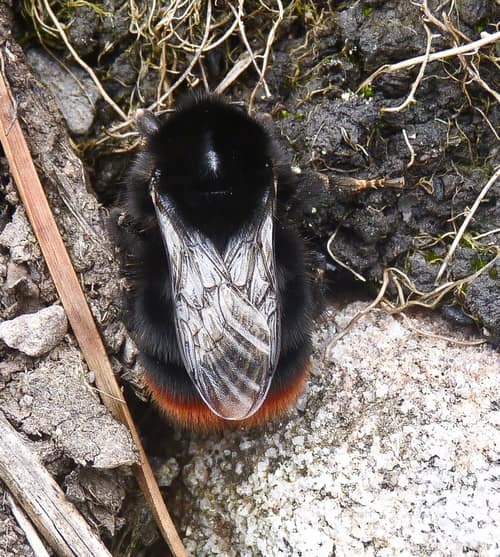
Host Species (c) Odd Wellies, some rights reserved (CC BY) · cc-by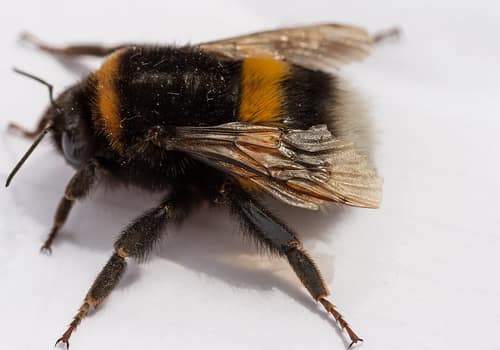
Competitor Marco Almbauer / CC0 · cc0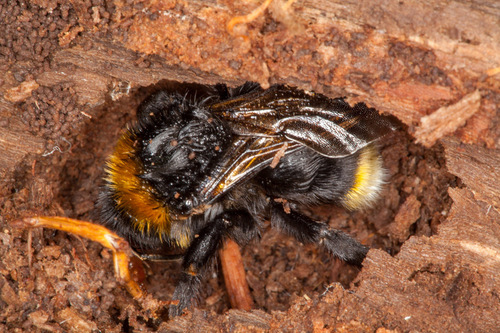
Close Relative (c) Drepanostoma, some rights reserved (CC BY), uploaded by Drepanostoma · cc-by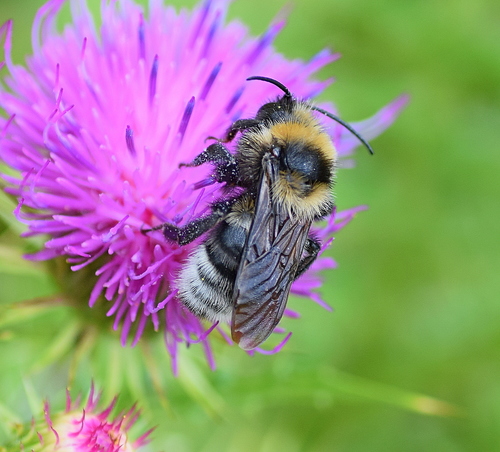
Close Relative (c) Kostas Zontanos, some rights reserved (CC BY), uploaded by Kostas Zontanos · cc-by
Help improve the field guideSomething wrong?
Checking your Fauna account…Report a name, category, or profile issue for review.