
Insect
Parancistrocerus pensylvanicus
Parancistrocerus pensylvanicusAlso known as Pennsylvania Mason Wasp, Pennsylvania Potter Wasp
Pennsylvania mason wasps are solitary cavity-nesters that seek out hollow twigs, abandoned beetle burrows, and manmade bee hotels to rear their young. Females hunt small caterpillars, paralyzing them with precise stings to stock within partitioned mud cells before laying an egg suspended from a silk filament. Adults spend warm afternoons hopping between wildflower umbels to drink nectar and gather moisture.
Solitary WaspCavity NesterPollinator


—observations
—countries
—peak records
Not EvaluatedConservation statusIUCN Red List categoriesLCNTVUENCREWEXNot Evaluated — not placed on the risk ladderRed List categories, explained →
Diet & preyTortricid caterpillars, Pyralid caterpillars, Flower nectar
Predators
- Robber flies
- Crab spiders
- Insectivorous birds
ThreatsBroad-spectrum insecticides and loss of deadwood nesting sites
HabitatsDeciduous forest edges, meadows, old fields, and suburban gardens
Life span1–2 months as adult; up to 1 year including larval overwintering
Classification
- OrderHymenoptera
- FamilyEumenidae
- GenusParancistrocerus
- SpeciesParancistrocerus pensylvanicus
Range data is not available yet.
Interaction riskVery high
- Low
- Moderate
- High
- Very high
- Why interaction risk is very high
- Females can deliver a painful defensive sting if caught or pressed against bare skin.
- Why it is dangerous
- Females possess an aculeate stinger that injects venom designed to paralyze prey, causing localized burning pain and mild swelling in humans.
- How to recognize a risky encounter
- Look for a compact black body marked with fine pale yellow or ivory transverse bands across the abdomen.
- What to do
- Allow the wasp to crawl or fly away undisturbed; never crush or swat it against your body.
Responsible observation
- Foraging hotspots: Watch for adults visiting small-flowered plants like mountain mint, sumac, and wild carrot.
- Bee hotel visitor: Install nesting blocks with 3 to 4 mm tunnel openings to provide female nesting habitat.
- Peaceful observation: Photograph closely while the wasp sips nectar, as solitary wasps rarely sting without severe provocation.

Competitor (c) Nathan Walther, some rights reserved (CC BY), uploaded by Nathan Walther · cc-by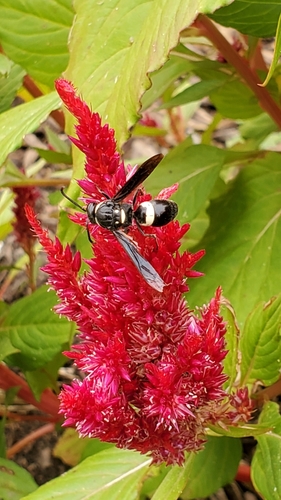
Close Relative (c) Lexi Destria, some rights reserved (CC BY) · cc-by
Close Relative (c) Ryan Hodnett, some rights reserved (CC BY-SA) · cc-by-sa
Help improve the field guideSomething wrong?
Checking your Fauna account…Report a name, category, or profile issue for review.