
Insect · GBIF taxon 1312356
Common Eastern Velvet Ant
Dasymutilla occidentalisAlso known as Red Velvet Ant, Cow Killer, Eastern Velvet Ant, Mutillid Wasp
Eastern velvet ants are wingless solitary wasps whose striking black and bright crimson markings warn potential predators of an extraordinarily painful sting. Females scurry tirelessly across open sandy ground in search of bumblebee ground nests, where they lay their eggs on developing host larvae. Males possess dark translucent wings and lack a stinger entirely, spending sunny summer days patrolling low vegetation in search of mates.
AposematicParasitoidSolitary Wasp
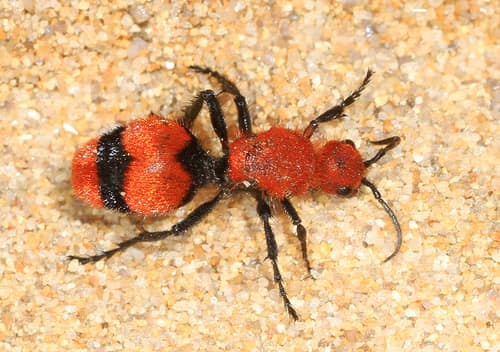
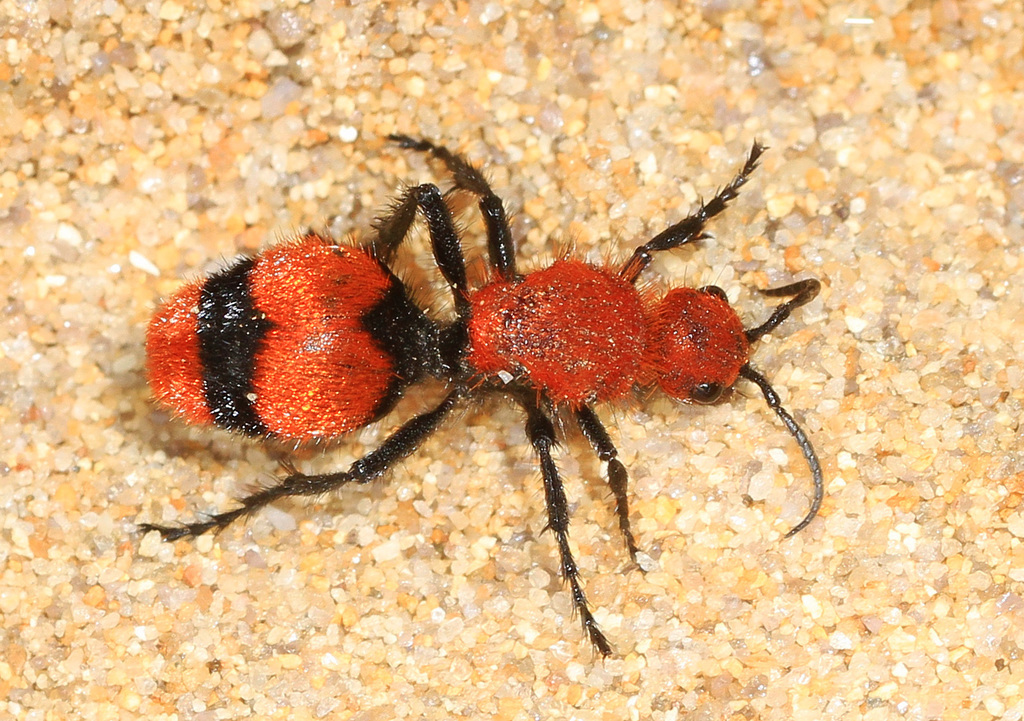 1 / 7
1 / 7—observations
—countries
—peak records
Not EvaluatedConservation statusIUCN Red List categoriesLCNTVUENCREWEXNot Evaluated — not placed on the risk ladderRed List categories, explained →
Diet & prey
- Floral nectar
- Fruit juices
- Bumblebee pupae
Predators
- Toads
- Lizards
- Spiders
ThreatsBroad-spectrum pesticide application, habitat destruction, and direct killing by humans.
HabitatsOpen fields, sandy soils, pastures, forest edges, and sunny gardens.
Life span1–2 years (adult stage lasts several months).
Size / weightNot available
Classification
- OrderHymenoptera
- FamilyMutillidae
- GenusDasymutilla
- SpeciesDasymutilla occidentalis
Range data is not available yet.
Interaction riskVery high
- Low
- Moderate
- High
- Very high
- Why interaction risk is very high
- Females deliver an exceptionally painful venomous sting; observe from a distance and never handle by hand.
- Why it is dangerous
- Females possess a long flexible stinger that injects venom capable of causing intense, prolonged pain.
- How to recognize a risky encounter
- Look for fuzzy, bright red and black ant-like insects moving quickly across dry soil or sand.
- What to do
- Maintain a safe distance, wear shoes outdoors in known habitats, and keep pets away.
Responsible observation
- Safe Distance: Observe wingless females crawling on open ground without making direct physical contact.
- Auditory Sign: Listen for a faint squeaking stridulation sound produced when the insect feels cornered.
- Sex Identification: Look for wings to distinguish harmless males from the wingless, stinging females.
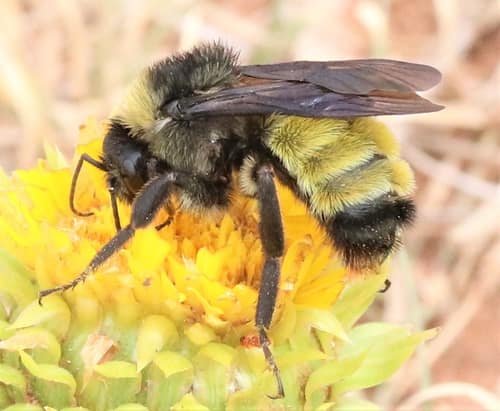
Host Species (c) crseaquist, some rights reserved (CC BY), uploaded by crseaquist · cc-by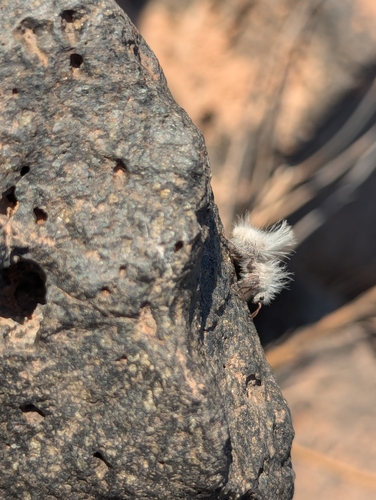
Close Relative (c) colorful-corvid, some rights reserved (CC BY) · cc-by
Help improve the field guideSomething wrong?
Checking your Fauna account…Report a name, category, or profile issue for review.