
Insect · GBIF taxon 1310944
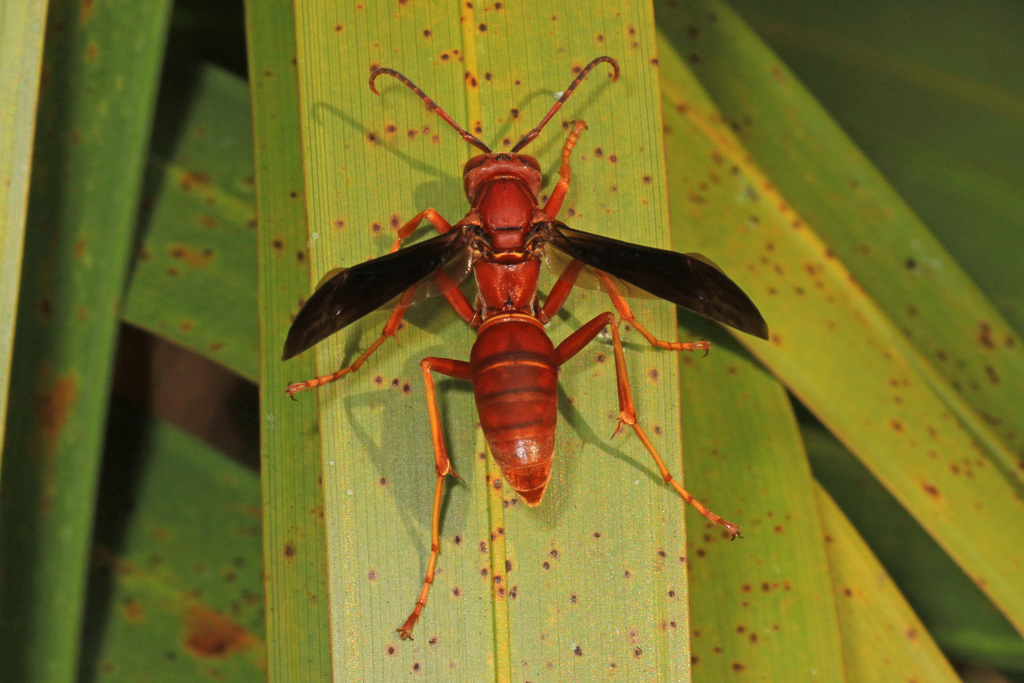
Fine-backed Red Paper Wasp
Polistes carolinaAlso known as Red Paper Wasp, Carolina Paper Wasp
Fine-backed red paper wasps construct open, umbrella-shaped paper nests from chewed plant fibers mixed with saliva in sheltered nooks like hollow trees and porch eaves. Single overwintered queens establish new colonies every spring, raising sterile female workers that hunt caterpillars to feed developing larvae while adult wasps sip nectar. Characterized by their uniform rusty-red coloration and dark wings, these social wasps aggressively protect their home territory when threatened.
Social InsectVenomousPollinator

 1 / 7
1 / 7—observations
—countries
—peak records
Not EvaluatedConservation statusIUCN Red List categoriesLCNTVUENCREWEXNot Evaluated — not placed on the risk ladderRed List categories, explained →
Diet & prey
- Caterpillars
- Flies
- Beetle Larvae
Predators
- Birds
- Spiders
- Praying Mantises
ThreatsPesticide application, nest destruction, and extreme weather events.
HabitatsDeciduous forests, woodland edges, meadows, and suburban structures.
Life spanQueens live up to 1 year; workers live 2–6 weeks.
Size / weightNot available
Classification
- OrderHymenoptera
- FamilyEumenidae
- GenusPolistes
- SpeciesPolistes carolina
Range data is not available yet.
Interaction riskVery high
- Low
- Moderate
- High
- Very high
- Why interaction risk is very high
- Females possess a painful sting; maintain a safe distance from active nests to avoid defensive stings.
- Why it is dangerous
- Injects polypeptide venom via a smooth sting, causing severe localized pain, tissue inflammation, and potential anaphylaxis in allergic individuals.
- How to recognize a risky encounter
- Identified by its rich red-brown color overall, dark smoky wings, and extremely fine transverse ridges on the propodeum.
- What to do
- Maintain several meters of distance from paper nests and remain calm if a foraging worker approaches.
Responsible observation
- Observe from Distance: Watch workers hunting caterpillars without approaching within a few meters of the nest.
- Avoid Sudden Motion: Rapid movements near an active nest can provoke a defensive swarm.
- Check Shelter Cues: Look beneath porch eaves, overhangs, and tree cavities where queens prefer to build in spring.

Competitor (c) Bill Keim, some rights reserved (CC BY) · cc-by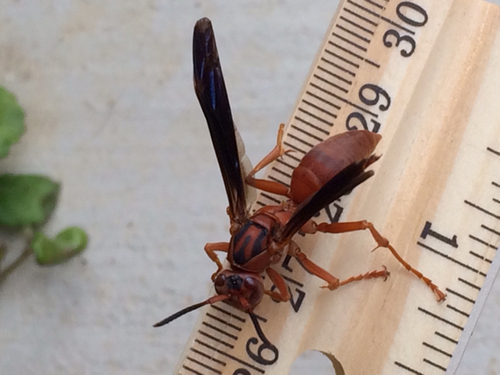
Close Relative (c) Laura Clark, some rights reserved (CC BY), uploaded by Laura Clark · cc-by
Close Relative no rights reserved · cc0
Help improve the field guideSomething wrong?
Checking your Fauna account…Report a name, category, or profile issue for review.