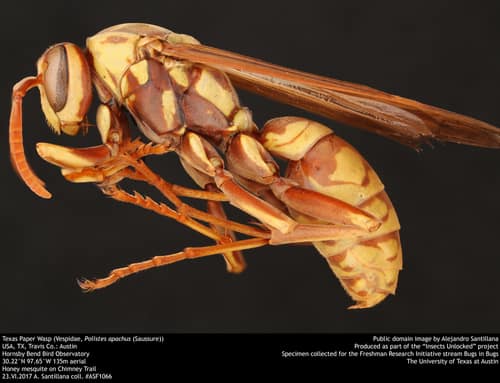
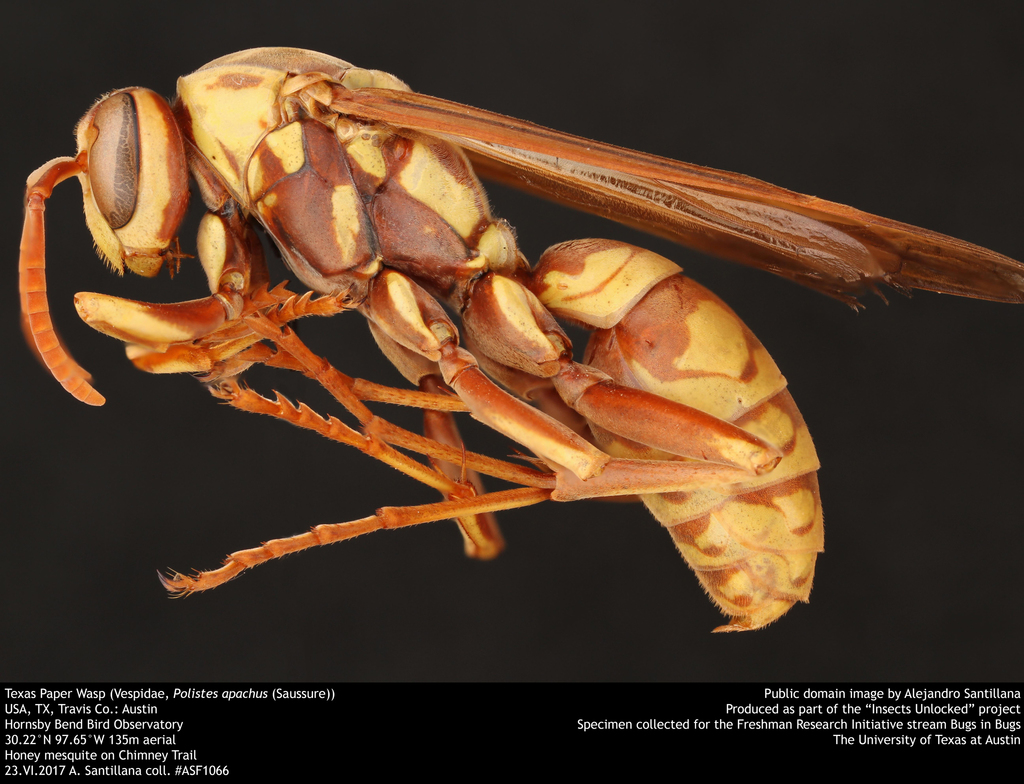
Also known as Texas Paper Wasp, Southwestern Texas Paper Wasp, Apache Wasp
Apache paper wasps construct open, umbrella-shaped paper combs suspended from slender stalks under sheltered eaves, dense orchard trees, and rocky overhangs. Fertilized queens initiate nests in the spring, chewing weathered plant fibers into resilient gray pulp before rearing successive broods of sterile female workers that hunt soft-bodied garden pests. Colonies maintain complex dominance hierarchies through tactile antennal drumming and vigorously defend their nursery against vibrations or close intrusion.
Not EvaluatedConservation statusIUCN Red List categoriesLCNTVUENCREWEXNot Evaluated — not placed on the risk ladderRed List categories, explained →
Key facts
Diet & prey
Caterpillars
Beetle larvae
Flower nectar
Predators
Praying mantises
Orb-weaver spiders
Summer tanagers
ThreatsPesticide applications, winter freezes, and structural nest extermination
HabitatsArid scrublands, riparian groves, orchards, vineyards, and urban structures
Life spanSeveral months for workers; up to 1 year for overwintering queens
Classification
OrderHymenoptera
FamilyEumenidae
GenusPolistes
SpeciesPolistes apachus
Range & activity
Range data is not available yet.
Safe observation
Interaction riskVery high
Low
Moderate
High
Very high
Why interaction risk is very high
Females sting defensively if the nest is disturbed; maintain a distance of several meters.
Why it is dangerous
Defending females inject a painful protein venom repeatedly with an unbarbed stinger, which can trigger severe, life-threatening anaphylactic reactions in sensitized people.
How to recognize a risky encounter
Look for a reddish-brown body with conspicuous yellow abdominal bands and distinctive reddish antennal tips.
What to do
Do not attempt to touch or swat resting wasps; back away slowly if foraging workers circle or if guarding adults raise their wings at the nest.
Responsible observation
Maintain Distance: Give active nests located under eaves or on branches at least two meters of clearance to avoid triggering defensive behavior.
Remain Calm: If an individual approaches while foraging on nectar or fallen fruit, move away smoothly without sudden swatting motions.
Seal Entryways: Close attic vents and fill exterior wall voids in early spring to deter queens from establishing nests inside domestic buildings.