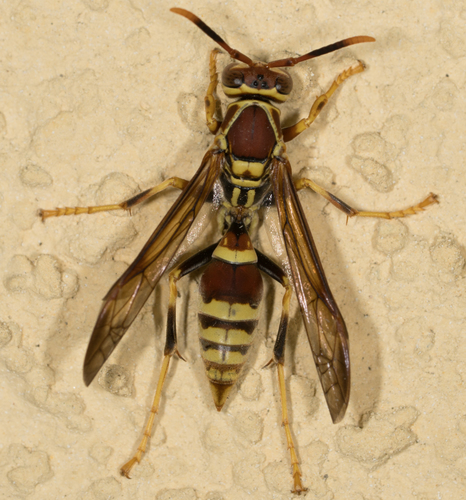
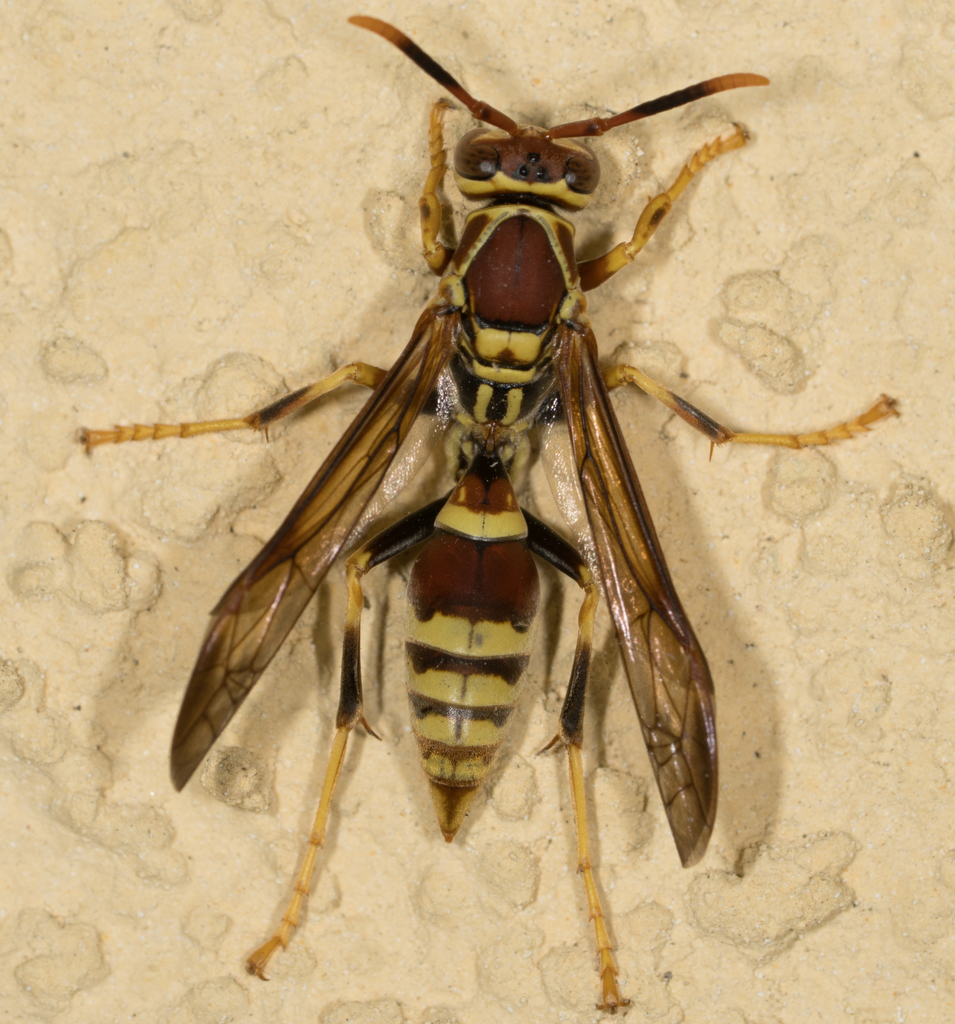
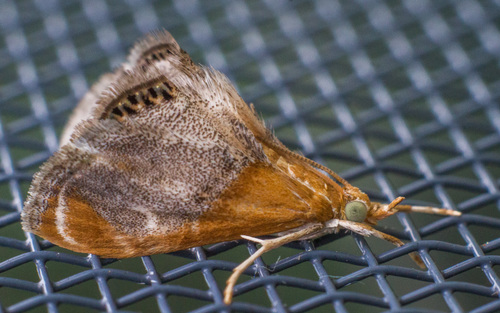
Guinea paper wasps build open, single-tier umbrella nests from chewed plant fibers, often suspending them beneath building eaves or dense foliage. A strict age-based dominance hierarchy governs colony life, where older females assume foraging and defense duties while younger workers attend to brood inside hexagonal paper cells. Though frequently targeted by parasitic moths and predatory birds, these social insects defend their nests through coordinated stinging attacks when threatened.
Not EvaluatedConservation statusIUCN Red List categoriesLCNTVUENCREWEXNot Evaluated — not placed on the risk ladderRed List categories, explained →
Key facts
Diet & preyCaterpillar, Nectar, Fly
Predators
Pyralid Moth
Northern Cardinal
Green Anole
ThreatsPesticide spraying, severe winter freezes, and nest parasites
HabitatsOpen woodlands, suburban gardens, meadows, and human structures
Life span1 year for queens; 1–2 months for workers
Classification
OrderHymenoptera
FamilyEumenidae
GenusPolistes
SpeciesPolistes exclamans
Range & activity
Range data is not available yet.
Safe observation
Interaction riskVery high
Low
Moderate
High
Very high
Why interaction risk is very high
Females sting in defense of their nest; observe from a safe distance and seek help if allergic.
Why it is dangerous
Injects venom containing proteins and biogenic amines that cause sharp pain, localized swelling, and severe allergic reactions in sensitized individuals.
How to recognize a risky encounter
Recognizable by yellow abdominal bands, reddish-brown patches, and distinct yellow spots near the eye margins.
What to do
Do not approach nests attached to eaves or vegetation, and retreat slowly if a guard wasp assumes a raised-wing posture.
Responsible observation
Nest Safety: Keep at least two meters away from active nests hanging from porch roofs or eaves.
Gardening Friend: Allow wasps to forage unmolested in flowerbeds where they consume pest caterpillars.
Cool Demeanor: Avoid waving arms or striking at wasps hovering nearby, as sudden movements trigger stings.