
Insect · GBIF taxon 1310556
Northern Paper Wasp
Polistes fuscatusAlso known as Dark Paper Wasp, Northern Wasp, Common Paper Wasp
Northern paper wasps are slender, social insects recognized by dark brown bodies marked with rust-reddish patches and narrow yellow bands. Females build open, umbrella-shaped paper nests suspended by a single stalk under roof eaves, porch ceilings, or dense foliage using chewed wood pulp mixed with saliva. Uniquely among insects, individuals recognize one another by distinct facial patterns, which help maintain a peaceful social hierarchy within the colony.
Social InsectVenomousArchitect

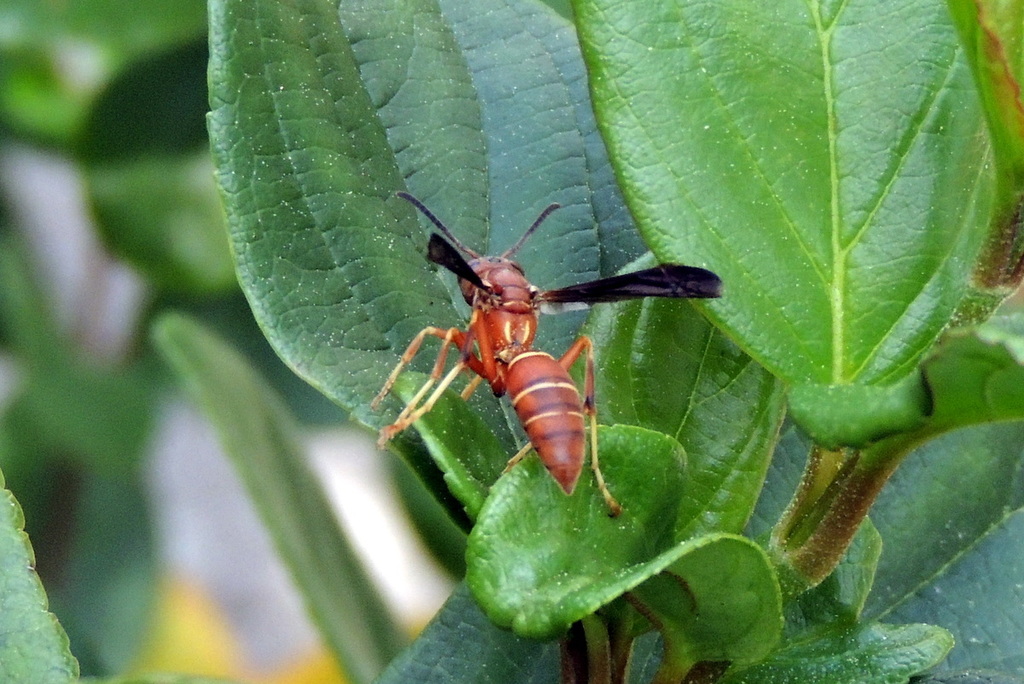
—observations
—countries
—peak records
Not EvaluatedConservation statusIUCN Red List categoriesLCNTVUENCREWEXNot Evaluated — not placed on the risk ladderRed List categories, explained →
Diet & prey
- Caterpillars
- Beetle larvae
- Nectar
Predators
- Birds
- Spiders
- Praying Mantises
ThreatsPesticide application, direct nest destruction by humans, severe winter cold
HabitatsWoodlands, savannas, meadows, suburban gardens, sheltered human structures
Life span1 year (colonies dissolve annually; fertilized queens overwinter)
Size / weightNot available
Classification
- OrderHymenoptera
- FamilyEumenidae
- GenusPolistes
- SpeciesPolistes fuscatus
Range data is not available yet.
Interaction riskVery high
- Low
- Moderate
- High
- Very high
- Why interaction risk is very high
- Delivers a painful sting when defending nests; observe active colonies from a respectful distance of a few meters.
- Why it is dangerous
- Delivers a painful sting containing venom that causes localized swelling, severe pain, and potential anaphylaxis in allergic individuals.
- How to recognize a risky encounter
- Look for slender brownish bodies with dangling legs during flight and comb-like paper nests attached by a single pedicel.
- What to do
- Maintain a clear distance from active nests, avoid sudden hand movements, and never swat at patrolling foragers.
Responsible observation
- Nest Management: Leave high or out-of-the-way nests alone, as adults consume vast quantities of garden pest caterpillars.
- Observation Distance: Keep at least 2 to 3 meters away from active nests to avoid triggering a communal defense response.
- Spring Identification: Watch for single queens in early spring as they prospect for dry wood and sheltered nest sites.

Invasive Competitor (c) Bill Keim, some rights reserved (CC BY) · cc-by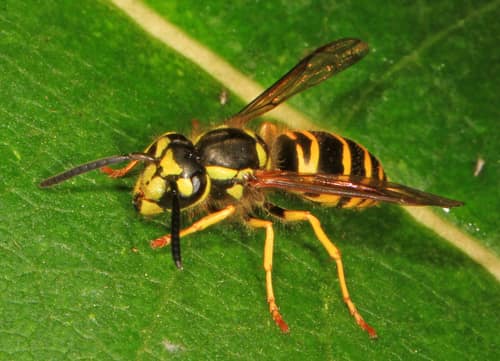
Co-Occurring Vespid (c) Judy Gallagher, some rights reserved (CC BY-SA), uploaded by Judy Gallagher · cc-by-sa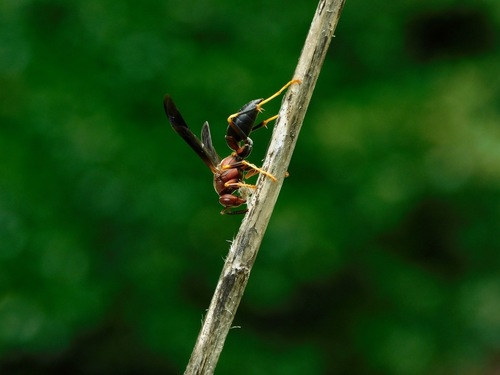
Close Relative (c) Michael J. Papay, some rights reserved (CC BY), uploaded by Michael J. Papay · cc-by
Close Relative (c) Judy Gallagher, some rights reserved (CC BY-SA), uploaded by Judy Gallagher · cc-by-sa
Help improve the field guideSomething wrong?
Checking your Fauna account…Report a name, category, or profile issue for review.