Golden paper wasps build open umbrella-shaped nests from chewed wood fibers mixed with saliva, suspending the combs under sheltered eaves, rocks, or tree branches. Fertilized queens establish nests in early spring, fiercely defending their brood while hunting soft-bodied garden pests like caterpillars to nourish the developing larvae. Adults maintain a relatively docile temperament when foraging on flowers, yet colony members become aggressive sentinels if their nesting structure is bumped or approached too closely.
ThreatsPesticide use, nest destruction, and cold winter snaps
HabitatsChaparral, open woodlands, suburban gardens, and grasslands
Life spanQueens live up to 1 year; workers survive 2–4 months
Classification
OrderHymenoptera
FamilyEumenidae
GenusPolistes
SpeciesPolistes aurifer
Range & activity
Range data is not available yet.
Safe observation
Interaction riskVery high
Low
Moderate
High
Very high
Why interaction risk is very high
Females sting repeatedly when defending their nest; observe colonies from several meters away.
Why it is dangerous
Females deliver venom containing pain-inducing peptides and histamines, causing intense local pain or life-threatening systemic anaphylaxis in sensitized individuals.
How to recognize a risky encounter
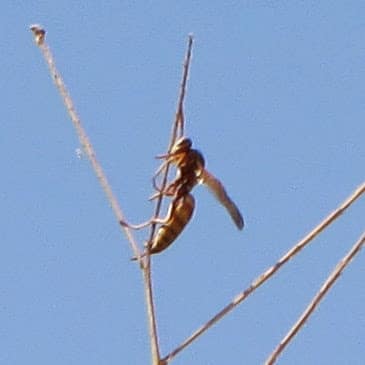
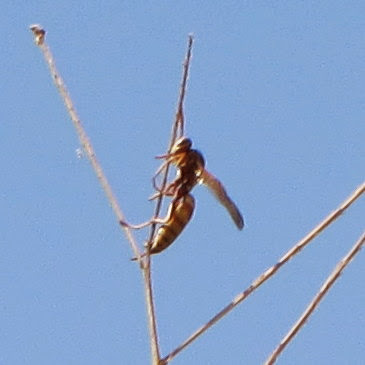
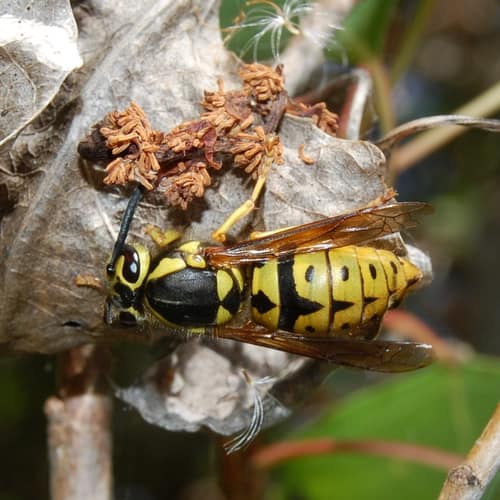
Recognized by slender bodies with vibrant yellow abdominal bands, yellow antennae tips, and long legs that dangle noticeably during flight.
What to do
Do not swat at flying individuals, keep clear of active combs, and seek emergency care immediately if breathing difficulty develops after a sting.
Responsible observation
Garden Observation: Watch them peacefully forage for nectar on composite flowers without sudden movements.
Nest Awareness: Keep a distance of at least three meters from open paper combs under building eaves.
Pest Control Value: Allow nests to remain undisturbed in out-of-the-way areas to help manage garden caterpillars.