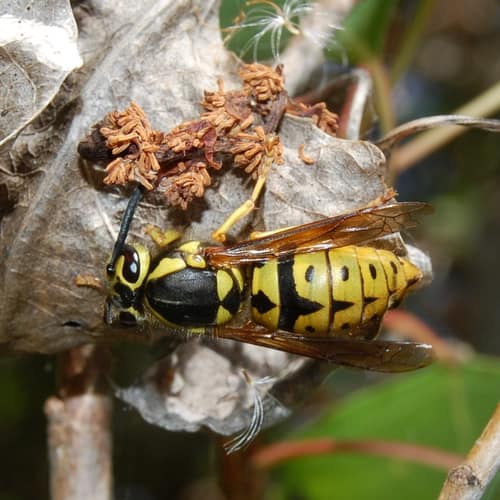
Western paper wasps construct single-comb, open paper nests sheltered beneath tree limbs, rocky overhangs, and suburban roof eaves across western North America. Colonies feature a cooperative hierarchy where fertilized foundresses initiate nests in spring, often tolerating satellite co-foundresses before a single dominant queen takes control of egg laying. Unlike aggressive hornets, workers defend their brood primarily by bluffing or ramming intruders before resorting to a sting.
Not EvaluatedConservation statusIUCN Red List categoriesLCNTVUENCREWEXNot Evaluated — not placed on the risk ladderRed List categories, explained →
Key facts
Diet & prey
Caterpillars
Flies
Floral nectar
Predators
Birds
Praying mantises
Ants
ThreatsPesticide spraying, nest eradication around buildings, and habitat loss
HabitatsRiparian woodlands, chaparral, oak savannahs, canyon bottoms, and suburban structures
Life span1 season (workers live several weeks; mated queens survive up to 1 year)
Size / weightNot available
Classification
OrderHymenoptera
FamilyVespidae
GenusMischocyttarus
SpeciesMischocyttarus flavitarsis
Range & activity
Range data is not available yet.
Safe observation
Interaction riskVery high
Low
Moderate
High
Very high
Why interaction risk is very high
Can deliver a painful sting if nests are threatened; maintain a calm distance.
Why it is dangerous
Females possess a venomous stinger that injects melittin-like peptides, causing local pain, swelling, and potential life-threatening systemic anaphylaxis in sensitized individuals.
How to recognize a risky encounter
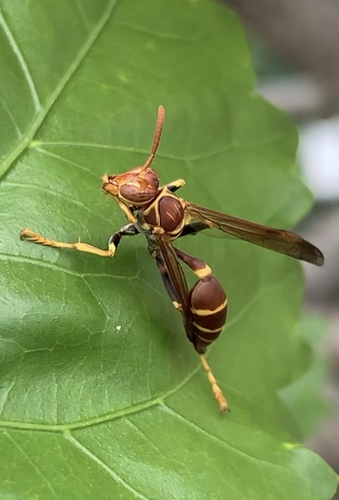
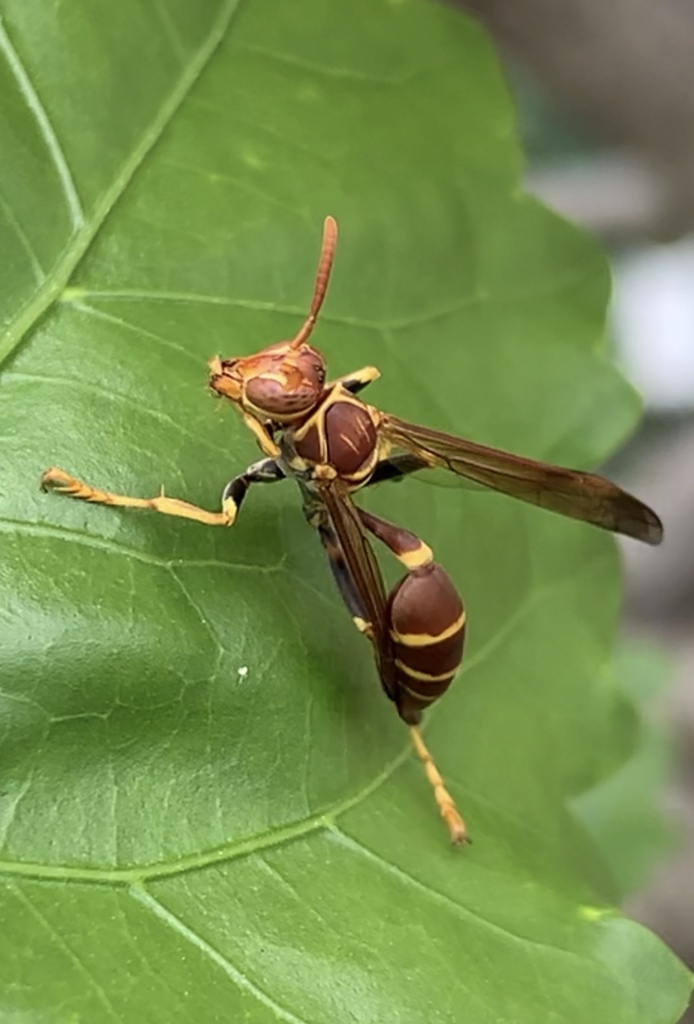
Look for a slender, reddish-brown to black wasp with yellow bands, distinctive yellow tarsi on the hind legs, and a petiolate, club-shaped abdomen.
What to do
Do not swat or make erratic movements if one approaches; back away slowly if a wasp flies directly at you or rams your body.
Responsible observation
Nest buffer: Keep at least two to three meters away from active nests under roof eaves to avoid triggering alarm ramming.
Garden value: Welcome workers visiting garden plants, as they hunt pest caterpillars and rarely sting when foraging.

 1 / 7
1 / 7

 Image unavailable