
Reptile · GBIF taxon 11184463
Great Basin Rattlesnake
Crotalus lutosusAlso known as Great Basin Pit Viper
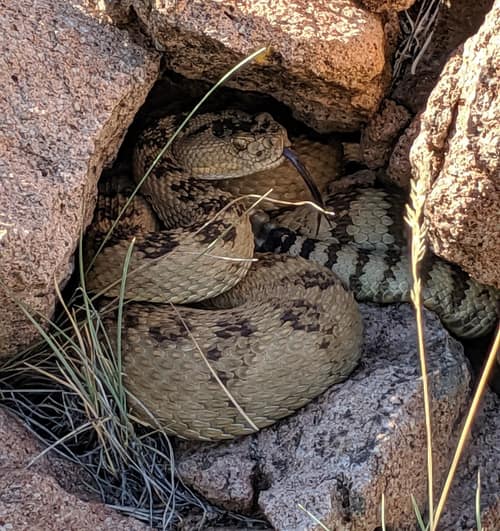
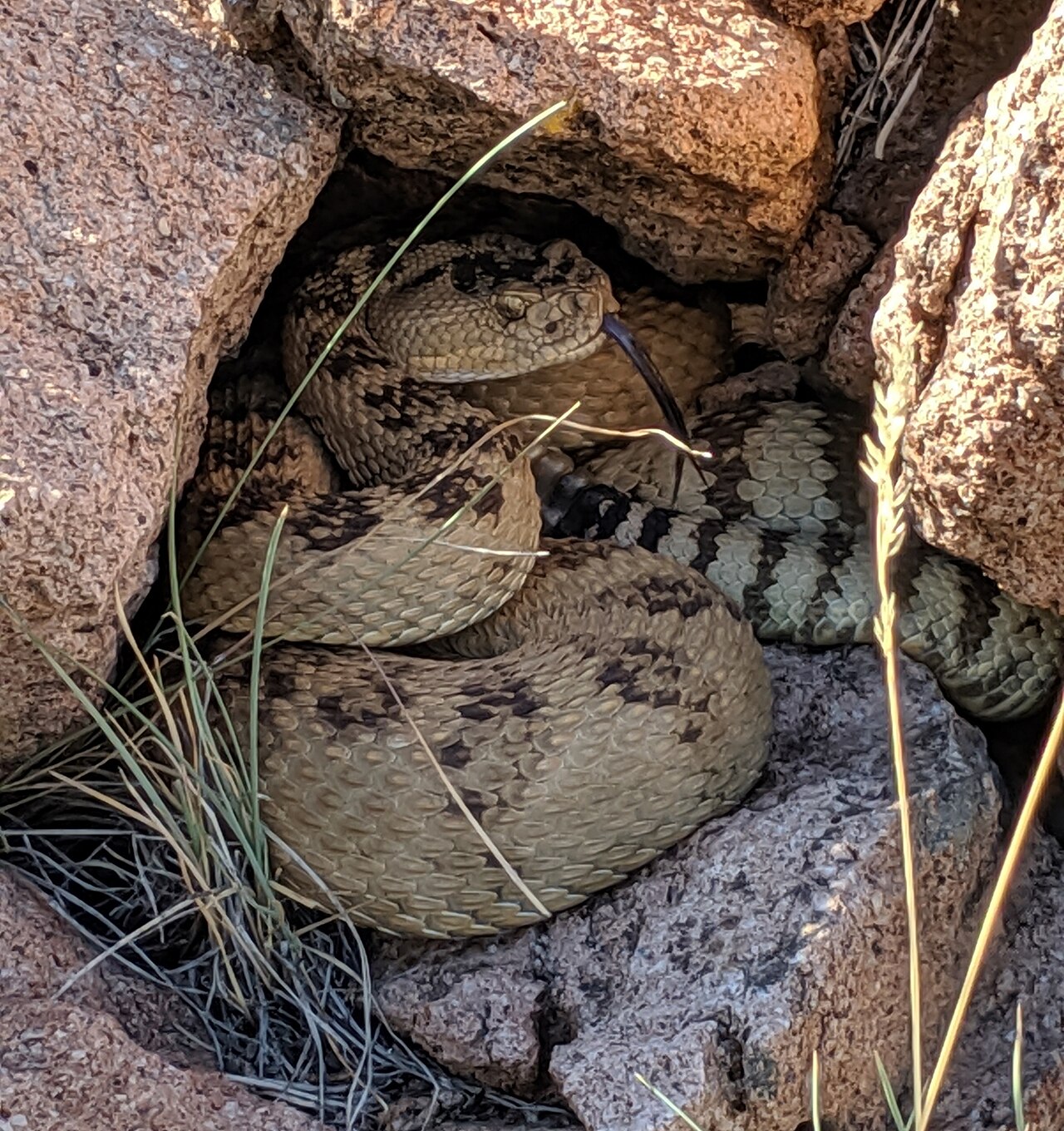
Great Basin rattlesnakes thrive across arid sagebrush steppes and rocky canyons, relying on subtle blotched patterns to blend seamlessly into desert soils. During cold winters, dozens or even hundreds congregate in underground communal dens to survive the freeze before dispersing across great distances each spring. When threatened, they coil tightly, vibrate their segmented tail rattle as a warning, and use heat-sensing facial pits to locate prey or potential threats in total darkness.
VenomousReptileDesert-Dweller
Licensed referenceMorgan Hansen / CC BY 4.0 · cc-by
—observations
—countries
—peak records
Least ConcernConservation statusIUCN Red List categoriesLCNTVUENCREWEXLeast ConcernRed List categories, explained →
Diet & prey
- Ord's Kangaroo Rat
- Deer Mouse
- Side-blotched Lizard
Predators
- Red-tailed Hawk
- Coyote
- California Kingsnake
ThreatsHabitat fragmentation, road mortality, direct human persecution
HabitatsSagebrush steppe, desert scrub, rocky slopes, pinyon-juniper woodland
Life span15–20 years
Size / weightNot available
Classification
- FamilyViperidae
- GenusCrotalus
- SpeciesCrotalus lutosus
Range data is not available yet.
Interaction riskVery high
- Low
- Moderate
- High
- Very high
- Why interaction risk is very high
- Delivers a venomous bite if threatened; maintain a respectful distance of at least two meters.
- Why it is dangerous
- Possesses potent hemotoxic venom that causes severe localized tissue damage, intense pain, and dangerous swelling.
- How to recognize a risky encounter
- Look for a triangular head, vertical slit pupils, tan ground color with dark brown blotches, and a tail rattle.
- What to do
- Never handle or corner this snake; freeze upon visual contact and step away slowly.
Responsible observation
- Watch Your Step: Scan trail edges carefully and avoid placing hands or feet into unlit rock crevices.
- Listen Closely: Freeze immediately if you hear a dry, buzzing rattle to locate the snake's position.
- Give Space: Back away slowly, keeping a minimum distance of three meters at all times.
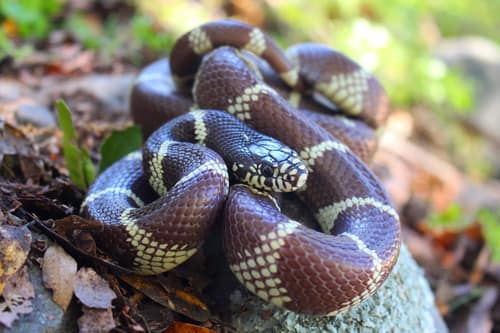
Predator (c) Connor Long, some rights reserved (CC BY-SA) · cc-by-sa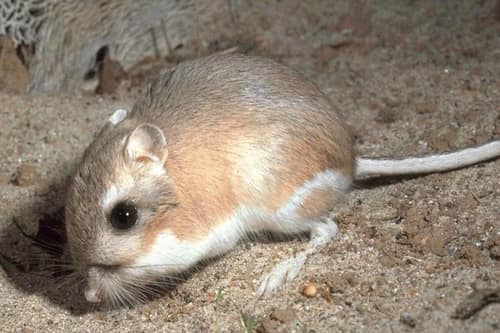
Prey Wikimedia Commons / Public domain · cc0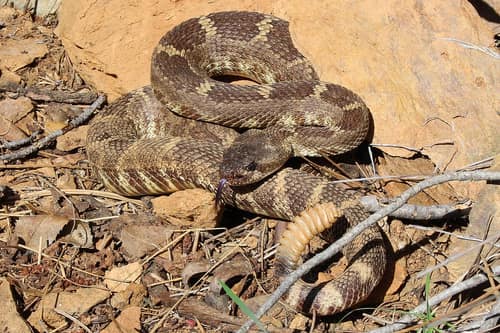
Close Relative Connor Long / CC BY-SA 4.0 · cc-by-sa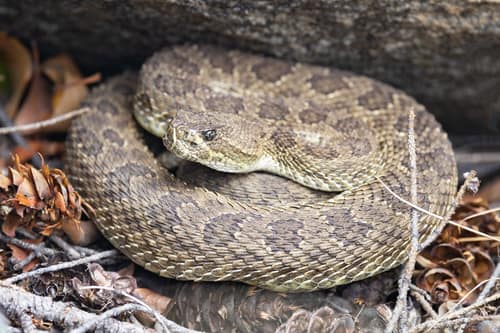
Close Relative "Prairie rattlesnake (Crotalus viridis)" by YellowstoneNPS is marked with Public Domain Mark 1.0. To view the terms, visit https://creativecommons.org/publicdomain/mark/1.0/. · cc0
Keep collecting in Fauna
Found in Collections
Ecosystem chain Pro
Desert Sands
Great Basin Rattlesnake is found in this collection. Identify it in Fauna to fill this slot and continue your progress.
Unlock to track progress
Help improve the field guideSomething wrong?
Checking your Fauna account…Report a name, category, or profile issue for review.