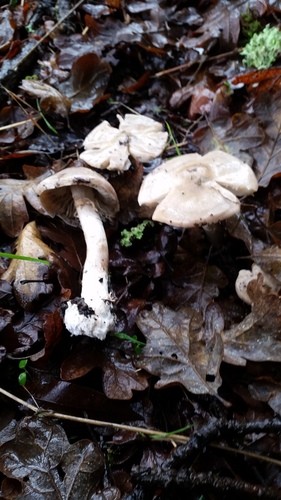
Also known as Torn Fibrecap, Straw-colored Fibrecap
Split fibrecaps form vital ectomycorrhizal partnerships with a wide variety of deciduous and coniferous trees, exchanging soil minerals for host carbohydrates. Caps typically begin conical before expanding, developing prominent radial splits along the fibrous edges as the mushroom matures. Fruiting bodies emerge in small troops or scattered groups throughout summer and autumn along mossy paths, woodland borders, and grassy parklands.
Not EvaluatedConservation statusIUCN Red List categoriesLCNTVUENCREWEXNot Evaluated — not placed on the risk ladderRed List categories, explained →
Key facts
Diet & prey
Mycorrhizal partner absorbing sugars in exchange for soil nutrients
Predators
Fungus Gnat Larvae
Slugs
Springtails
ThreatsHabitat clearance, severe soil compaction, and excessive nitrogen pollution
HabitatsDeciduous and coniferous forests, woodland edges, mossy banks, and parklands
Life spanFruiting bodies persist 1–2 weeks; underground mycelium lives for years
Classification
OrderAgaricales
FamilyInocybaceae
GenusPseudosperma
SpeciesPseudosperma rimosum
Range & activity
Range data is not available yet.
Safe observation
Interaction riskHigh
Low
Moderate
High
Very high
Why interaction risk is high
Contains dangerous muscarine toxins. Many edible mushrooms have toxic look-alikes; never eat wild fungi based on app identification alone.
Why it is dangerous
Contains muscarine, which overstimulates the parasympathetic nervous system, inducing profuse sweating, extreme salivation, severe gastrointestinal distress, and cardiac complications.
How to recognize a risky encounter
Recognized by a conical to bell-shaped straw-yellow cap that splits radially along its fibrous margins, paired with pale clay-colored gills.
What to do
Never forage or taste wild fibrecaps, and avoid mixing unfamiliar specimens with edible harvests.
Responsible observation
Field Examination: Observe the radially split cap margin and pale gills using a hand lens in place.
Spore Print: Harvest a mature cap to produce a clay-brown spore deposit on white paper.

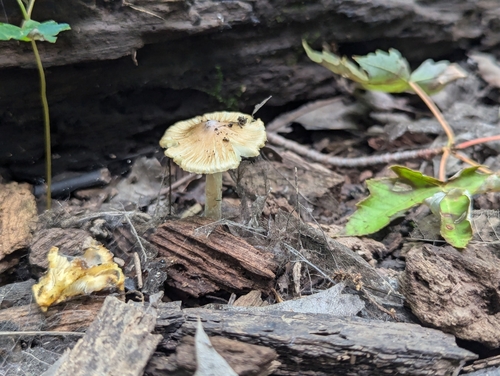
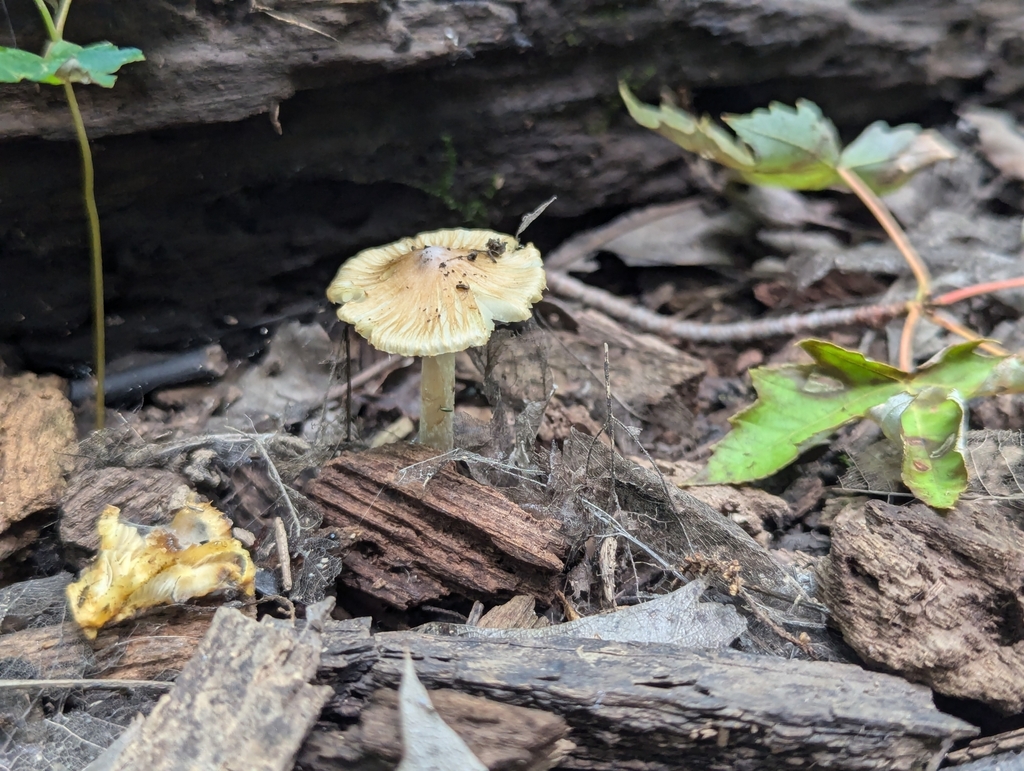
 Image unavailable