
Insect · GBIF taxon 10793064
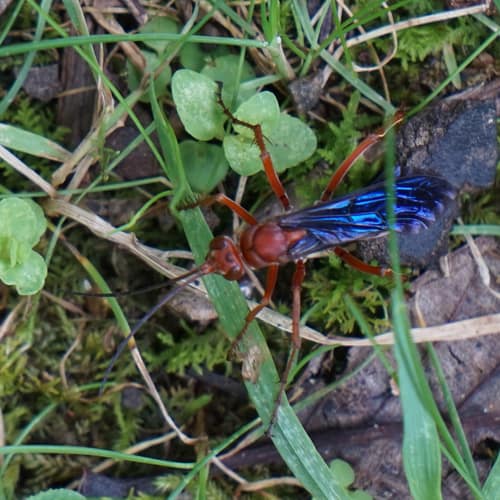
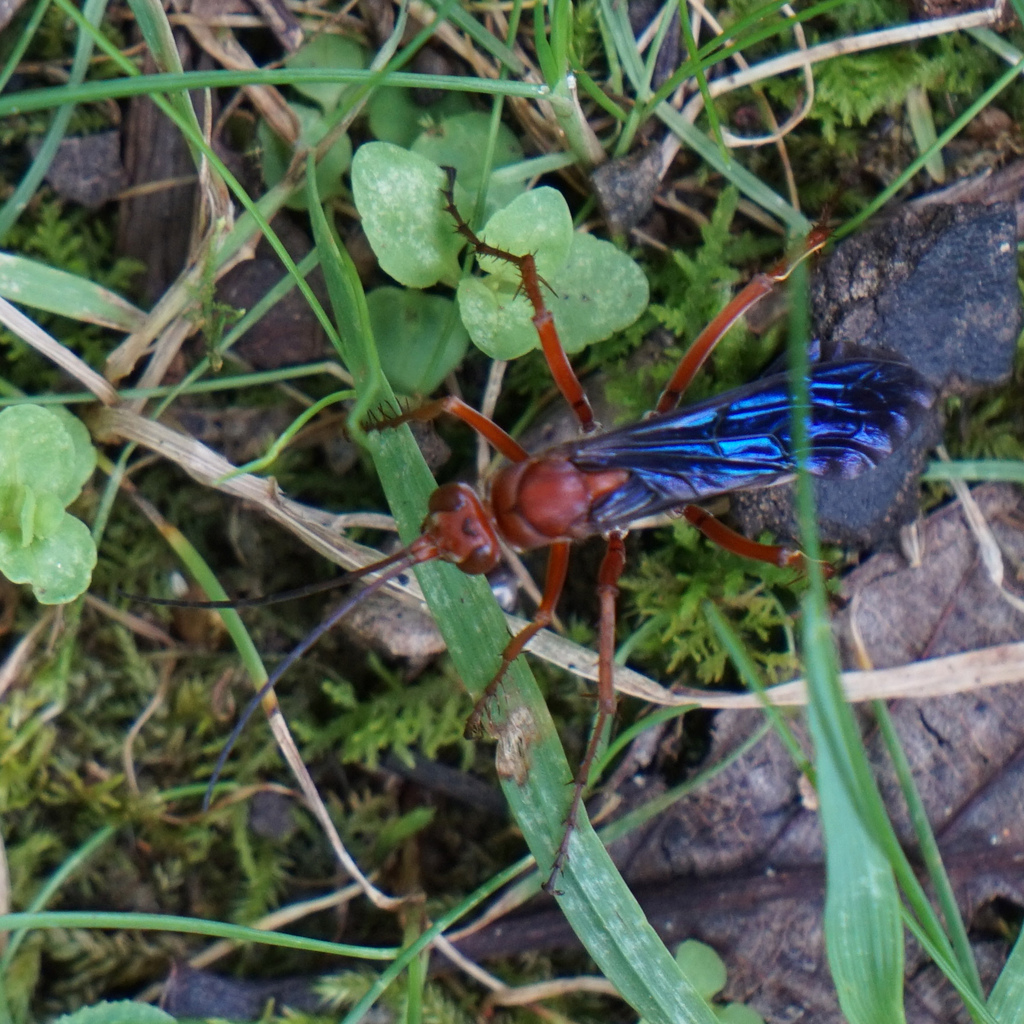
Rusty Spider Wasp
Tachypompilus ferrugineusAlso known as Red-tailed Spider Hunter, Red-tailed Spider Wasp
Females are relentless ground hunters that run swiftly with flickering wings across leaf litter to flush large wolf and fishing spiders from their retreats. Once stung and completely paralyzed, the spider is dragged backward up vertical tree trunks or rock crevices to a secure cavity where the wasp deposits a single egg. Adult wasps spend sunny afternoons visiting aster and goldenrod flowers, feeding peacefully on sweet nectar while posing virtually no threat to passersby unless roughly grabbed.
SolitaryParasitoidPredatory
—observations
—countries
—peak records
Not EvaluatedConservation statusIUCN Red List categoriesLCNTVUENCREWEXNot Evaluated — not placed on the risk ladderRed List categories, explained →
Diet & prey
- Rabid wolf spider
- Carolina wolf spider
- Dark fishing spider
Predators
- Robber flies
- Insectivorous birds
- Fence lizards
ThreatsPesticide application, severe habitat loss, and decline of large wolf spider prey
HabitatsWoodland borders, forest clearings, meadows, old fields, and rocky slopes
Life span1 year (adults live 1 to 2 months)
Classification
- OrderHymenoptera
- FamilyPompilidae
- GenusTachypompilus
- SpeciesTachypompilus ferrugineus
Range data is not available yet.
Interaction riskVery high
- Low
- Moderate
- High
- Very high
- Why interaction risk is very high
- Females can deliver a painful defensive sting; watch from a short distance without handling.
- Why it is dangerous
- Venom contains neurotoxic peptides that induce intense localized burning pain and can prompt systemic allergic reactions in sensitized individuals.
- How to recognize a risky encounter
- Recognizable by an elongated rust-orange or reddish-brown body, long spiny legs, and smokey violet-tinted wings.
- What to do
- Give hunting females plenty of room to maneuver and never attempt to pick one up bare-handed.
Responsible observation
- Spotting Hunts: Watch for females flicking their wings rapidly while patrolling bases of stone walls and rotting logs.
- Observing Prey: Keep a respectful step back when a female drags a paralyzed spider so she does not abandon her prize.
- Garden Habitat: Provide late-blooming nectar plants like milkweed and sumac to attract adult foraging wasps.
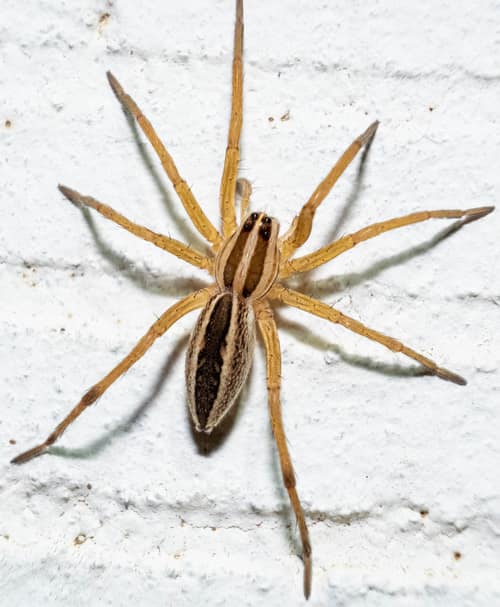
Prey no rights reserved, uploaded by Mirko Schoenitz · cc0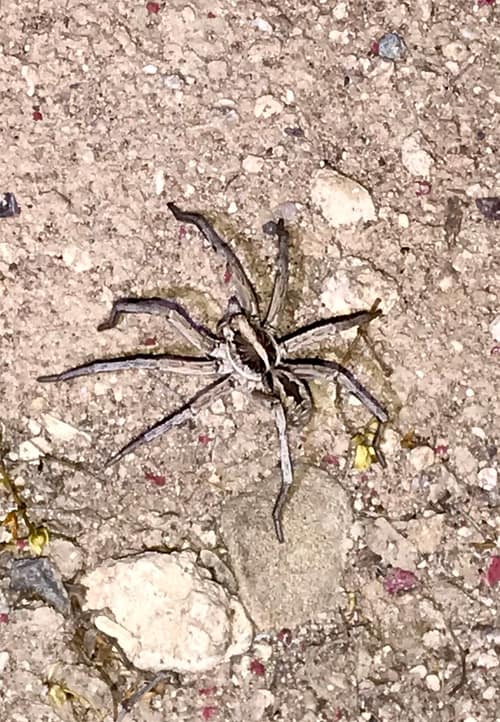
Prey (c) CK2AZ, some rights reserved (CC BY), uploaded by CK2AZ · cc-by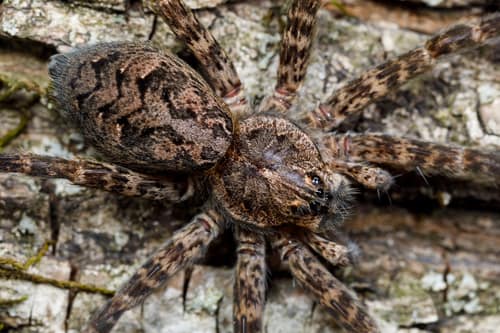
Prey (c) Meghan Cassidy, some rights reserved (CC BY-SA), uploaded by Meghan Cassidy · cc-by-sa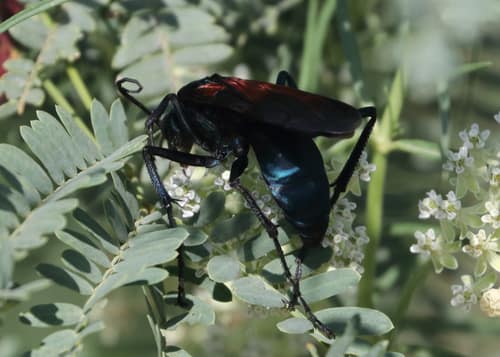
Same Family (c) Seth Wollney, some rights reserved (CC BY) · cc-by
Help improve the field guideSomething wrong?
Checking your Fauna account…Report a name, category, or profile issue for review.