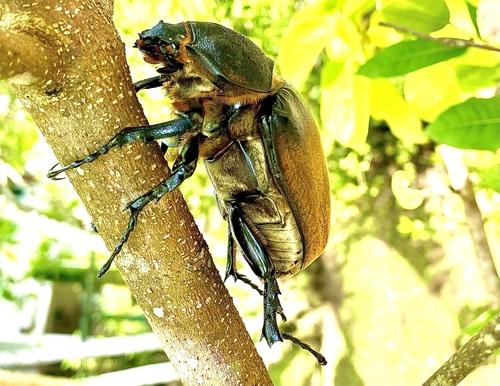
Male Hercules beetles wield massive thoracic and cephalic horns that can exceed the length of their own bodies, locking together in intense wrestling bouts to fling rivals off tree branches. Their elytra possess a remarkable structural coloration that shifts from greenish-yellow in dry air to velvety black as ambient humidity rises. After spending up to two years as hefty subterranean grubs chewing through rotting logs, adults emerge for a brief, flying life devoted entirely to mating and feeding on fallen fruit.
Not EvaluatedConservation statusIUCN Red List categoriesLCNTVUENCREWEXNot Evaluated — not placed on the risk ladderRed List categories, explained →
Key facts
Diet & prey
Decaying wood
Overripe fruits
Tree sap
Predators
Coatis
Large birds
Opossums
ThreatsDeforestation, habitat fragmentation, and collection for the pet and specimen trade
HabitatsTropical lowland and montane rainforests
Life span1–3 years (majority spent as larva; adults live 3–6 months)
Size / weightNot available
Classification
OrderColeoptera
FamilyScarabaeidae
GenusDynastes
SpeciesDynastes hercules
Range & activity
Range data is not available yet.
Safe observation
Interaction riskLow
Low
Moderate
High
Very high
Why interaction risk is low
Powerful spiny legs and horn grip can pinch skin painfully; observe closely without handling.
Why it is dangerous
Males can pinch flesh tightly between their thoracic horns, and both sexes possess powerful legs tipped with sharp, hooked tarsi that can puncture skin when pulled away.
How to recognize a risky encounter
Recognizable by immense size, greenish-yellow to black speckled elytra, and in males, an enormous arching horn projecting forward from the thorax.
What to do
Allow the insect to crawl voluntarily onto an open palm or flat surface; never forcibly pull its clinging legs from skin or clothing.
Responsible observation
UV Light Traps: Look for flying adults around bright lights or mercury-vapor lamps near rainforest edges after dark.
Fallen Fruit: Inspect piles of rotting forest fruit and rotting sap pockets on trunks during humid nights.
Gentle Observation: Avoid restraining an adult, as backward-facing leg spines grip human skin tenaciously.

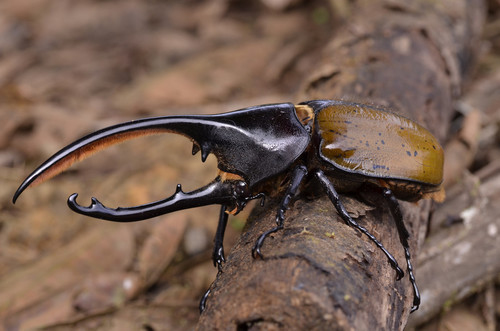
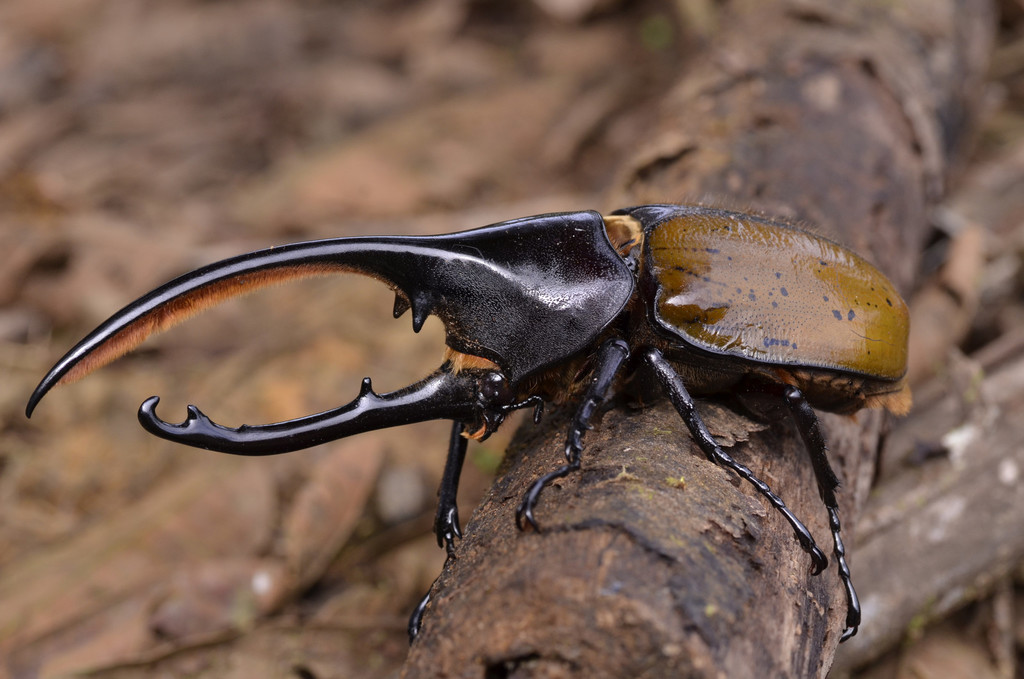
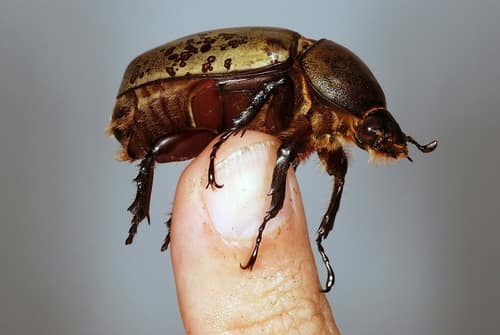
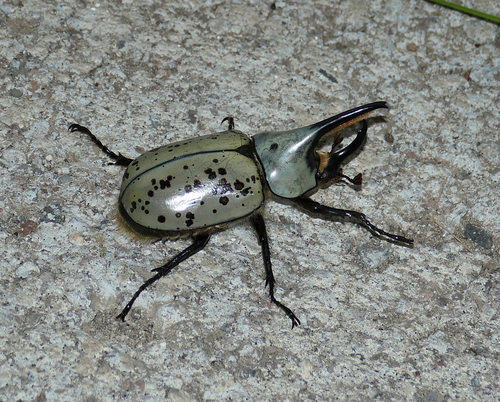
 Image unavailable