
Insect · GBIF taxon 4995217
Elephant Beetle
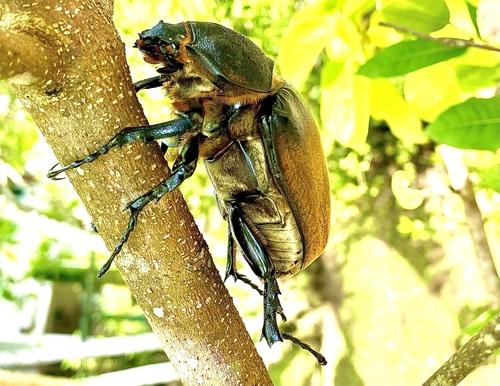
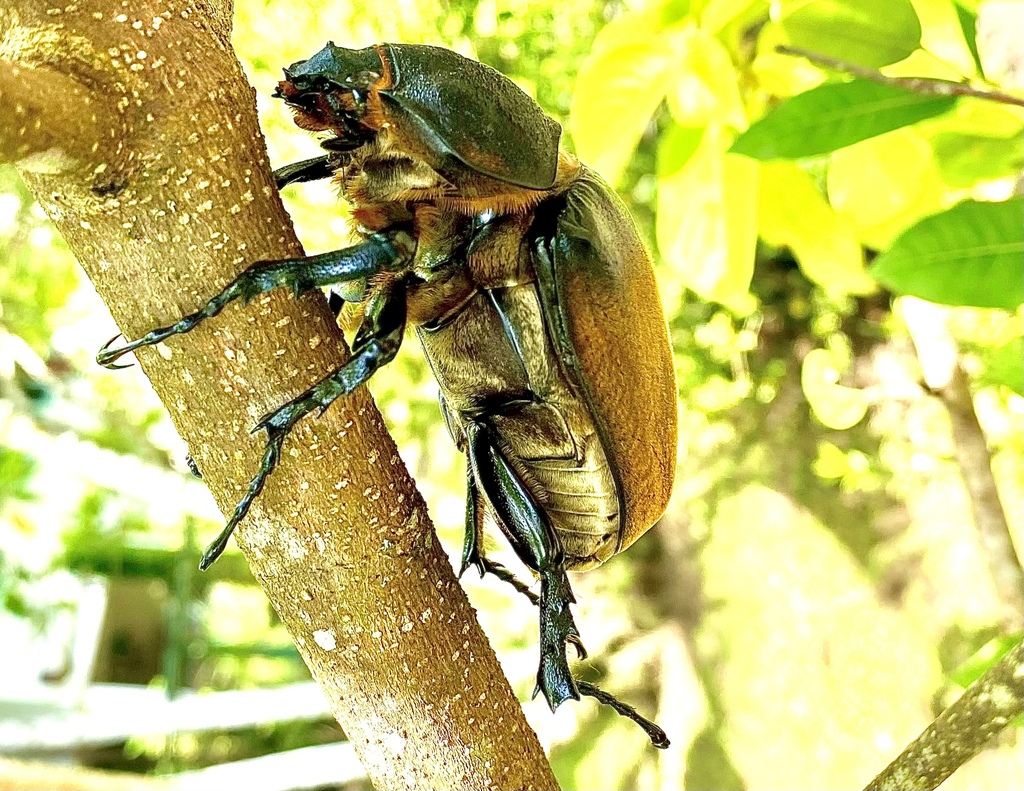
Megasoma elephasElephant beetles are among the heaviest insects in the Americas, clothed in a dense coat of fine yellowish hairs that gives their bulky black exoskeleton a soft, velvety texture. Males wield an imposing, forward-curving horn split at the tip like an elephant trunk, using it as a lever to pry rival suitors off branches during nocturnal mating battles. Adults spend daylight hours concealed in tree hollows or forest canopy before taking flight after dark to drink tree sap and sugary juices from fermenting fruits.
NocturnalGiant InsectCanopy Dweller
—observations
—countries
—peak records
Not EvaluatedConservation statusIUCN Red List categoriesLCNTVUENCREWEXNot Evaluated — not placed on the risk ladderRed List categories, explained →
Diet & prey
- Fermenting fruit juices
- Tree sap
- Rotting wood
Predators
- White-nosed coati
- Spectacled owl
- Common opossum
ThreatsRainforest deforestation, habitat fragmentation, and collection for the exotic insect trade
HabitatsLowland rainforests and moist deciduous tropical woodlands
Life span1–3 years (mostly spent as larvae; adults live 1–4 months)
Size / weightNot available
Classification
- OrderColeoptera
- FamilyScarabaeidae
- GenusMegasoma
- SpeciesMegasoma elephas
Range data is not available yet.
Interaction riskLow
- Low
- Moderate
- High
- Very high
- Why interaction risk is low
- Harmless and safe to observe at a normal distance, though sharp tarsal claws grip tightly.
Responsible observation
- Night Observation: Check bright lights near forest edges, where dispersing adults frequently collide and settle.
- Gentle Inspection: Avoid pulling them off skin or bark forcefully, as their strong leg spines grip tenaciously.
 Image unavailable
Same Genus 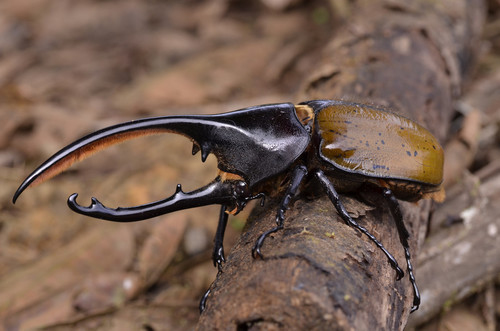
Close Relative (c) TOUROULT Julien, some rights reserved (CC BY), uploaded by TOUROULT Julien · cc-by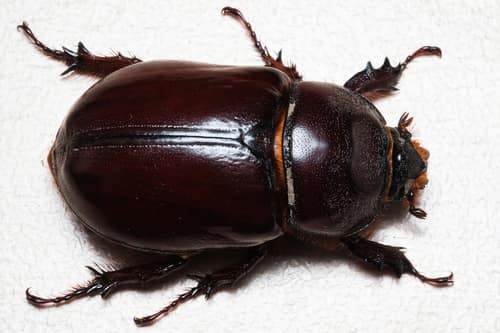
Same Subfamily (c) lugachev_vitaly, some rights reserved (CC BY), uploaded by lugachev_vitaly · cc-by
Help improve the field guideSomething wrong?
Checking your Fauna account…Report a name, category, or profile issue for review.