
Mammal
Northwest African Cheetah
Acinonyx jubatus heckiAlso known as Saharan Cheetah
Saharan cheetahs wander vast desert landscapes with striking, pale buff coats that blend into arid sand dunes. They survive hyper-arid conditions without permanent water by extracting moisture directly from their prey. These secretive, crepuscular hunters rely on stealth and speed to target desert gazelles in regions where few other large carnivores endure.
MammalCarnivoreRare
—observations
—countries
—peak records
Critically EndangeredConservation statusIUCN Red List categoriesLCNTVUENCREWEXCritically EndangeredRed List categories, explained →
Diet & preyDorcas gazelle, Dama gazelle, Cape hare
Predators
- Humans
ThreatsPoaching, severe prey reduction, human persecution, habitat loss
HabitatsArid deserts, xeric shrublands, dry mountain ranges
Life span10–12 years in the wild
Classification
- FamilyFelidae
- SpeciesAcinonyx jubatus hecki
Range data is not available yet.
Interaction riskHigh
- Low
- Moderate
- High
- Very high
- Why interaction risk is high
- Large predator capable of defensive attacks; maintain extreme distance and observe from vehicles only.
- Why it is dangerous
- Large wild felid equipped with powerful jaws and sharp claws capable of inflicting serious injuries.
- How to recognize a risky encounter
- Recognizable by its pale buff coat, muted spots, extremely slender frame, and faint facial tear stripes.
- What to do
- Never approach on foot, keep doors locked in vehicles, and retreat slowly if the animal displays agitation.
- What to notice
- Extremely pale, light-bodied cheetah native to hyper-arid regions of the Sahara and Sahel.
- Support conservation
- Never publish precise location coordinates of sightings and strictly avoid disturbing water holes or denning sites.
Responsible observation
- Observer Distance: Stay inside an enclosed vehicle and keep a vast distance to avoid disturbing the cat.
- Track Spotting: Look for distinct non-retractable claw prints along dry riverbeds and sandy tracks.
- Camera Traps: Rely on remote motion-activated cameras because direct daytime sightings are exceptionally rare.
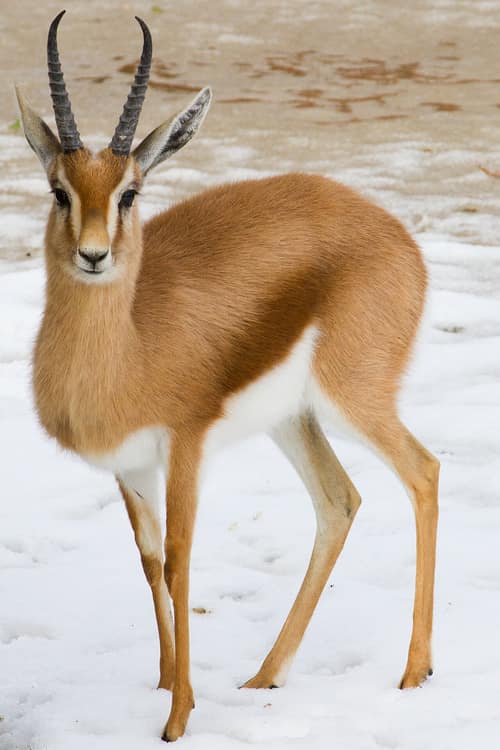
Primary Prey Khendon / CC BY-SA 3.0 · cc-by-sa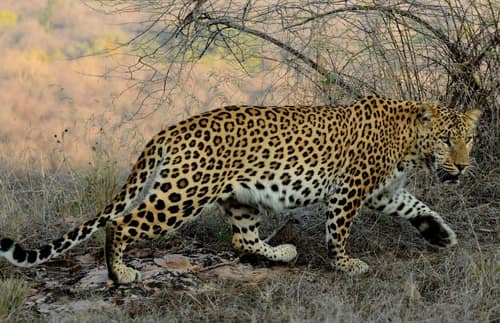
Competitor (c) Raja bandi, some rights reserved (CC BY), uploaded by Raja bandi · cc-by
Help improve the field guideSomething wrong?
Checking your Fauna account…Report a name, category, or profile issue for review.