
Species · GBIF taxon 2437331
Northern Flying Squirrel
Glaucomys sabrinusAlso known as Northern Glider
Northern flying squirrels navigate the dark canopy of coniferous forests using a specialized membrane of skin called a patagium to glide effortlessly between trees. These strictly nocturnal rodents rely on large, light-gathering eyes and long whiskers to steer through the night air, often traveling up to 45 meters in a single leap. They play a vital role in forest health by dispersing mycorrhizal fungal spores and lichens through their droppings.
NocturnalGliderForest Dweller
—observations
—countries
—peak records
Least ConcernConservation statusIUCN Red List categoriesLCNTVUENCREWEXLeast ConcernRed List categories, explained →
Diet & prey
- Truffles
- Lichens
- Insects
Predators
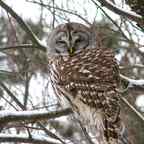
- Barred Owl
- Marten
- Domestic Cat
ThreatsHabitat loss, forest fragmentation, and competition with southern flying squirrels
HabitatsConiferous and mixed coniferous-deciduous forests
Life span3 to 4 years in the wild
Size / weightNot available
Classification
- FamilySciuridae
- SpeciesGlaucomys sabrinus
Range data is not available yet.
Interaction riskLow
- Low
- Moderate
- High
- Very high
- Why interaction risk is low
- Capable of biting if cornered or handled; observe from a safe distance.
- What to notice
- Identified by its larger size and belly hairs that are grey at the base, unlike southern flying squirrels.
- Support conservation
- Avoid disturbing nesting cavities and support the preservation of old-growth coniferous corridors.
Responsible observation
- Listen for high-pitched chirps: They communicate using soft, bird-like squeaks and chirps that are easily missed.
- Use a red light: Red-filtered flashlights allow observation at night without disrupting their nocturnal vision.
- Check tree cavities: Look for abandoned woodpecker holes or nest boxes in mature coniferous stands.
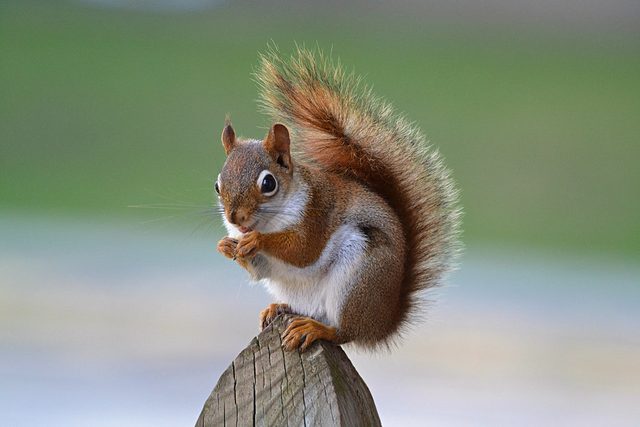
Competitor (c) DaPuglet, some rights reserved (CC BY-SA) · cc-by-sa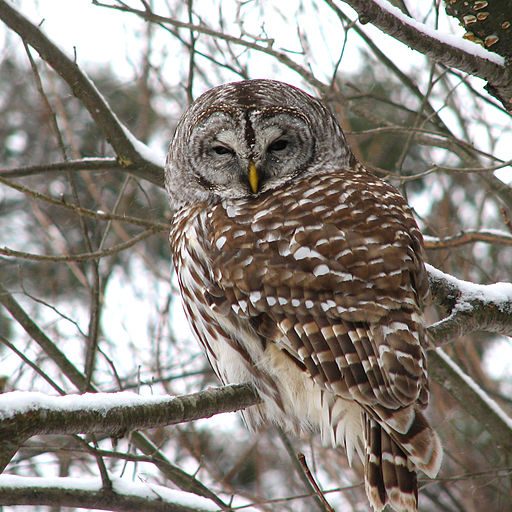
Predator U.S. Fish and Wildlife Service Headquarters / Public domain · cc0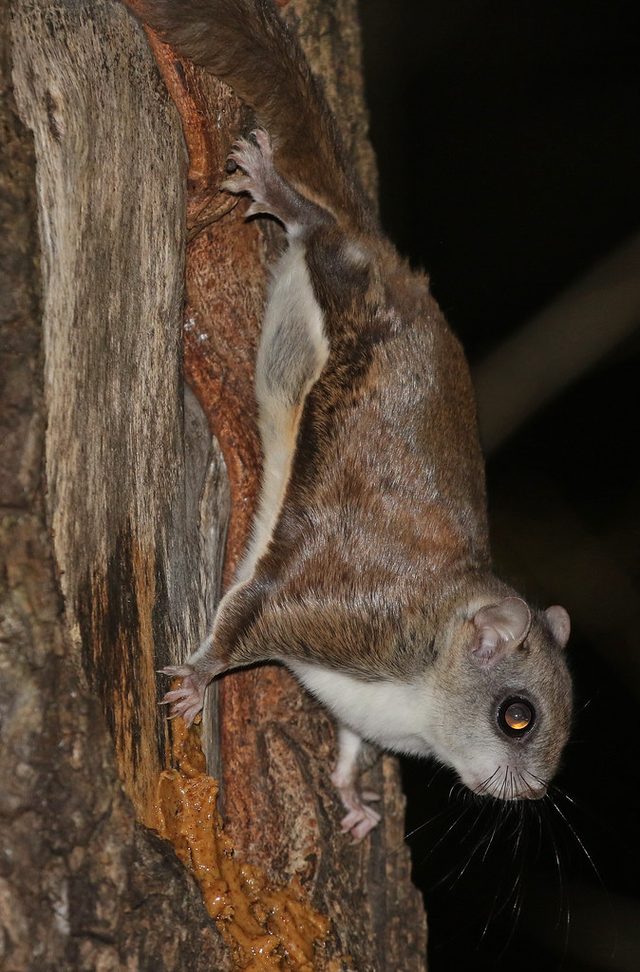
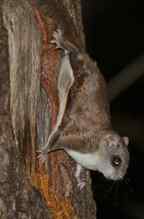
Close Relative "Southern Flying Squirrel - Glaucomys volans, Long Branch Nature Center, Arlington, Virginia, December 22, 2020" by Judy Gallagher is licensed under CC BY 2.0. To view a copy of this license, visit https://creativecommons.org/licenses/by/2.0/. · cc-by
Close Relative
Help improve the field guideSomething wrong?
Checking your Fauna account…Report a name, category, or profile issue for review.