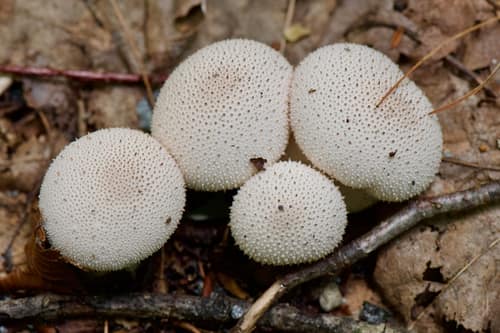
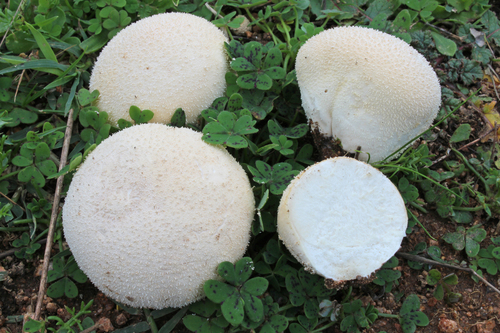
Dwarf puffballs produce tiny, rounded fruiting bodies that emerge among short grass, lawns, and sandy openings following warm summer and autumn rains. The outer skin displays a fine, scurfy texture ranging from buff to pale ochre before weathering away to reveal a smooth inner casing with a distinct apical pore. When raindrops strike the dried sac, hydraulic bellows action propels fine clouds of brown spores into the air to drift across the turf.
FungusSpore-producingSaprobic
—observations
—countries
—peak records
Not EvaluatedConservation statusIUCN Red List categoriesLCNTVUENCREWEXNot Evaluated — not placed on the risk ladderRed List categories, explained →
Key facts
Diet & preySaprotrophic (decaying plant material and soil organic matter)
Predators
Fungus gnats
Slugs
Ground beetles
ThreatsIntensive lawn herbicide use, topsoil degradation, and severe drought
HabitatsLawns, grassy meadows, pastures, and disturbed sandy soils
Life spanFruiting body lasts 1–2 weeks; perennial mycelium survives for years
Classification
FamilyLycoperdaceae
SpeciesLycoperdon dermoxanthum
Range & activity
Range data is not available yet.
Safe observation
Interaction riskLow
Low
Moderate
High
Very high
Why interaction risk is low
Many edible mushrooms have toxic look-alikes; never eat wild fungi based on app identification alone.
Responsible observation
Rain Simulation: Tap a dried mature puffball gently with a twig to watch the spore puff disperse.
Cross-sectioning: Slice young specimens vertically to verify the solid interior flesh with no hidden gills.