Gray Wolf
Canis lupus
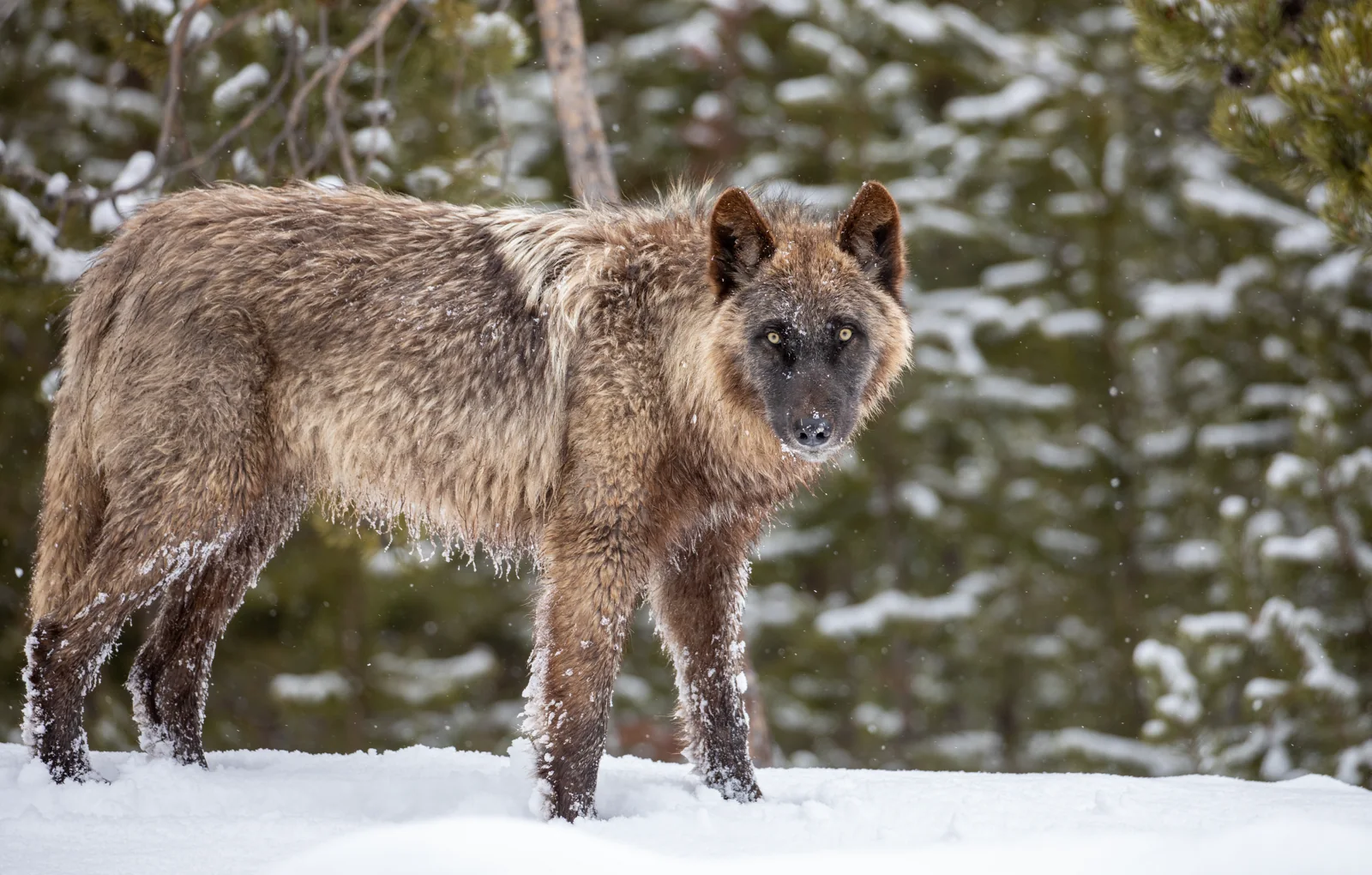
North America's largest wild canid, with a broad head, short rounded ears, and a substantially heavier build than a typical coyote.
What to look for
- 01
Large and heavily built, up to about 120 lb and 26–34 inches at the shoulder
- 02
Broad, blocky muzzle and short, rounded ears in proportion to the head
- 03
Bushy tail carried straight, never curled over the back
- 04
Grizzled gray to black or nearly white coats, varying widely by individual
Where it lives
Forests, mountains, and open country across recovering ranges in the northern Rockies, Great Lakes, Pacific Northwest, and Southwest.
How it moves
Travels purposefully in near-straight lines, often in family packs, and covers long distances. Tracks are large — roughly 4 by 5 inches, about double a coyote's.
Common lookalikes
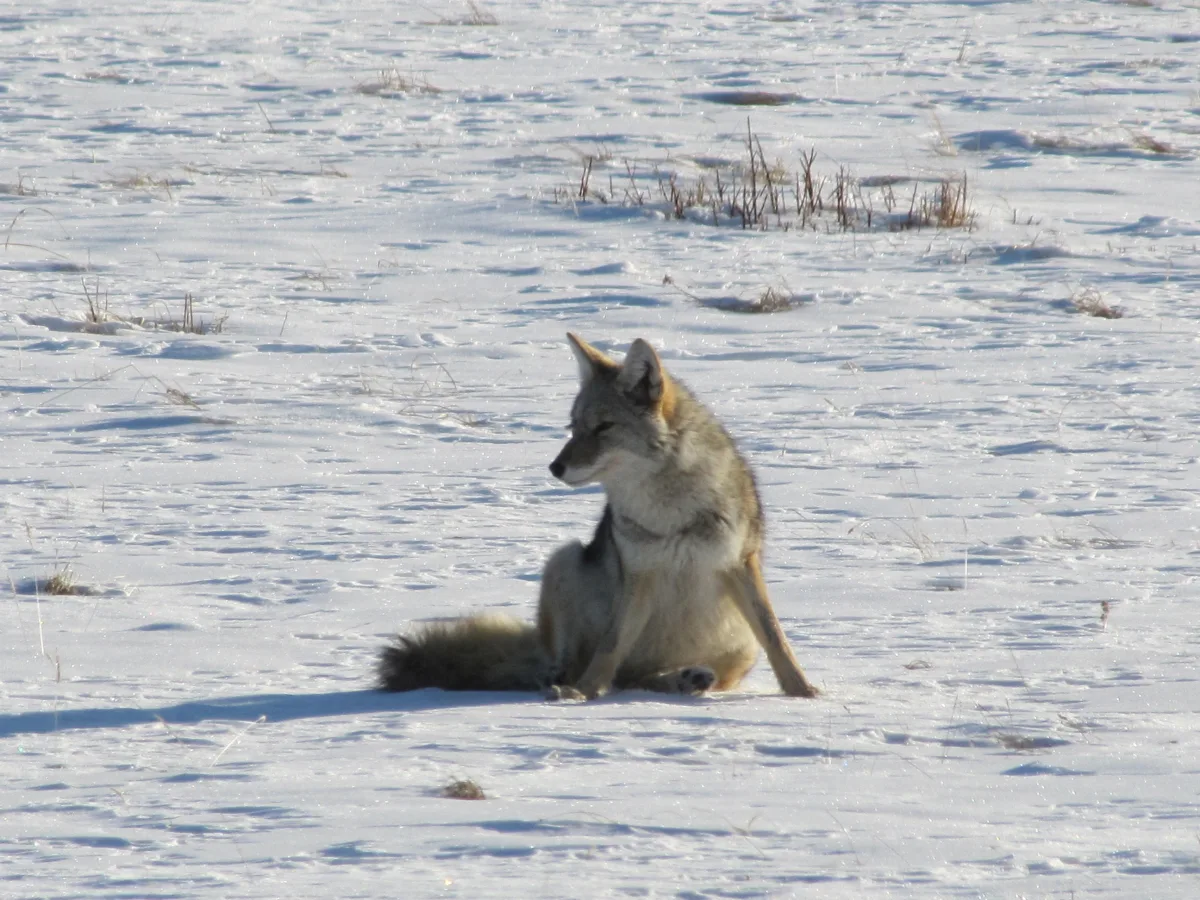
Coyotes are far smaller and slighter, with a narrow pointed muzzle and proportionally taller, more pointed ears. Large domestic dogs wander and meander where a wolf travels directly.
Observe responsibly
Watch from a long distance and never approach or follow. Keep dogs leashed in wolf country, and report sightings to state wildlife agencies where recovery is monitored.
Wolves rarely pose a threat to people and generally avoid them. Never feed or approach one; a food-conditioned wolf is a wolf in danger. Report any bold or unafraid animal to wildlife authorities.
Protection status varies sharply by state and population. Misidentification during coyote hunting is a documented source of illegal wolf mortality — which is exactly why careful identification matters.
Get Fauna and identify it in the field.
Where this guide comes from
Sources are linked below. Field marks vary with age, sex, season, region, light, and viewing distance.