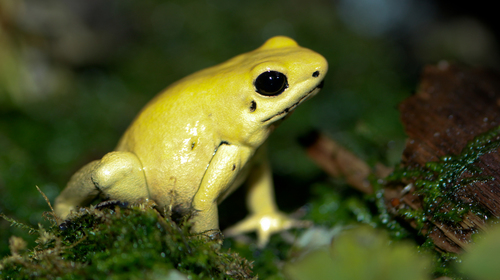
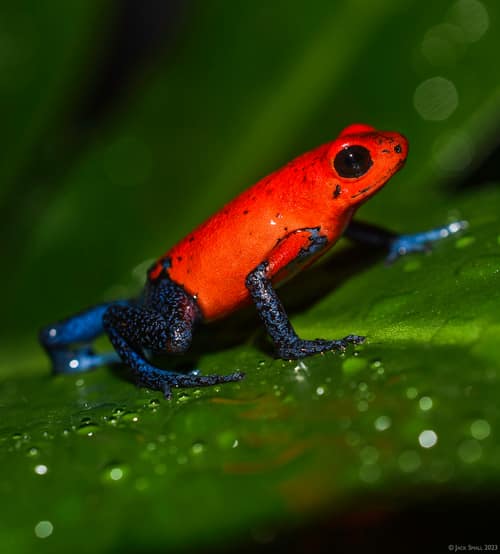
Also known as Cobalt Poison Frog, Tinc, Dyeing Dart Frog
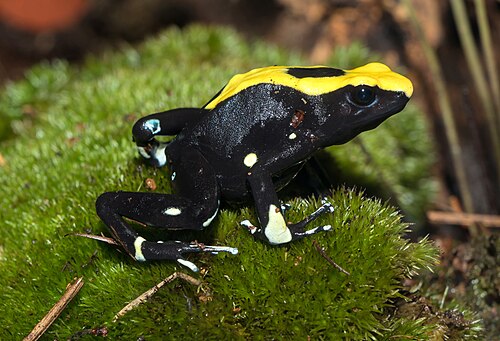
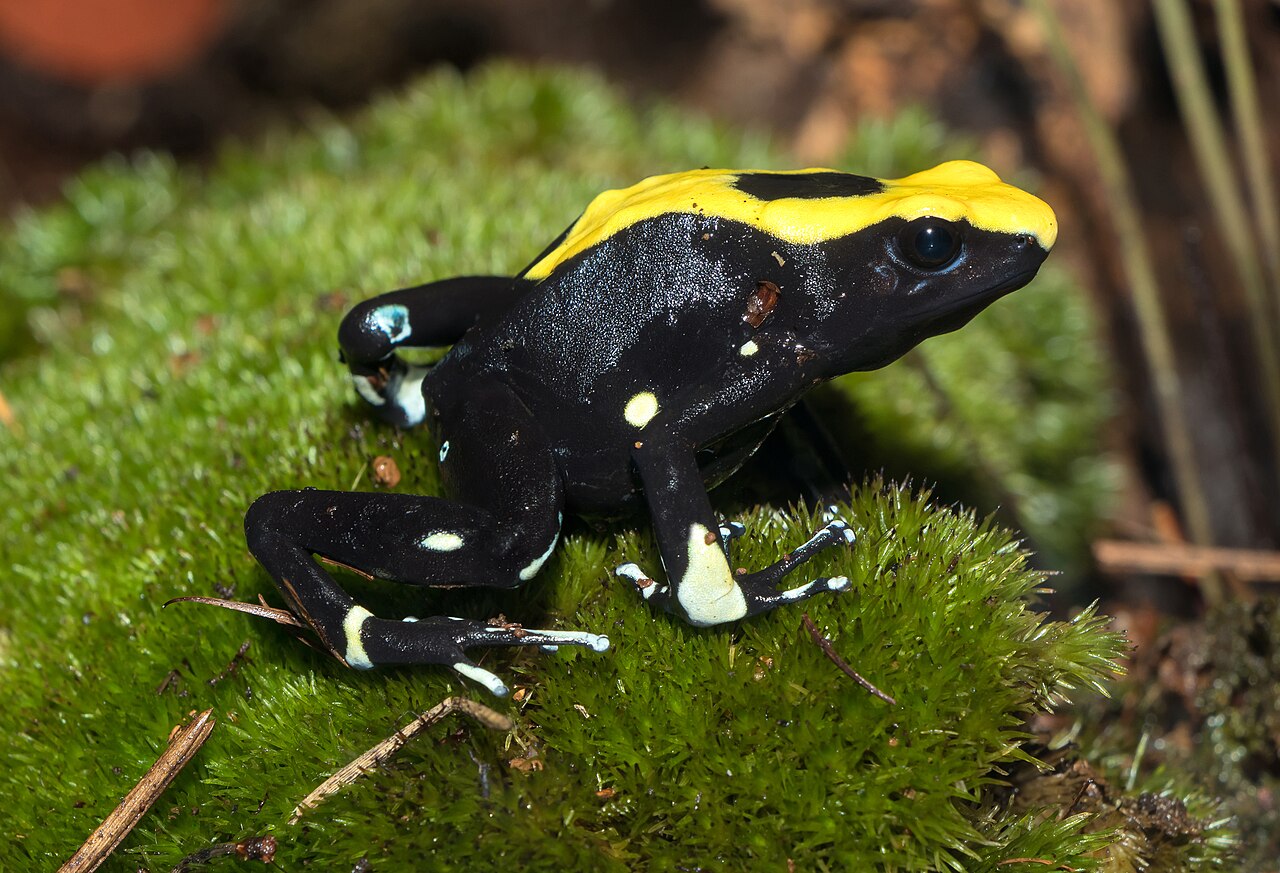
Boldly patterned in contrasting shades of cobalt, yellow, and black, dyeing poison dart frogs scour the humid Guiana Shield leaf litter by day in search of small arthropods. Males exhibit dedicated parental investment, fiercely guarding clutches laid on damp ground before hoisting newly hatched tadpoles onto their backs to transport them high into canopy bromeliads or tree hollows. Wild individuals accumulate defensive pumiliotoxin alkaloids directly from their dietary intake of specialized ants and mites, warning off potential predators with brilliant aposematic colors.
ThreatsDeforestation, illegal wildlife trade, and chytrid fungal infection
HabitatsLowland tropical rainforest floor, leaf litter, and treefall canopy gaps
Life span10–15 years in the wild (up to 20 years in captivity)
Classification
OrderAnura
FamilyDendrobatidae
GenusDendrobates
SpeciesDendrobates tinctorius
Range & activity
Range data is not available yet.
Safe observation
Interaction riskHigh
Low
Moderate
High
Very high
Why interaction risk is high
Skin secretes toxic alkaloids; do not handle and keep hands away from eyes and mouth.
Why it is dangerous
Skin secretions contain toxic pumiliotoxins and allopumiliotoxins that disrupt nerve function, causing severe pain, localized numbness, and systemic toxicity if ingested or absorbed through broken skin.
How to recognize a risky encounter
Recognizable by vivid, high-contrast coloration combining deep cobalt blue, canary yellow, and black across a stocky body.
What to do
Do not touch wild individuals; if accidental contact occurs, wash hands immediately with soap and avoid touching the face.
Responsible observation
Field Observation: Search moist leaf litter near fallen logs and sunlit canopy gaps during peak morning daylight.
Safe Distance: Admire visually without handling to protect the frog's sensitive skin and prevent toxic exposure.