
Reptile · GBIF taxon 9628941
Desert Monitor
Varanus griseusAlso known as Grey Monitor, Saharan Desert Monitor
Desert monitors are powerful opportunistic predators remarkably adapted to hyper-arid environments across North Africa and Asia. They dig extensive subterranean burrows to regulate body temperature and escape extreme summer heat, emerging during cooler daylight hours to track prey across vast distances. When cornered, they inflate their bodies, hiss menacingly, and whip their long tails to deter potential threats.
DesertReptilePredator
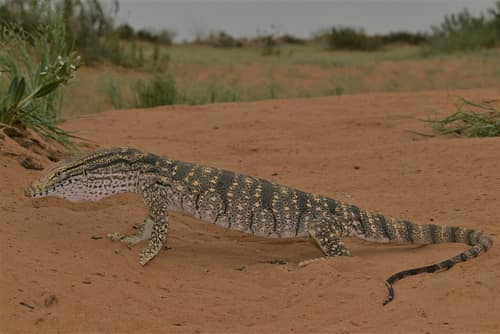
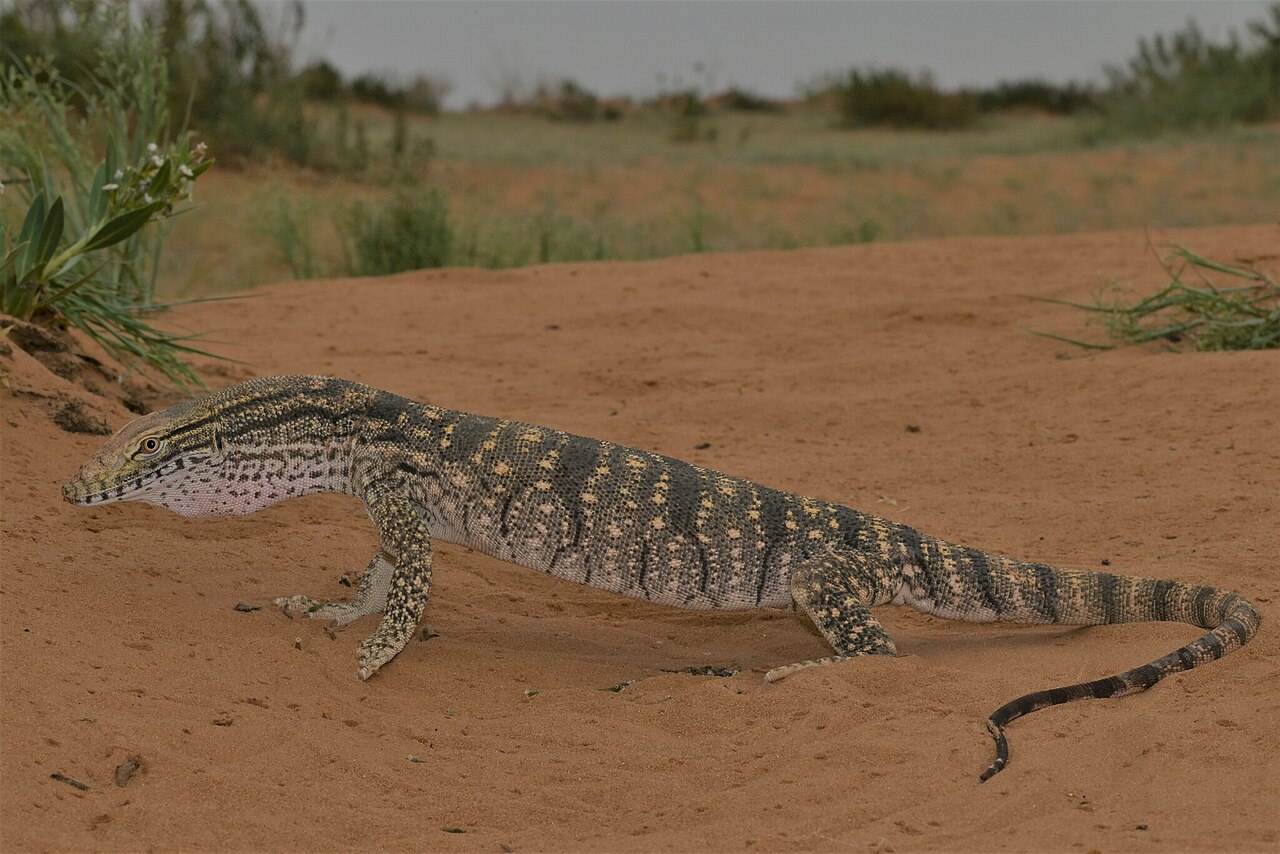
—observations
—countries
—peak records
Least ConcernConservation statusIUCN Red List categoriesLCNTVUENCREWEXLeast ConcernRed List categories, explained →
Diet & prey
- Rodents
- Venomous snakes
- Lizards
Predators
- Raptors
- Eagles
- Wild canids
ThreatsHabitat destruction, targeted killing out of fear, illegal pet trade
HabitatsArid deserts, semi-arid scrublands, sand dunes, rocky hillsides
Life span8–15 years
Size / weightNot available
Classification
- FamilyVaranidae
- SpeciesVaranus griseus
Range data is not available yet.
Interaction riskLow
- Low
- Moderate
- High
- Very high
- Why interaction risk is low
- Capably delivers a painful bite and deep scratches if cornered; observe from a safe distance.
- Why it is dangerous
- Delivers powerful bites with sharp recurved teeth that can break skin and cause severe bacterial infections.
- How to recognize a risky encounter
- Recognized by its pale yellow to light brown body with dark crossbands, long neck, and narrow head.
- What to do
- Never attempt to handle, corner, or grab a wild desert monitor; allow it an open escape path.
- What to notice
- Look for a large sandy-colored lizard roaming open dunes or rocky desert clearings.
- Support conservation
- Avoid sharing exact GPS coordinates of burrows and admire foraging individuals quietly from afar.
Responsible observation
- Keep a Safe Distance: Maintain several meters of space to avoid provoking a defensive posture.
- Watch the Tracks: Look for their distinctive trackways and tail drag marks leading toward deep sandy burrows.
- Respect Warning Signals: If the monitor inflates its throat, hisses loudly, or raises its tail, back away immediately.
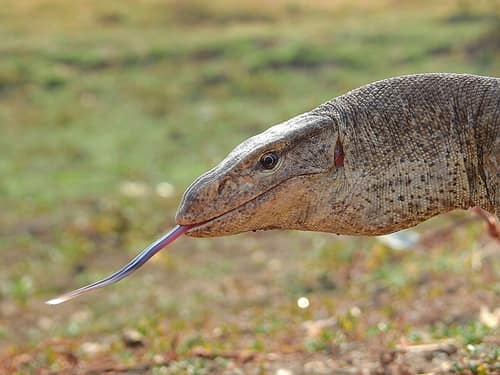
Close Relative Shantanu Kuveskar / CC BY-SA 4.0 · cc-by-sa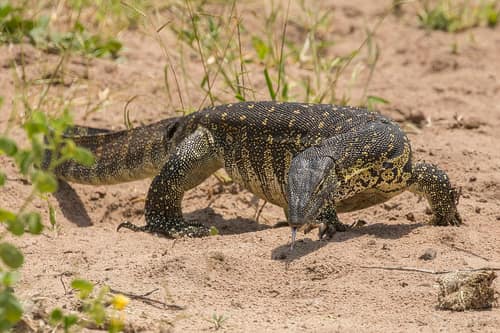
Close Relative Charles J. Sharp / CC BY-SA 4.0 · cc-by-sa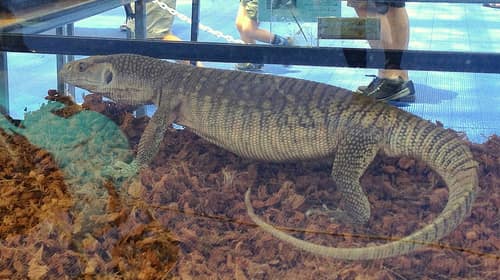
Close Relative KKPCW / CC BY-SA 4.0 · cc-by-sa
Help improve the field guideSomething wrong?
Checking your Fauna account…Report a name, category, or profile issue for review.