
Amphibian
Salamandroides giganteus
Salamandroides giganteusAlso known as Mastodonsaurus
Mastodonsaurus giganteus ranks among the largest amphibians to have ever lived, dominating Middle Triassic freshwater ecosystems with a heavily armored, triangular skull exceeding a meter in length. It lurked on the bottoms of shallow lakes and floodplains, thrusting upward to seize passing fish and early terrestrial tetrapods in sudden ambush. Unique openings in the upper jaw allowed two massive lower tusk-like teeth to protrude completely through the skull even when its mouth was fully closed.
PrehistoricCarnivorousAquatic
—observations
—countries
—peak records
ExtinctConservation statusIUCN Red List categoriesLCNTVUENCREWEXExtinctRed List categories, explained →
Diet & preyDipterid lungfish, Small temnospondyl amphibians, Archosauromorph reptiles
Predators
- Batrachotomus kupferzellensis
ThreatsLate Triassic aridification and competitive displacement by pseudosuchians
HabitatsSwamps, lakes, and low-energy freshwater river basins
Life spanEstimated 20–30 years
Classification
- FamilyMastodonsauridae
- SpeciesSalamandroides giganteus
Range data is not available yet.
Interaction riskLow
- Low
- Moderate
- High
- Very high
- Why interaction risk is low
- Extinct prehistoric species known only from Triassic fossil deposits.
Responsible observation
- Museum Specimens: Inspect skull casts in Stuttgart or Tübingen to observe the tusk holes piercing the snout.
- Fossil Locations: Look for Middle Triassic Lettenkeuper sandstone layers across central Europe where teeth often preserve.
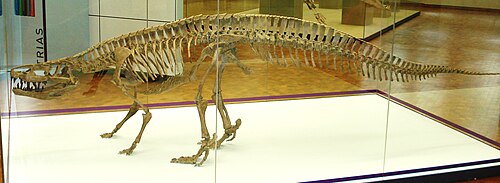
Apex Predator Ghedoghedo / CC BY-SA 3.0 · cc-by-sa Image unavailable
Contemporary Close Relative
Help improve the field guideSomething wrong?
Checking your Fauna account…Report a name, category, or profile issue for review.