
Mammal
Deinotherium bavaricum
Deinotherium bavaricumAlso known as Bavarian Deinothere, Bavarian Prodeinothere
Prodeinotherium bavaricum was an early deinothere that roamed the dense, warm forests of Miocene Europe, using its distinctive downward-curving chin tusks to strip vegetation from branches. Unlike modern elephants, its limbs were proportionately longer and more cursorial, adapted for moving between patches of woodland rather than across open grasslands. Its fossilized bilophodont cheek teeth reveal a specialized diet strictly limited to soft browse such as dicot leaves and tender shoots.
HerbivorePrehistoric
—observations
—countries
—peak records
ExtinctConservation statusIUCN Red List categoriesLCNTVUENCREWEXExtinctRed List categories, explained →
Diet & preyBroadleaf foliage, Deciduous twigs, Tree bark
Predators
- Amphicyon giganteus
- Hemicyon sansaniensis
ThreatsMiocene climate cooling, aridification, and forest fragmentation
HabitatsSubtropical woodlands, floodplains, and humid closed-canopy forests
Life spanEstimated 50–70 years
Classification
- FamilyDeinotheriidae
- SpeciesDeinotherium bavaricum
Range data is not available yet.
Interaction riskHigh
- Low
- Moderate
- High
- Very high
- Why interaction risk is high
- Extinct prehistoric mammal; known exclusively from the fossil record.
Responsible observation
- Museum Exhibits: Observe complete jaw casts and downward-curved tusks in European paleontology collections.
- Fossil Identification: Look for low-crowned lophodont molars that distinguish deinotheres from true mastodons.
 Image unavailable
Competitor Predator 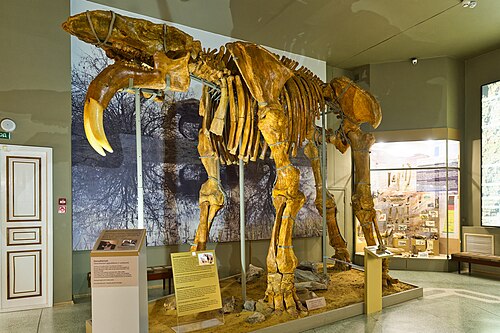
Close Relative Alexxx1979 / CC BY-SA 4.0 · cc-by-saClose Relative
Help improve the field guideSomething wrong?
Checking your Fauna account…Report a name, category, or profile issue for review.