
Reptile · GBIF taxon 9533689
Red-footed Tortoise
Chelonoidis carbonariusAlso known as Red-foot Tortoise, Savanna Tortoise
Red-footed tortoises spend their days rambling across sun-dappled forest floors and savannas, tracking ripening fruit trails and clearing fallen plant debris. Males engage in dramatic courtship displays featuring rhythmic, side-to-side head movements and distinctive clucking vocalizations that sound remarkably like a clucking chicken. By swallowing large quantities of seeds whole and depositing them in nutrient-rich dung across miles of territory, these long-lived reptiles serve as critical forest rejuvenators.
ReptileFrugivoreTropical
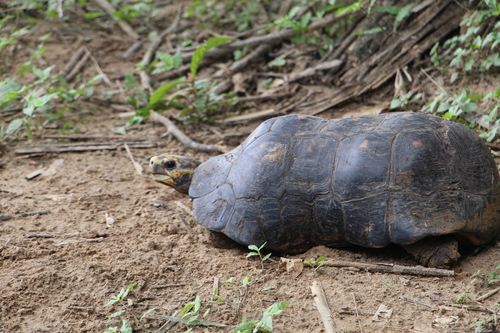
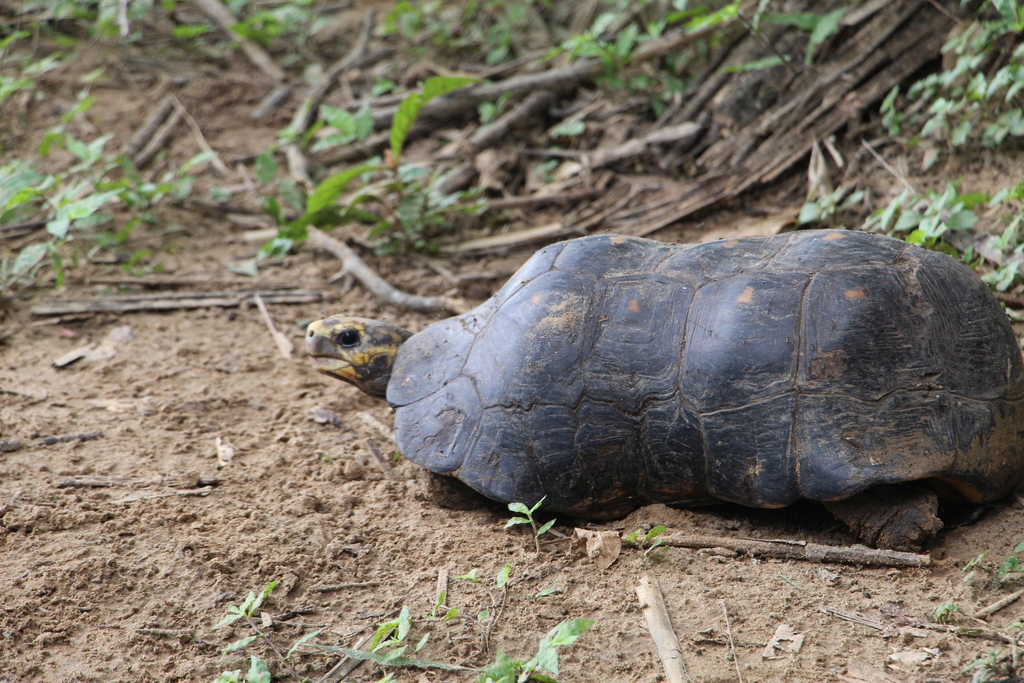
—observations
—countries
—peak records
Not EvaluatedConservation statusIUCN Red List categoriesLCNTVUENCREWEXNot Evaluated — not placed on the risk ladderRed List categories, explained →
Diet & prey
- Fallen wild figs
- Bromeliad shoots
- Forest fungi
Predators
- Jaguar
- Argentine Black and White Tegu
- Harpy Eagle
ThreatsPoaching for bushmeat, habitat conversion for agriculture, and overexploitation for the pet trade
HabitatsTropical dry forests, humid lowland rainforest edges, and savanna grasslands
Life span50–70 years
Classification
- FamilyTestudinidae
- GenusChelonoidis
- SpeciesChelonoidis carbonarius
Range data is not available yet.
Interaction riskLow
- Low
- Moderate
- High
- Very high
- Why interaction risk is low
- Safe to observe at a normal distance; avoid handling to prevent distress and water loss.
- What to notice
- Look for bright red or orange scales along dark limbs and yellow spots on a loaf-shaped dark shell.
- Support conservation
- Observe wild individuals without touching, lifting, or removing them from their natural territory.
Responsible observation
- Respectful Distance: Watch foraging tortoises from several paces back so they do not retreat into their shells.
- Road Assistance: If moving an individual off a road, carry it low to the ground in its travel direction.
- Avoid Lifting: Wild tortoises often void their stored water supply when picked up, risking severe dehydration.
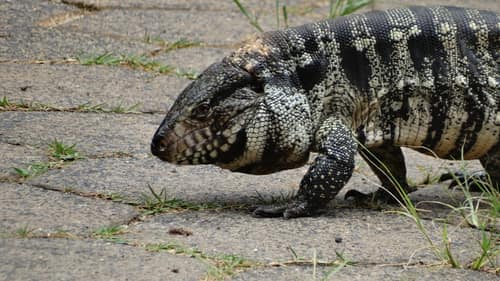
Predator (c) Bruno Henrique Aranda, some rights reserved (CC BY), uploaded by Bruno Henrique Aranda · cc-by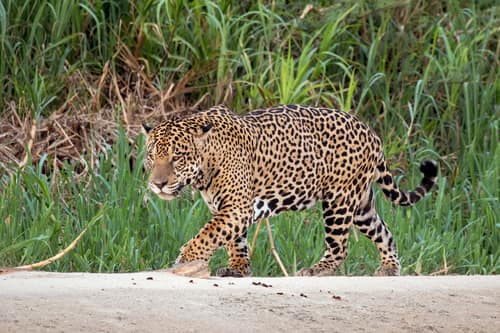
Predator (c) Charles J. Sharp , some rights reserved (CC BY-SA) · cc-by-sa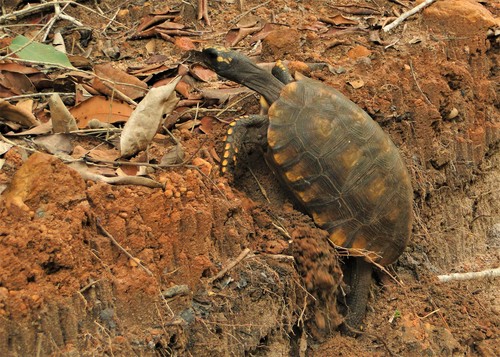
Close Relative (c) Carlos Otávio Gussoni, some rights reserved (CC BY) · cc-by
Close Relative (c) Silvio Montani, some rights reserved (CC BY) · cc-by
Help improve the field guideSomething wrong?
Checking your Fauna account…Report a name, category, or profile issue for review.