
Bird · GBIF taxon 9522580
Chestnut-bellied Sandgrouse
Pterocles exustusAlso known as Common Sandgrouse, Singed Sandgrouse
Chestnut-bellied sandgrouse excel in harsh arid environments across Africa and Asia, flying dozens of kilometers each morning to reach freshwater pools. Males soak specialized belly feathers in water, absorbing liquid like a sponge to transport back to thirsty chicks waiting in the desert heat. Their cryptically patterned plumage provides near-perfect camouflage against dry, stony ground while feeding on tiny fallen seeds.
Arid LandFlockingGround Nesting
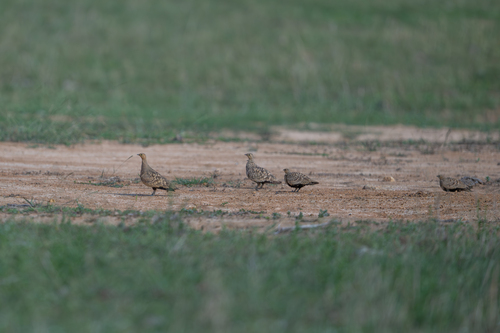
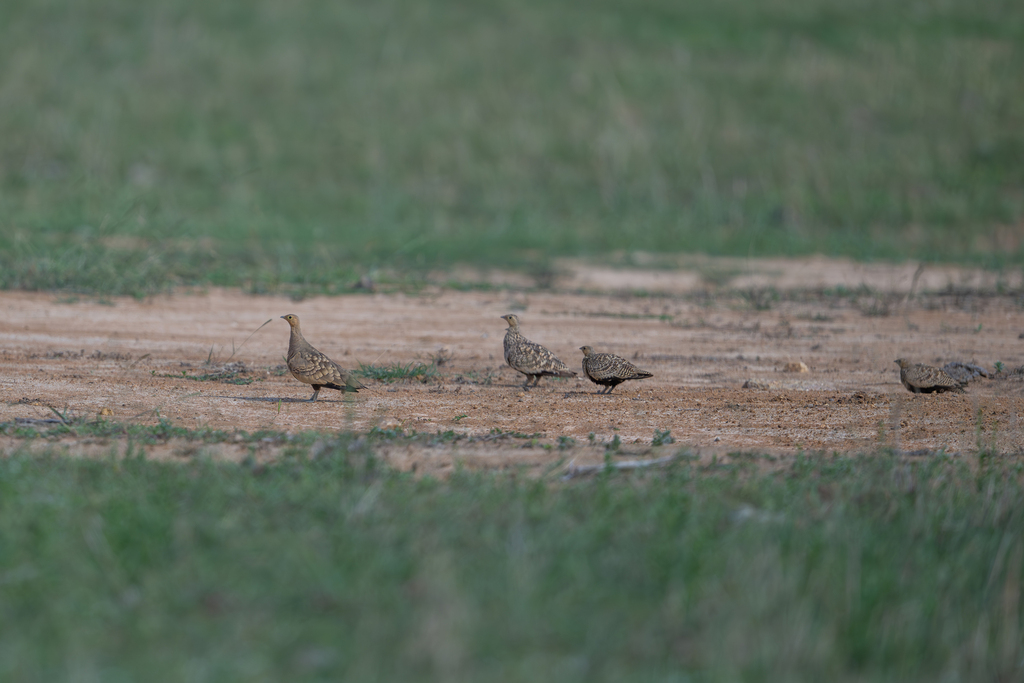
—observations
—countries
—peak records
Least ConcernConservation statusIUCN Red List categoriesLCNTVUENCREWEXLeast ConcernRed List categories, explained →
Diet & prey
- Plant seeds
- Grains
- Insects
Predators
- Falcons
- Desert foxes
- Snakes
ThreatsAgricultural expansion, overhunting, and loss of watering sites
HabitatsDry grasslands, semi-deserts, open scrubland, and stony plains
Life span5–10 years
Size / weightNot available
Classification
- FamilyPteroclididae
- SpeciesPterocles exustus
Range data is not available yet.
Interaction riskLow
- Low
- Moderate
- High
- Very high
- Why interaction risk is low
- Safe to observe at a normal distance.
Responsible observation
- Waterhole watching: Stake out desert waterholes at dawn to observe arriving flocks.
- Flock watching: Look for synchronized flight patterns and listen for metallic flight calls.
- Disturbance avoidance: Stay concealed near water sources to avoid scaring nervous birds away.
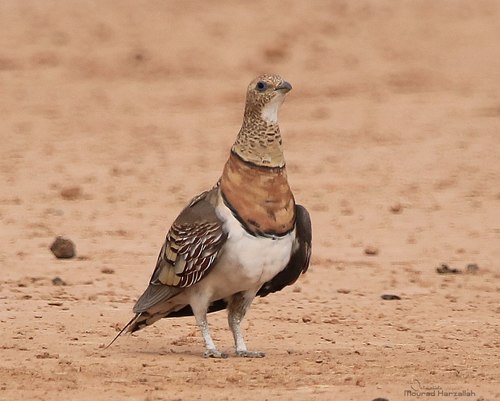
Close Relative (c) Mourad Harzallah, some rights reserved (CC BY), uploaded by Mourad Harzallah · cc-by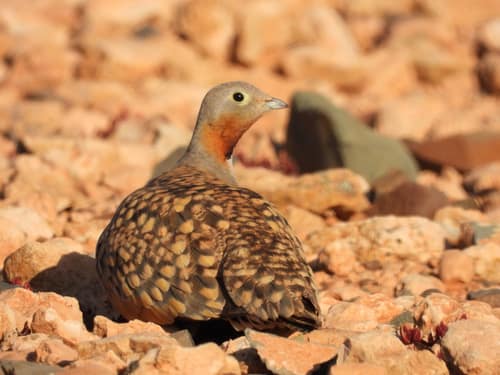
Close Relative (c) Marcelo Cabrera, some rights reserved (CC BY), uploaded by Marcelo Cabrera · cc-by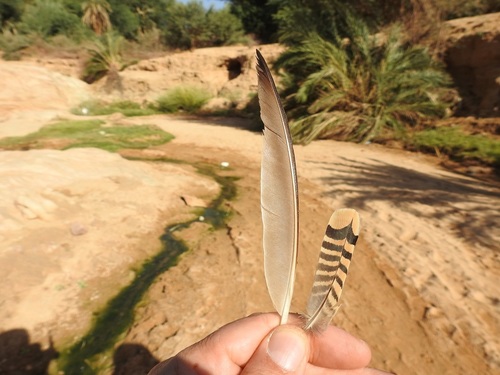
Close Relative (c) Karim Haddad, some rights reserved (CC BY), uploaded by Karim Haddad · cc-by
Help improve the field guideSomething wrong?
Checking your Fauna account…Report a name, category, or profile issue for review.