
Invertebrate
Bowed Fiddler Crab
Tubuca arcuataAlso known as Arcuate Fiddler Crab, East Asian Fiddler Crab
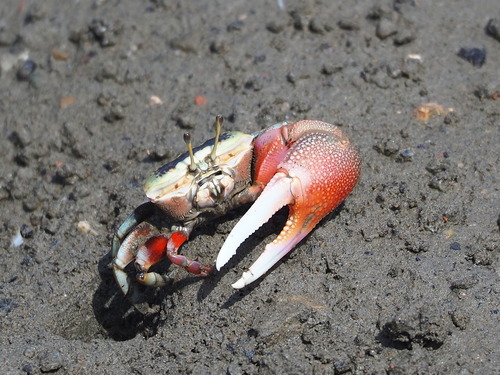
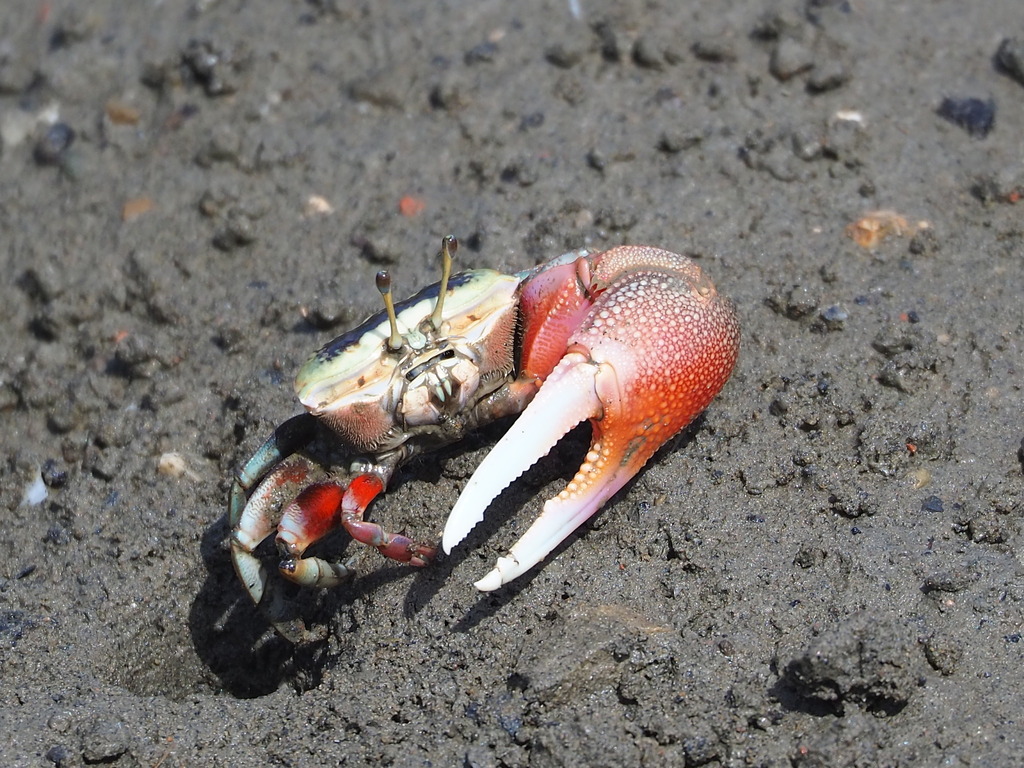
Bowed fiddler crabs construct deep vertical burrows along muddy intertidal mudflats and mangrove estuaries across East Asia. Males possess a disproportionately large, brightly colored major claw that they wave rhythmically during low tide to defend territory and attract females. These active crustaceans retreat into their air-filled burrows when the high tide rolls in, sealing the entrance with a plug of mud.
IntertidalBurrowingCrustacean
—observations
—countries
—peak records
Not EvaluatedConservation statusIUCN Red List categoriesLCNTVUENCREWEXNot Evaluated — not placed on the risk ladderRed List categories, explained →
Diet & preyOrganic detritus, Benthic microalgae, Sediment bacteria
Predators
- Herons
- Egrets
- Predatory fish
ThreatsCoastal development, wetland reclamation, and marine pollution
HabitatsIntertidal mudflats, sheltered estuaries, and mangrove swamps
Life span1–3 years
Classification
- FamilyOcypodidae
- SpeciesTubuca arcuata
Range data is not available yet.
Interaction riskLow
- Low
- Moderate
- High
- Very high
- Why interaction risk is low
- Harmless to humans; observe quietly from a short distance to avoid scaring them into their burrows.
Responsible observation
- Observation approach: Walk slowly and quietly along mudflats, as vibrations and sudden movements cause crabs to retreat into burrows.
- Patience for displays: Crouch still near active burrows to watch males resume their rhythmic claw waving after several minutes.
- Tide timing: Plan visits during low tide when crabs actively emerge to feed and socialise on open mud.
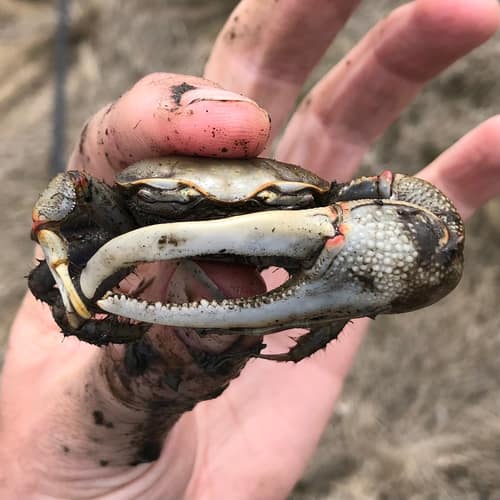
Ecological Equivalent (c) Alan Kneidel, some rights reserved (CC BY), uploaded by Alan Kneidel · cc-by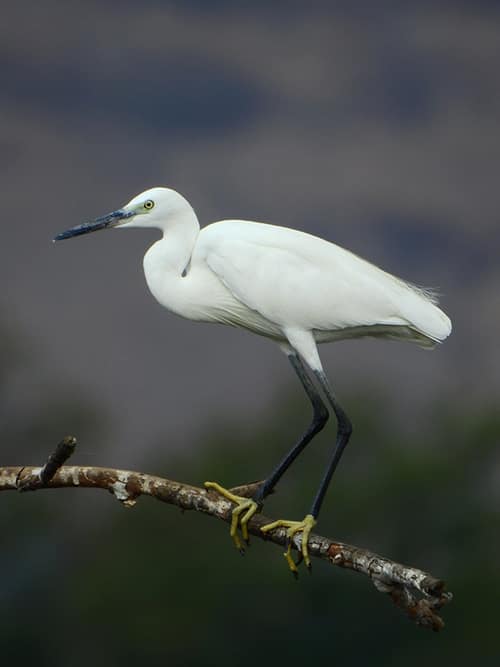
Predator Shantanu Kuveskar / CC BY-SA 4.0 · cc-by-sa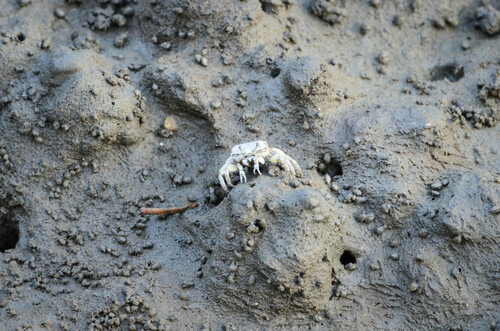
Close Relative (c) 如此甚好, some rights reserved (CC BY) · cc-by
Help improve the field guideSomething wrong?
Checking your Fauna account…Report a name, category, or profile issue for review.