Also known as Night-scented Lily, Giant Upright Elephant Ear
Giant heart-shaped leaves held rigidly upright give Asian taro a commanding presence across shaded forest floors and moist subtropical stream banks. During bloom, the inflorescence uses metabolic thermogenesis to warm its spadix, emitting a potent nocturnal perfume that attracts specialized drosophilid flies for pollination. Microscopic, needle-sharp crystals fill every part of the vegetative tissue, providing an aggressive chemical defense against browsing herbivores.
ThreatsHabitat clearance and riparian forest degradation
HabitatsTropical rainforests, wet secondary woods, river valleys, and ravines
Life spanPerennial (decades via clumping rhizomes)
Classification
OrderAlismatales
FamilyAraceae
GenusAlocasia
SpeciesAlocasia odora
Range & activity
Range data is not available yet.
Safe observation
Interaction riskHigh
Low
Moderate
High
Very high
Why interaction risk is high
Sap irritates skin and ingestion causes intense oral burning; observe without picking or handling bare-handed.
Why it is dangerous
Tissues contain needle-like calcium oxalate raphides that pierce mucous membranes, triggering immediate oral agony, severe airway swelling, and acute dermatitis from raw sap.
How to recognize a risky encounter
Stout, trunk-like green stem bearing enormous, glossy, arrow-shaped leaves that point upward on rigid stalks.
What to do
Do not chew any part of the plant, avoid contacting broken stems or sap, and wash exposed skin promptly with soapy water.
Responsible observation
Scent Timing: Check the pale spathes around dusk when the inflorescence heats up to release its distinctive fragrance.
Pruning Safety: Wear impervious gloves and eye protection to prevent acrid sap from splashing onto bare skin.
Pet Awareness: Keep potted specimens out of reach of cats and dogs prone to chewing foliage.



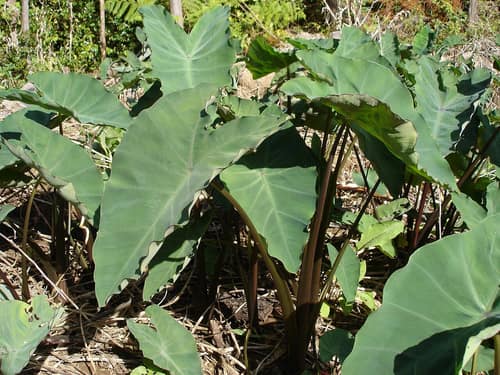
 Image unavailable