
Reptile
Western Milksnake
Lampropeltis gentilisAlso known as Central Plains Milksnake, Pale Milksnake, Utah Milksnake, New Mexico Milksnake
Western milksnakes spend much of their lives hidden beneath flat rocks, rotten logs, or rodent burrows across the grasslands and rocky hills of central North America. When darkness falls or temperatures drop during summer evenings, they emerge to hunt lizards, small mammals, and other snakes using powerful constriction. Their vivid tricolored banding acts as classic Batesian mimicry, discouraging predators by closely echoing the alarming warning coloration of venomous coral snakes.
SecretiveNocturnalConstrictor
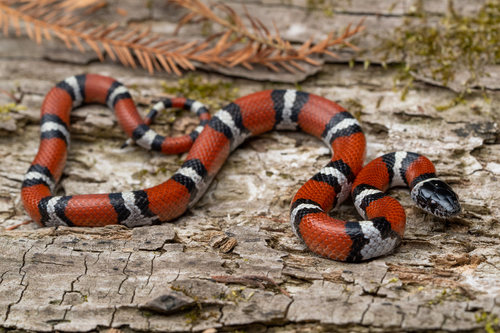
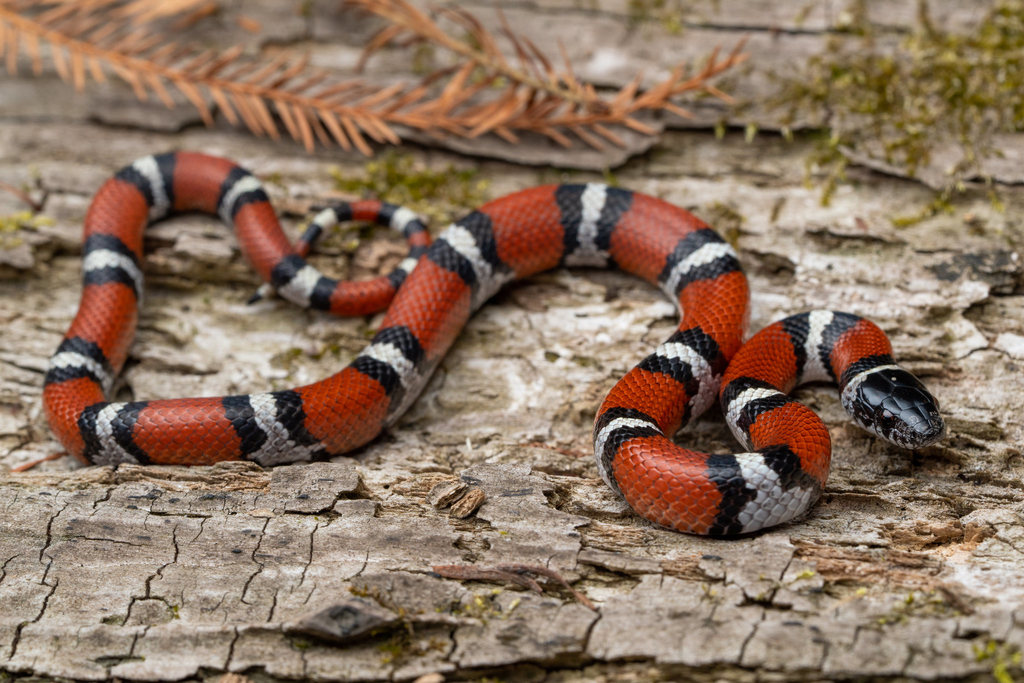
—observations
—countries
—peak records
Least ConcernConservation statusIUCN Red List categoriesLCNTVUENCREWEXLeast ConcernRed List categories, explained →
Diet & preyPrairie Lizard, Deer Mouse, Plains Garter Snake
Predators
- Red-tailed Hawk
- Coyote
- Striped Skunk
ThreatsHabitat fragmentation, road mortality, and indiscriminate killing due to mistaken identity
HabitatsShortgrass prairies, rocky hillsides, canyons, and agricultural margins
Life span12–20 years
Classification
- FamilyColubridae
- SpeciesLampropeltis gentilis
Range data is not available yet.
Interaction riskLow
- Low
- Moderate
- High
- Very high
- Why interaction risk is low
- Non-venomous, but can deliver a small defensive nip and excrete musk if handled roughly.
Responsible observation
- Color check: Observe that red bands touch black bands, separating them from venomous coral snakes.
- Rock flipping: Avoid overturning landscape rocks, as replacing them improperly destroys delicate microhabitats.
- Safe viewing: Enjoy their striking patterns from a step back without cornering or attempting to handle them.
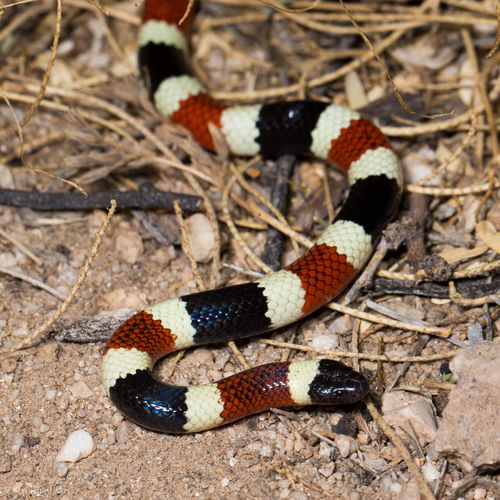
Mimic Model (c) Ken-ichi Ueda, some rights reserved (CC BY), uploaded by Ken-ichi Ueda · cc-by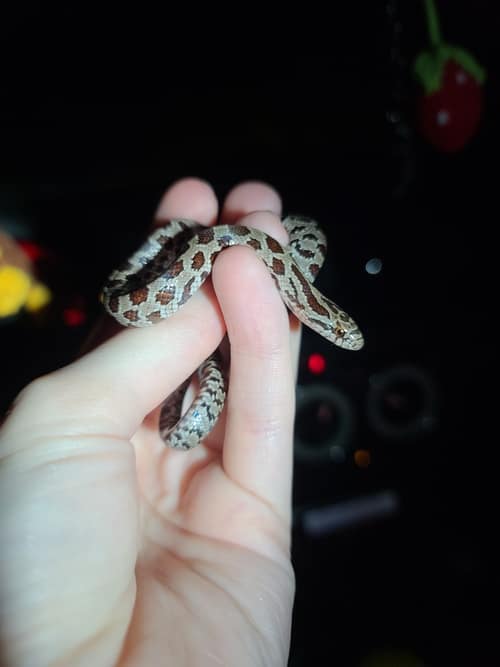
Same Genus (c) Sarah Smith, some rights reserved (CC BY) · cc-by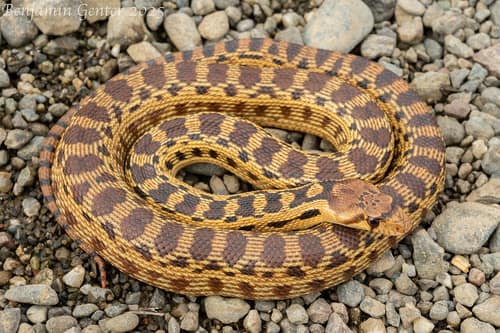
Neighbor Benjamin Genter / Public domain · cc0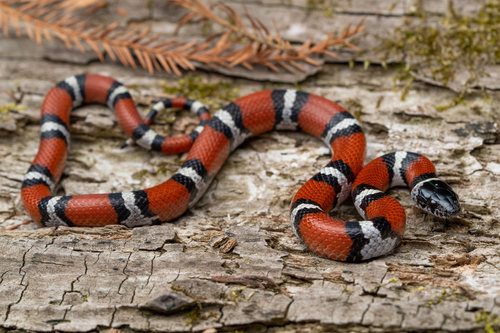
Close Relative (c) evangrimes, some rights reserved (CC BY), uploaded by evangrimes · cc-by
Help improve the field guideSomething wrong?
Checking your Fauna account…Report a name, category, or profile issue for review.