
Plant · GBIF taxon 9485490
Redstem Stork's-bill
Erodium cicutariumAlso known as Common Stork's-bill, Redstem Filaree, Pinweed, Filaree
Redstem Stork's-bill forms low basal rosettes with deeply dissected leaves and reddish, hairy stems that bear small pink to purple flowers. Its most striking feature is the elongated, beak-like seed fruit that curls spirally as it dries, mechanically drilling the seed into soil upon humidity changes. Springing up quickly in arid soils and disturbed places, it provides early seasonal forage for livestock and wildlife while outcompeting native annuals.
AnnualFloweringWeedy
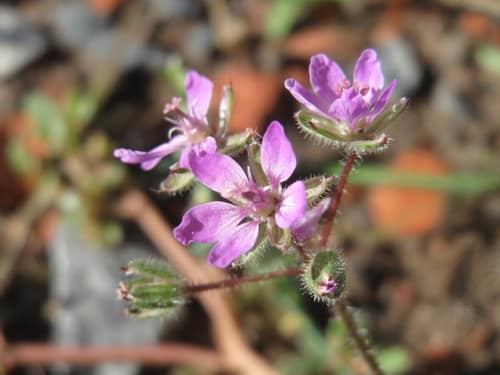
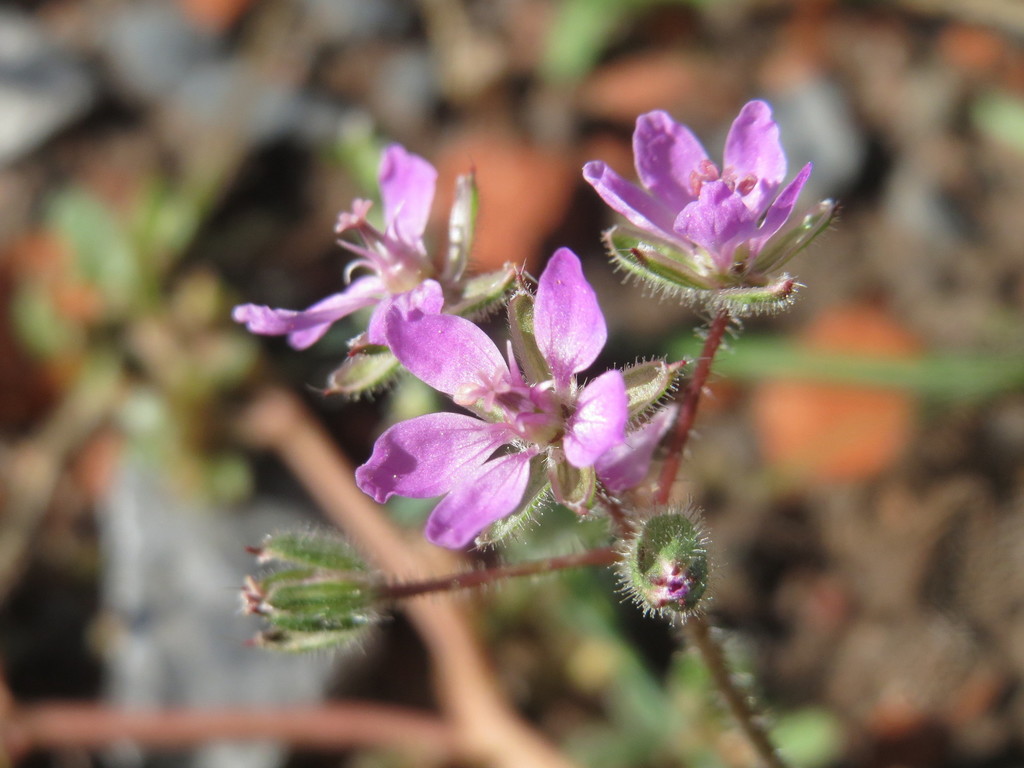
—observations
—countries
—peak records
Least ConcernConservation statusIUCN Red List categoriesLCNTVUENCREWEXLeast ConcernRed List categories, explained →
Diet & prey
- Autotrophic (Photosynthetic)
Predators
- Livestock
- Lepidoptera larvae
- Rodents
ThreatsHerbicide application and intensive cultivation
HabitatsArid grasslands, deserts, pastures, disturbed ground, roadsides
Life span1 year (annual) or up to 2 years (biennial)
Size / weightNot available
Classification
- OrderGeraniales
- FamilyGeraniaceae
- GenusErodium
- SpeciesErodium cicutarium
Range data is not available yet.
Interaction riskLow
- Low
- Moderate
- High
- Very high
- Why interaction risk is low
- Safe to observe at a normal distance.
Responsible observation
- Watch the seeds: Place a dry seed pod in a damp palm to watch the spiral awn uncoil and drill.
- Check for red stems: Look at the base of the plant for the fine red hairs that give the stems their signature color.
- Spot the flowers: Look during sunny mornings when the tiny five-petaled pink flowers fully open.

Close Relative (c) Tony Wills, some rights reserved (CC BY-SA), uploaded by Tony Wills · cc-by-sa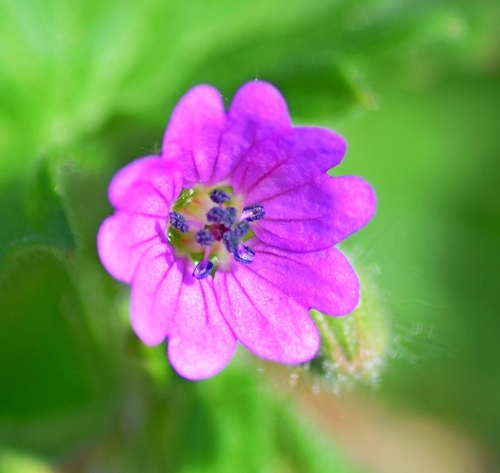
Family Member (c) Kostas Zontanos, some rights reserved (CC BY), uploaded by Kostas Zontanos · cc-by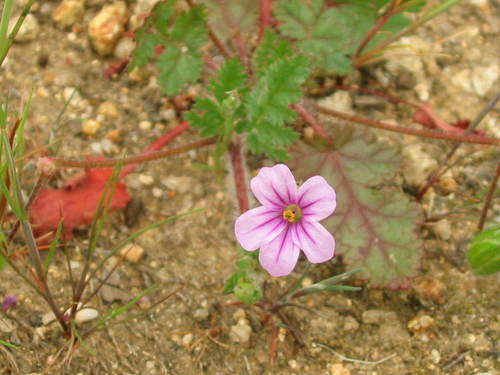
Close Relative (c) Patricio Novoa Quezada, some rights reserved (CC BY) · cc-by
Help improve the field guideSomething wrong?
Checking your Fauna account…Report a name, category, or profile issue for review.