
Reptile · GBIF taxon 9444471
Ceylon Pit Viper
Craspedocephalus trigonocephalusAlso known as Sri Lankan Pit Viper, Sri Lankan Green Pitviper, Pala Polonga
Ceylon pit vipers are striking arboreal snakes identifiable by their bright green bodies, black-patterned heads, and prehensile tails used to anchor onto branches. Active primarily at night, they hunt using thermal loreal pits located between their eyes and nostrils to detect warm-blooded prey in total darkness. Endemic to Sri Lanka, these rainforest dwellers play a vital ecological role controlling small rodent and amphibian populations.
VenomousArborealEndemic
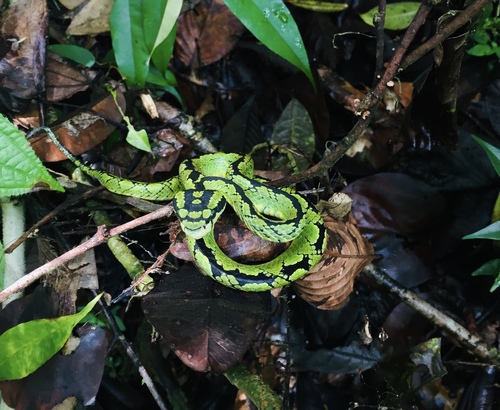
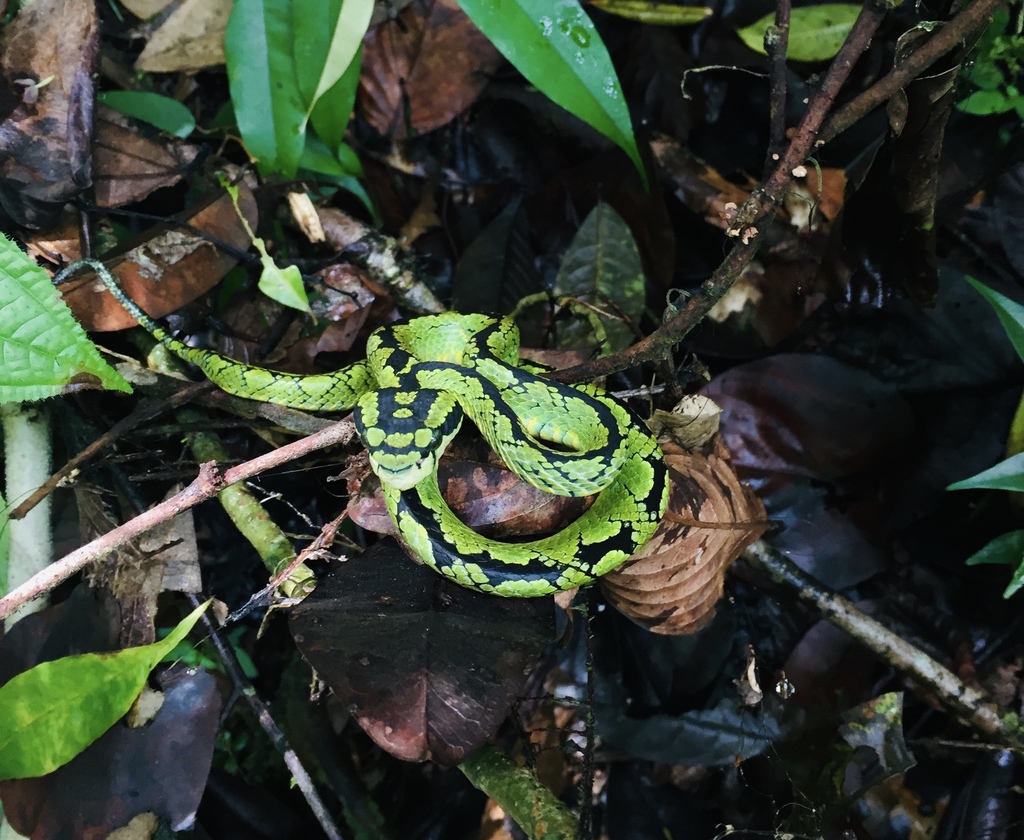
Licensed reference(c) klukoff, some rights reserved (CC BY) · cc-by
—observations
—countries
—peak records
Least ConcernConservation statusIUCN Red List categoriesLCNTVUENCREWEXLeast ConcernRed List categories, explained →
Diet & prey
- Tree frogs
- Geckos
- Small rodents
Predators
- Crested serpent eagles
- Mongooses
- Peafowl
ThreatsDeforestation, agricultural expansion, and retaliatory killing
HabitatsTropical rainforests, cloud forests, plantations, and rural gardens
Life span10–15 years
Size / weightNot available
Classification
- FamilyViperidae
- SpeciesCraspedocephalus trigonocephalus
Range data is not available yet.
Interaction riskVery high
- Low
- Moderate
- High
- Very high
- Why interaction risk is very high
- Venomous bite causes severe pain and swelling; keep a safe distance at all times.
- Why it is dangerous
- Injects hemotoxic venom via hinged fangs, causing extensive tissue swelling, acute pain, and potential organ complications.
- How to recognize a risky encounter
- Look for a triangular broad head, emerald body with dark net-like patterns, and a yellowish prehensile tail tip.
- What to do
- Never attempt to touch or capture this viper; back away slowly if encountered on trails or foliage.
- What to notice
- Easily recognized by its vibrant green skin, triangular head, and habitat preference for tree limbs.
- Support conservation
- Observe silently without shaking branches or pointing high-powered lights directly into its eyes.
Responsible observation
- Safe Distance: Keep at least two meters away, especially around dense bush and low tree branches.
- Plantation Vigilance: Exercise caution around tea bushes where these camouflaged vipers frequently rest.
- Night Spotting: Look for green reflections on low foliage using a headlamp during nocturnal walks.
 Image unavailable
Frequent Companion Sympatric Venomous Snake 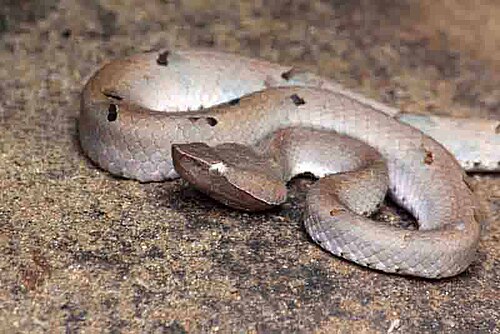
Close Relative Vssekm at en.wikipedia / Public domain · cc0
Help improve the field guideSomething wrong?
Checking your Fauna account…Report a name, category, or profile issue for review.