
Reptile · GBIF taxon 9370234
Malabar Pit Viper
Craspedocephalus malabaricusAlso known as Malabar Rock Pit Viper, Rock Viper
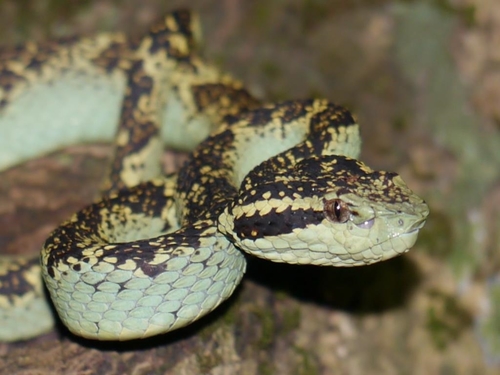
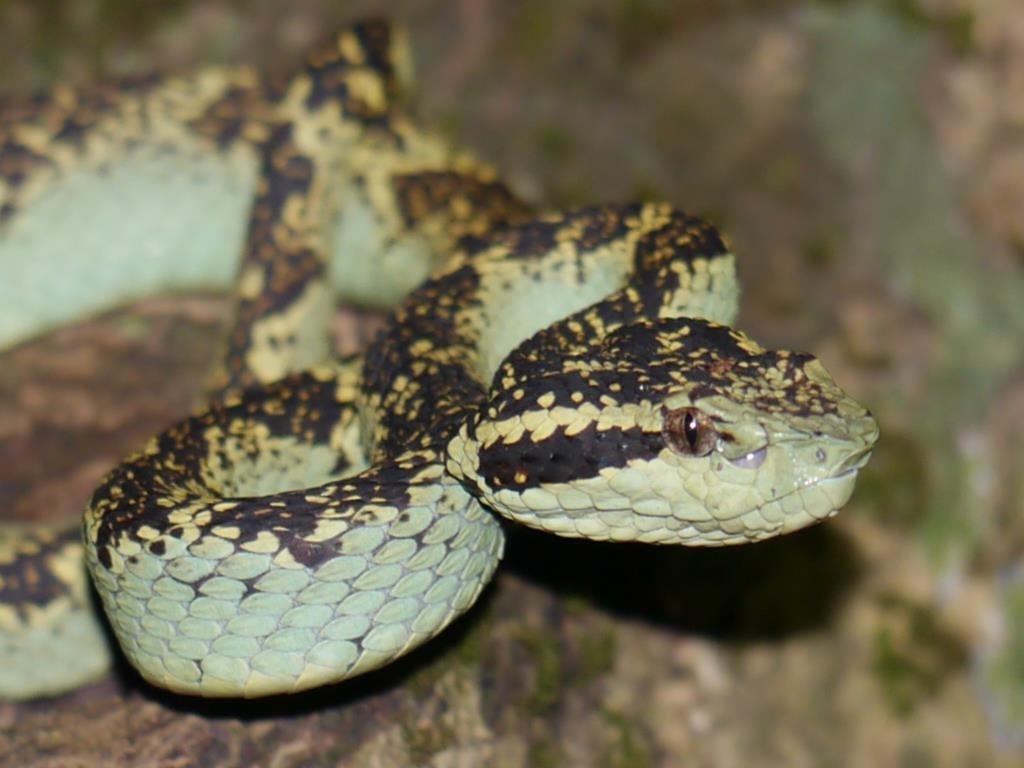
Malabar pit vipers exhibit striking color polymorphism, ranging from vibrant green and yellow to earthy brown, blue, or reddish-orange with dark diamond markings. Endemic to the Western Ghats, these nocturnal ambush predators spend rainy nights perched motionless on low foliage or wet rocks along forest streams. Heat-sensing pit organs located between their nostrils and eyes allow them to strike warm-blooded prey with deadly precision in total darkness.
VenomousNocturnalArboreal
—observations
—countries
—peak records
Least ConcernConservation statusIUCN Red List categoriesLCNTVUENCREWEXLeast ConcernRed List categories, explained →
Diet & prey
- Tree frogs
- Forest geckos
- Small rodents
Predators
- Birds of prey
- Cobras
- Small mammalian carnivores
ThreatsHabitat loss from agricultural expansion, road kill, climate-driven monsoonal shifts
HabitatsMoist evergreen rainforests, riverine vegetation, wet montane forest understory
Life span10–15 years
Size / weightNot available
Classification
- FamilyViperidae
- SpeciesCraspedocephalus malabaricus
Range data is not available yet.
Interaction riskVery high
- Low
- Moderate
- High
- Very high
- Why interaction risk is very high
- Delivers a painful hemotoxic bite; maintain a safe observation distance of at least two meters.
- Why it is dangerous
- Delivers a potent hemotoxic venom that causes severe local swelling, intense pain, tissue necrosis, and systemic blood clotting complications.
- How to recognize a risky encounter
- Look for a distinct triangular head, vertical pupils, heat-sensing pits between the eyes and nostrils, and highly variable blotched coloration.
- What to do
- Freeze immediately if encountered on a trail, then slowly back away without making sudden movements.
- What to notice
- Recognized by its broad triangular head and broad-banded or mottled pattern while perched near monsoon streams in southwestern India.
- Support conservation
- Remain strictly on designated trail paths to avoid crushing hidden microhabitats or disturbing brooding females.
Responsible observation
- Night Spotting: Scan low-hanging branches and streamside boulders with a dim torch during monsoon rains.
- Safe Spacing: Keep a respectful distance of several meters as they can strike quickly if threatened.
- Avoid Touching: Never attempt to handle or poke camouflaged snakes resting along forest trails.
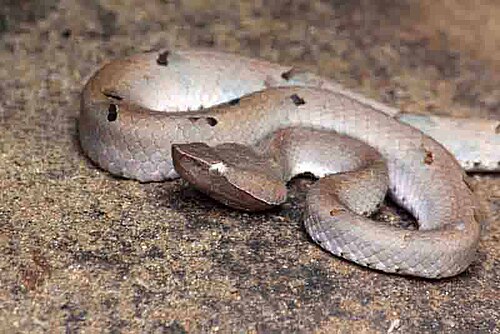
Co-Occurring Viper Vssekm at en.wikipedia / Public domain · cc0 Image unavailable
Close Relative Close Relative 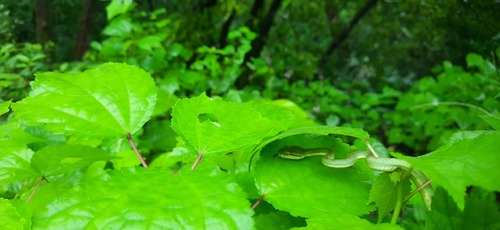
Close Relative (c) Ashwit Shetty, some rights reserved (CC BY) · cc-by
Help improve the field guideSomething wrong?
Checking your Fauna account…Report a name, category, or profile issue for review.