
Reptile
Central American Milksnake
Lampropeltis abnormaAlso known as Guatemalan Milk Snake, Guatemalan Milksnake, Central American Milk Snake
Central American milksnakes are secretive, smooth-scaled constrictors celebrated for their brilliant tricolor banding that mimics venomous coral snakes. Primarily active during twilight and humid nights, they prowl through tropical forest leaf litter, agricultural edges, and rocky crevices searching for varied vertebrate prey. When threatened, they often flatten their heads, emit musk, and rapidly vibrate their tails against dry leaves to deter would-be predators.
NocturnalSecretiveBatesian Mimic
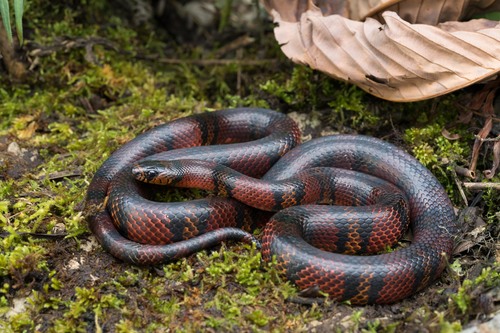
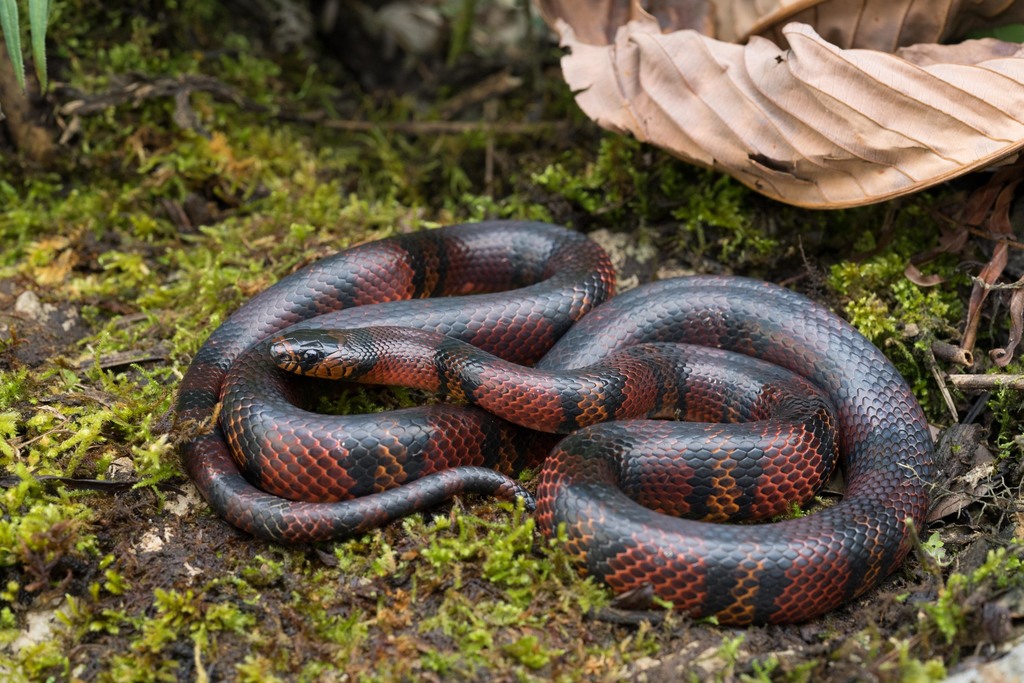
—observations
—countries
—peak records
Least ConcernConservation statusIUCN Red List categoriesLCNTVUENCREWEXLeast ConcernRed List categories, explained →
Diet & preySmall rodents, Lizards, Small snakes
Predators
- Birds of prey
- Carnivorous mammals
- Ophiophagous snakes
ThreatsHabitat fragmentation, agricultural conversion, and persecution due to resemblance to venomous coral snakes
HabitatsTropical rainforests, cloud forests, pine-oak woodlands, and pasture edges
Life span12–20 years
Classification
- FamilyColubridae
- SpeciesLampropeltis abnorma
Range data is not available yet.
Interaction riskLow
- Low
- Moderate
- High
- Very high
- Why interaction risk is low
- Non-venomous and docile, but capable of delivering a small defensive bite if grabbed.
- Why it is dangerous
- Possesses sharp, backward-curved teeth capable of puncturing skin when restrained, though completely lacking venom.
- How to recognize a risky encounter
- Banded in red, black, and white or cream, where red bands are bordered directly by black rather than yellow.
- What to do
- Observe from a respectful distance without attempting capture, and never handle wild banded snakes.
Responsible observation
- Field Observation: Watch forest floor leaf litter and rotten logs along humid trails at dusk or after warm rains.
- Identification Precaution: Never handle banded tricolor snakes in the wild, as venomous coral snakes share similar patterns.
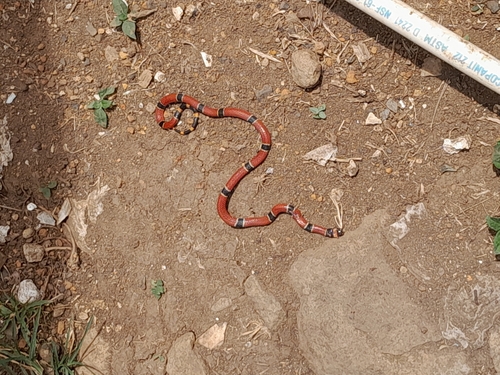
Model (c) Evely Lopez, some rights reserved (CC BY) · cc-by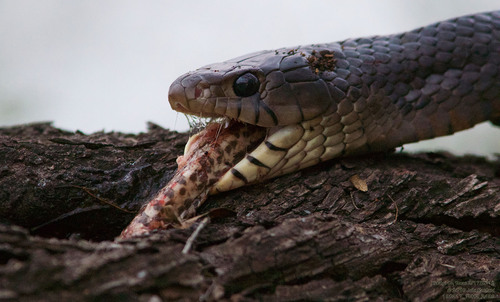
Predator (c) John Rosford, some rights reserved (CC BY) · cc-by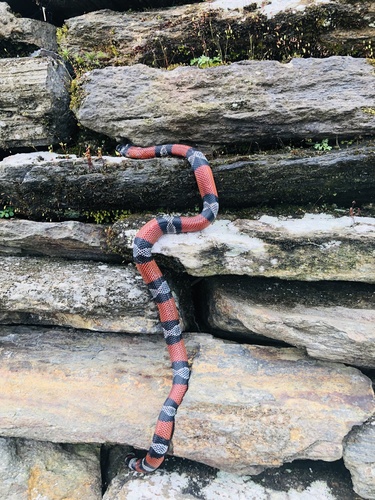
Close Relative no rights reserved · cc0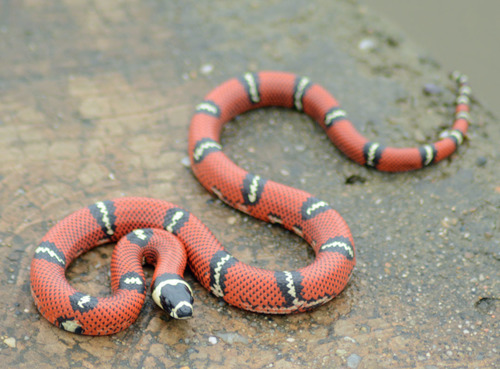
Close Relative (c) Gonzalo Zepeda Martínez, some rights reserved (CC BY-SA), uploaded by Gonzalo Zepeda Martínez · cc-by-sa
Help improve the field guideSomething wrong?
Checking your Fauna account…Report a name, category, or profile issue for review.