Also known as Southern Stingaree, American Whipray
Southern stingrays glide gracefully across shallow coastal sand flats and coral reefs, often burying themselves in the substrate until only their watchful eyes remain visible. Using special electroreceptors in their snouts, they detect the faint nervous impulses of buried crabs, worms, and small fish, which they churn up with hydraulic jets of water. Females gather in large numbers at specific aggregation sites during mating season, where courting males follow them closely in synchronized swimming displays.
Possesses a venomous tail barb used in self-defense; shuffle feet while walking in sand to avoid stepping on them.
Why it is dangerous
Extending from the base of the tail is a serrated spine coated in venomous mucus, which causes immediate severe pain, tissue damage, and potential infection if punctured.
How to recognize a risky encounter
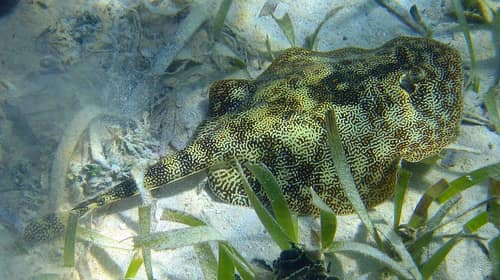
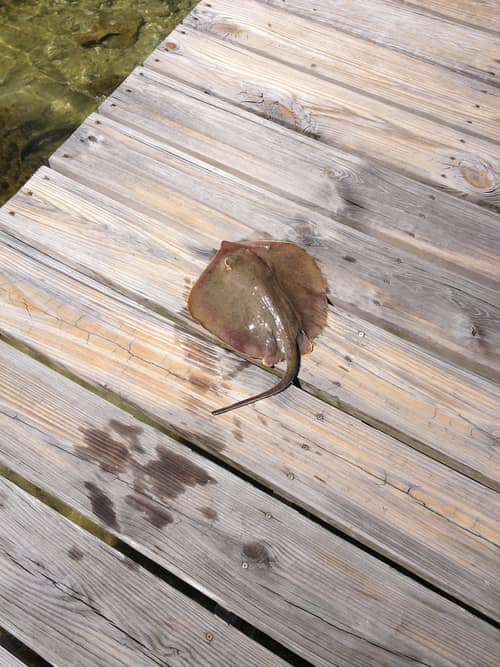
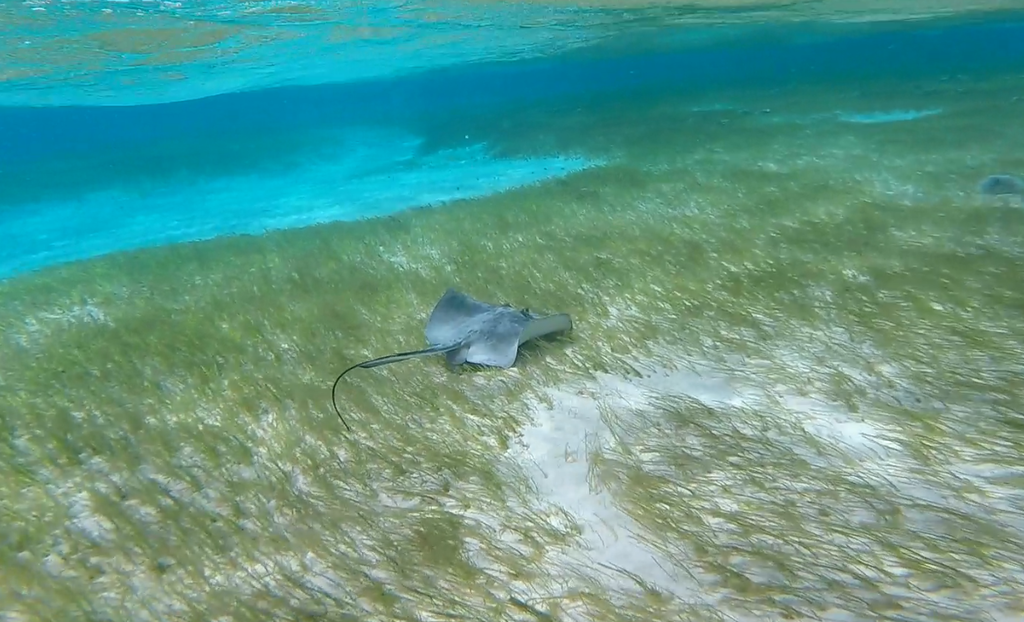
Look for a flat, diamond-shaped disc buried in sand with prominent dorsal eyes and a long whip-like tail.
What to do
Never step directly on or reach toward a resting ray; shuffle feet in shallow water and back away slowly if one approaches.
What to notice
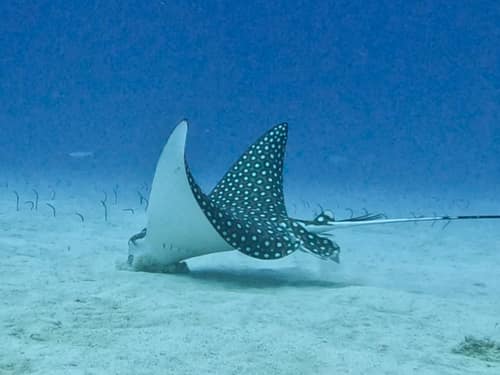
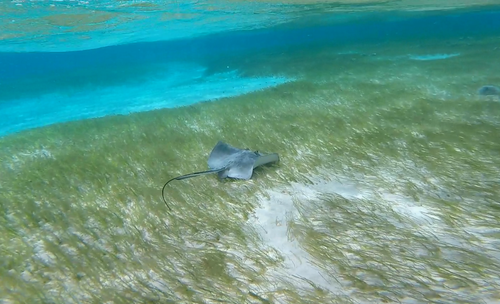
Identified by broad pectoral fins forming a diamond shape with angular side corners and dark olive or grey tone.
Support conservation
Give wild aggregations plenty of space and participate only in responsible wildlife tourism encounters.
Responsible observation
The Stingray Shuffle: Shuffle your feet along the sandy bottom when wading to alert buried rays of your presence.
Maintain Distance: Observe these gentle bottom-dwellers calmly from above without reaching out or touching their backs.
Snorkeling Etiquette: Avoid swimming directly over a resting ray, as this can trigger a defensive flee response.

 1 / 7
1 / 7