
Reptile · GBIF taxon 9265273
Hispaniolan Boa
Chilabothrus striatusAlso known as Hispaniolan Striped Boa, Fischer's Tree Boa, Striated Boa, Hispaniola Boa
Hispaniolan boas are adaptable arboreal constrictors that navigate tropical forests, scrublands, and farmland across Hispaniola. Young snakes spend their nights hunting anole lizards high in the canopy, shifting toward birds and rodents as they grow into large adult hunters. Cryptic mottled brown patterns help them blend into tree bark, where they remain coiled in hollows or thick vegetation throughout the day.
EndemicNocturnalConstrictor
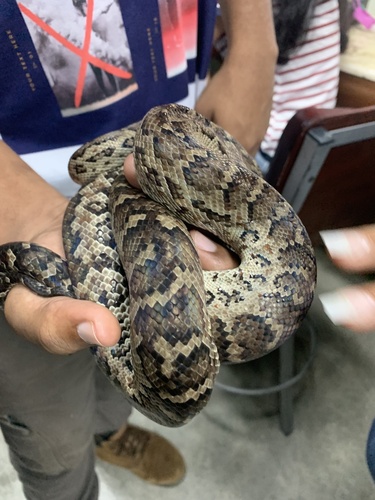
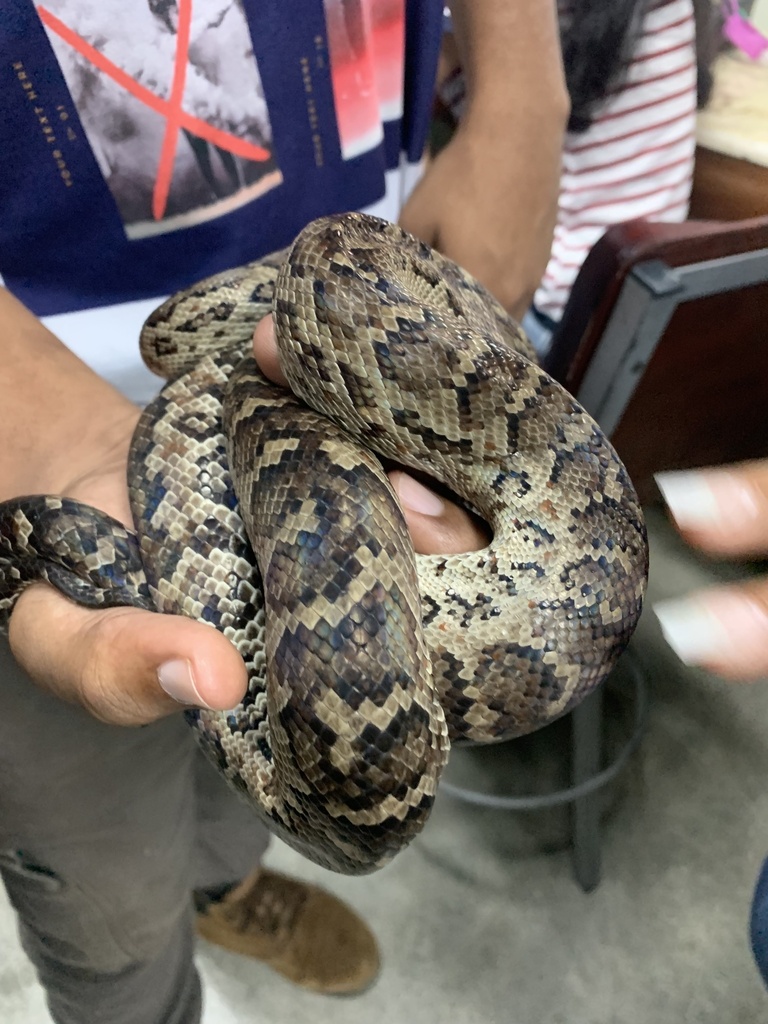
—observations
—countries
—peak records
Least ConcernConservation statusIUCN Red List categoriesLCNTVUENCREWEXLeast ConcernRed List categories, explained →
Diet & prey
- Anolis Lizards
- Rodents
- Roosting Birds
Predators
- Hispaniolan Hawk
- Feral Cats
- Small Indian Mongoose
ThreatsHabitat clearance, human persecution, international pet trade, invasive mongoose predation
HabitatsTropical moist forests, dry scrublands, agricultural fields, degraded woodlands
Life span15–20 years
Size / weightNot available
Classification
- FamilyBoidae
- SpeciesChilabothrus striatus
Range data is not available yet.
Interaction riskLow
- Low
- Moderate
- High
- Very high
- Why interaction risk is low
- Non-venomous, but large individuals may bite defensively if cornered or restrained; observe from a respectful distance.
- Why it is dangerous
- Delivers a sharp, painful defensive bite with numerous recurved teeth that can tear skin and cause minor bacterial infections.
- How to recognize a risky encounter
- Look for a slender to moderately robust body with brown to grayish scales marked by dark irregular blotches or longitudinal stripes.
- What to do
- Do not attempt to touch or capture wild individuals; maintain a minimum distance of two meters.
- What to notice
- Recognized by its brownish patterned body and frequent nighttime presence in trees, shrubs, or fence lines.
- Support conservation
- Keep location data general when logging observations online to shield wild populations from illegal trade collectors.
Responsible observation
- Night Surveys: Scan lower tree branches, agricultural fences, and scrub at night using a flashlight.
- Maintain Distance: Avoid handling wild individuals, as they will strike and bite defensively if cornered.
- Respect Shelter: Leave hollow logs and rock crevices undisturbed, as these serve as daytime refuges.
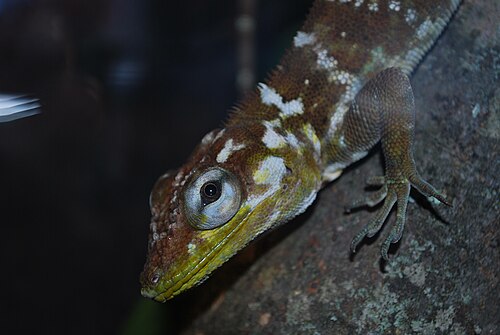
Prey Chris Faulkner / CC BY 2.0 · cc-by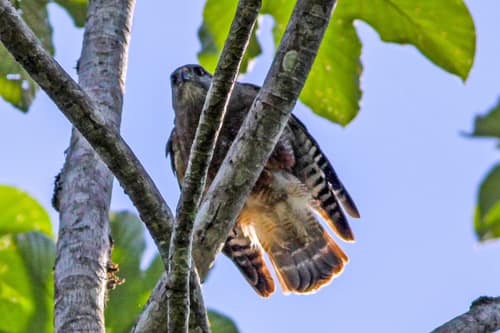
Predator (c) Ron Knight, some rights reserved (CC BY) · cc-by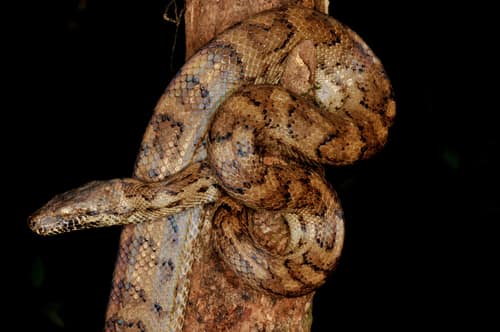
Close Relative (c) Tom Kennedy, some rights reserved (CC BY), uploaded by Tom Kennedy · cc-by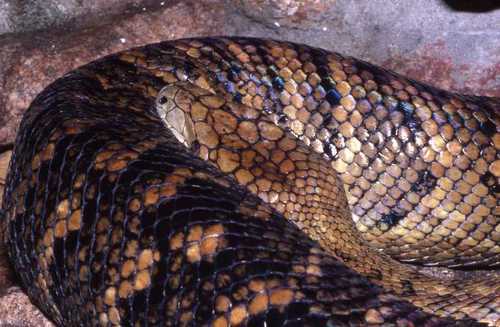
Close Relative (c) 2012 Simon J. Tonge, some rights reserved (CC BY) · cc-by
Help improve the field guideSomething wrong?
Checking your Fauna account…Report a name, category, or profile issue for review.