
Reptile · GBIF taxon 9228211
False Map Turtle
Graptemys pseudogeographicaAlso known as Mississippi Map Turtle, Sawback Turtle
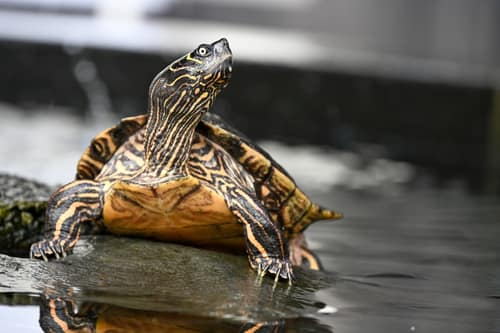
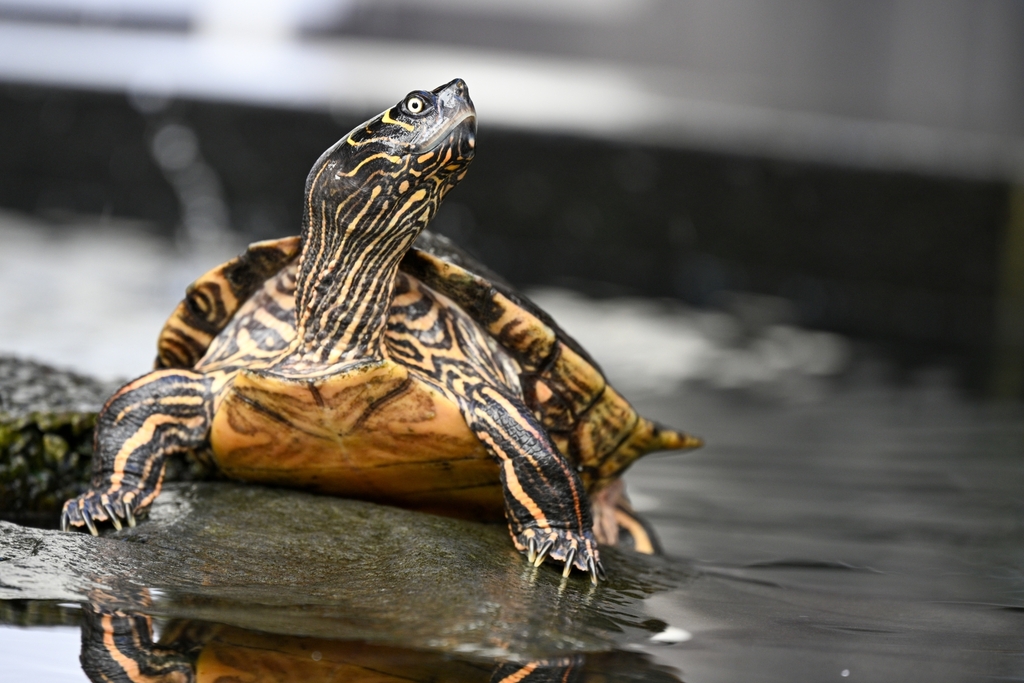
False map turtles derive their name from the intricate yellow lines across their dark carapaces, resembling contour lines on a topographical map. Females grow significantly larger than males, using their broad, crushing jaws to feed on snails and freshwater mussels along major river channels. Highly vigilant baskers, entire groups will plunge into the safety of deep water at the slightest sound of an approaching boat.
AquaticReptileBasker
 1 / 7
1 / 7—observations
—countries
—peak records
Least ConcernConservation statusIUCN Red List categoriesLCNTVUENCREWEXLeast ConcernRed List categories, explained →
Diet & prey
- Freshwater Mussels
- Aquatic Insects
- Aquatic Vegetation
Predators
- Raccoons
- Striped Skunks
- Large Fish
ThreatsHabitat alteration, river channelization, nest predation, and boat propeller strikes
HabitatsLarge rivers, lakes, oxbows, reservoirs, and sloughs with ample basking logs
Life span30–50 years
Classification
- FamilyEmydidae
- SpeciesGraptemys pseudogeographica
Range data is not available yet.
Interaction riskLow
- Low
- Moderate
- High
- Very high
- Why interaction risk is low
- May bite or scratch if cornered or handled; observe quietly from a distance.
Responsible observation
- Use Long Lenses: False map turtles are extremely skittish and dive off logs when approached.
- Check Eye Markings: Look for a yellow stripe behind the eye that curves down toward the neck.
- Scan River Logs: Search partially submerged timber along sunny, quiet river bends.
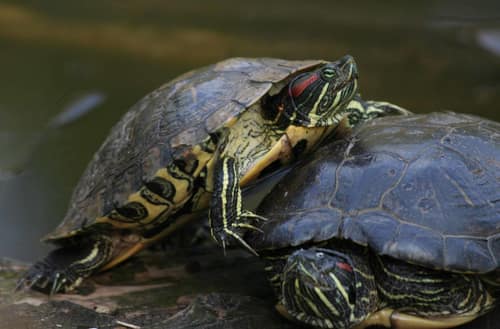
Frequent Companion (c) Laurent Lebois ©, some rights reserved (CC BY) · cc-by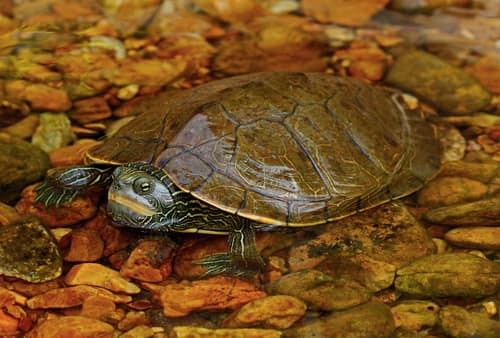
Close Relative (c) Peter Paplanus, some rights reserved (CC BY) · cc-by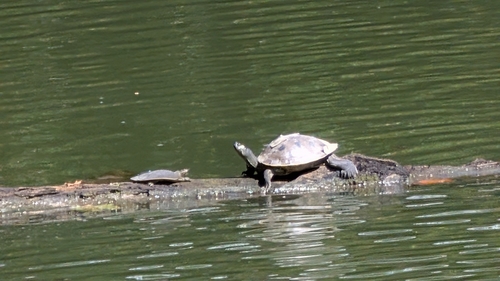
Close Relative (c) Peyton Phelps, some rights reserved (CC BY) · cc-by
Help improve the field guideSomething wrong?
Checking your Fauna account…Report a name, category, or profile issue for review.