
Insect
Blister Beetle
Mylabris pustulataAlso known as Orange Blister Beetle, Pustulate Blister Beetle, Red-banded Blister Beetle
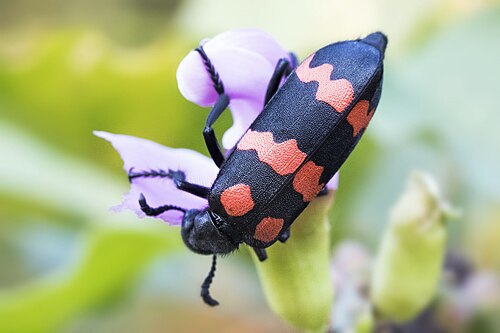
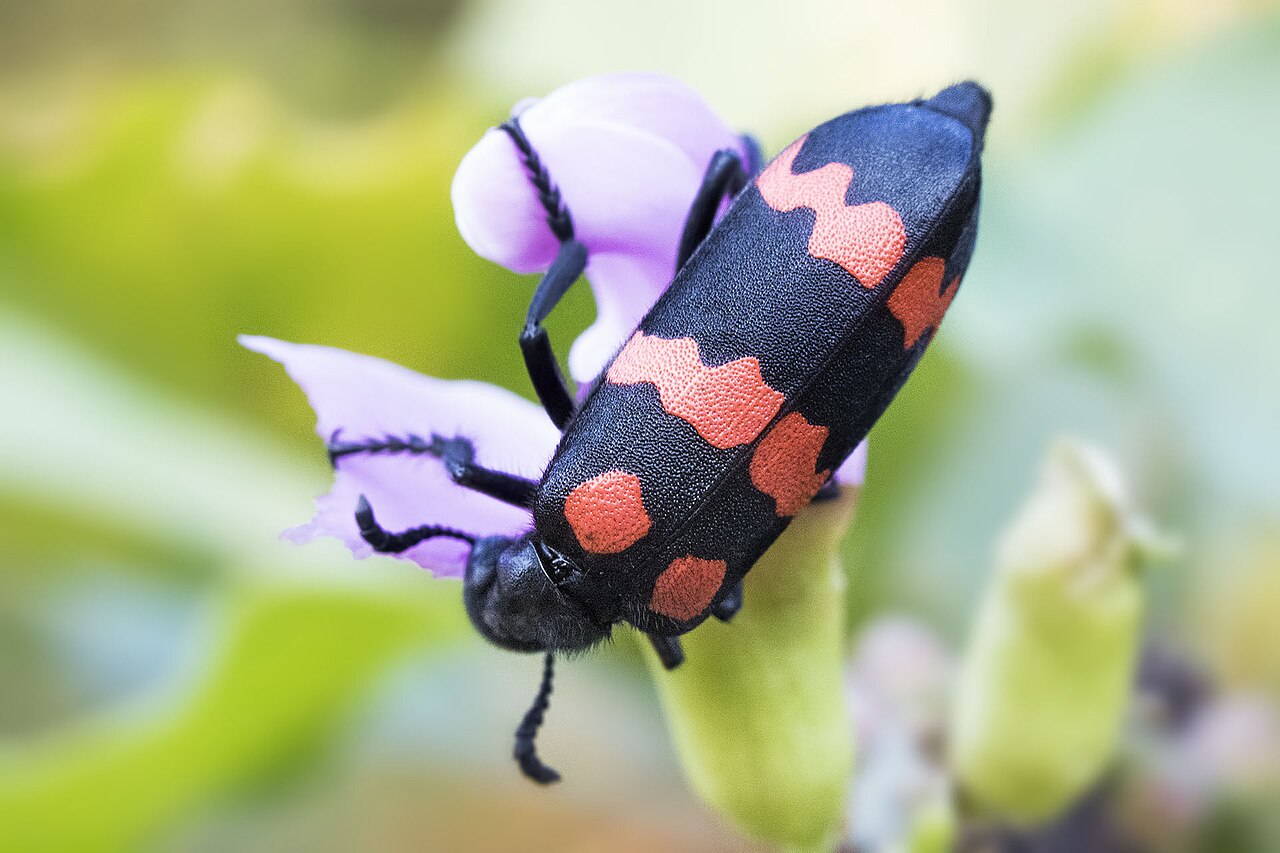
Striking black-and-orange wing covers signal the chemical defense of these insects to potential predators. Adults gather on blossoms to consume pollen and petals, while the highly mobile larvae seek out soil-dwelling grasshopper eggs to feed upon. Contact with stressed beetles triggers the release of cantharidin, a potent fluid that causes painful skin blisters within hours.
Warning ColorsBlisteringAgricultural Pest
—observations
—countries
—peak records
Not EvaluatedConservation statusIUCN Red List categoriesLCNTVUENCREWEXNot Evaluated — not placed on the risk ladderRed List categories, explained →
Diet & preyGrasshopper egg pods, Flower petals, Pollen
Predators
- Toads
- Lizards
- Birds
ThreatsPesticide application and habitat clearance
HabitatsAgricultural fields, grasslands, scrublands, and gardens
Life span1–2 years
Classification
- FamilyMeloidae
- SpeciesMylabris pustulata
Range data is not available yet.
Interaction riskHigh
- Low
- Moderate
- High
- Very high
- Why interaction risk is high
- Secretes cantharidin which causes painful skin blisters; avoid handling and never ingest.
- Why it is dangerous
- Produces cantharidin, a toxic chemical defense that causes severe skin blistering on contact and severe internal damage if swallowed.
- How to recognize a risky encounter
- Look for bold black wing covers patterned with broad red or bright orange bands and spots.
- What to do
- Observe from a safe distance and never brush crushed beetles off bare skin with bare hands.
Responsible observation
- Observation: Watch adults feeding on flowers from a short distance without touching them.
- Handling Caution: Never crush or pinch these beetles against exposed skin.
- Crop Protection: Wear thick gloves if removing them manually from garden foliage.
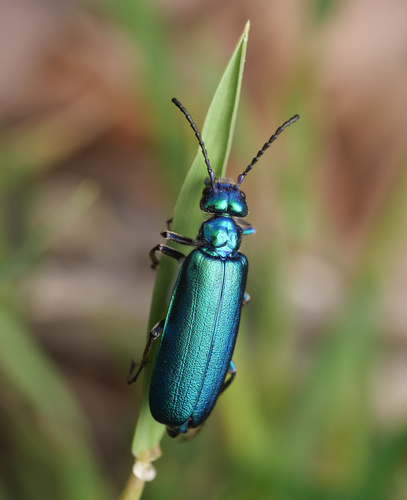
Close Relative no rights reserved, uploaded by Philipp Hoenle · cc0 Image unavailable
Close Relative 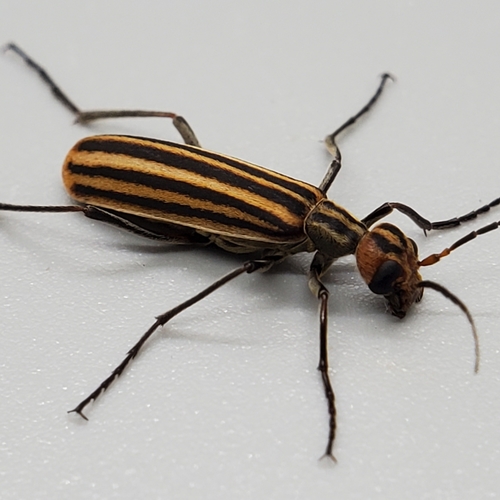
Close Relative (c) Will Kuhn, some rights reserved (CC BY), uploaded by Will Kuhn · cc-by
Help improve the field guideSomething wrong?
Checking your Fauna account…Report a name, category, or profile issue for review.