
Amphibian
Ouachita Streambed Salamander
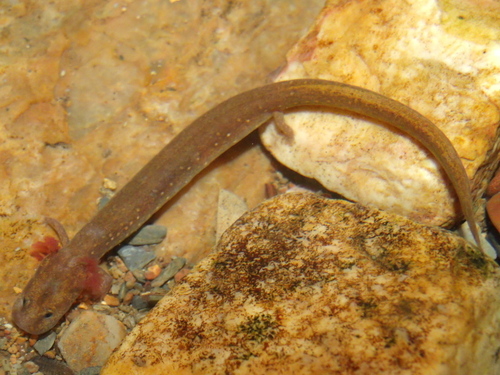
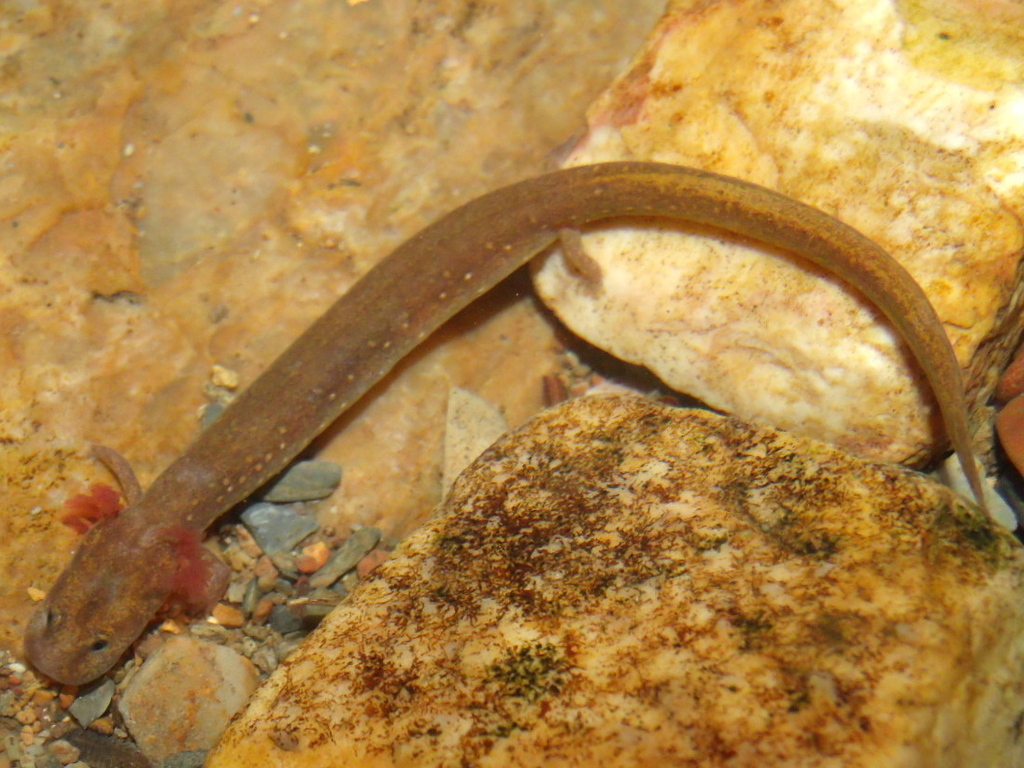
Eurycea subfluvicolaOuachita streambed salamanders spend their entire lives underwater in gravel-bottomed spring runs, retaining external gills and larval traits into adulthood through obligate paedomorphosis. They navigate subterranean fissures and interstitial spaces beneath streambed cobble to forage on aquatic microinvertebrates. Confined to a single creek drainage in Arkansas, this rare amphibian depends entirely on pristine groundwater flows and intact riparian canopy.
AmphibianPaedomorphicAquatic
—observations
—countries
—peak records
Critically EndangeredConservation statusIUCN Red List categoriesLCNTVUENCREWEXCritically EndangeredRed List categories, explained →
Diet & preyChironomid larvae, Amphipods, Copepods
Predators
- Crayfish
- Spring salamanders
- Fish
ThreatsGroundwater contamination, siltation, recreational disturbance, and extreme localized range
HabitatsSpring-fed gravel streams and subterranean interstitial waters
Life span5–10 years
Classification
- FamilyPlethodontidae
- SpeciesEurycea subfluvicola
Range data is not available yet.
Interaction riskLow
- Low
- Moderate
- High
- Very high
- Why interaction risk is low
- Safe to observe at a normal distance.
- What to notice
- Look for a slender, pale yellowish-tan aquatic salamander with bushy red gills navigating clear gravelly riffles.
- Support conservation
- Do not capture, handle, or displace gravel where individuals seek shelter.
Responsible observation
- Leave Streambeds Undisturbed: Avoid turning rocks or stirring up silt in fragile spring runs.
- Prevent Contamination: Clean boots thoroughly before entering local watersheds to block pathogens like chytrid fungus.
- Observe from the Bank: Watch quietly from dry shoreline gravel to prevent crushing submerged microhabitats.
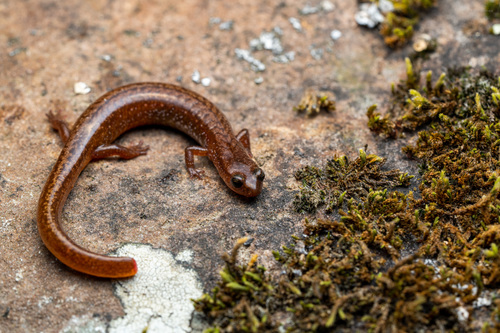
Close Relative (c) evangrimes, some rights reserved (CC BY) · cc-by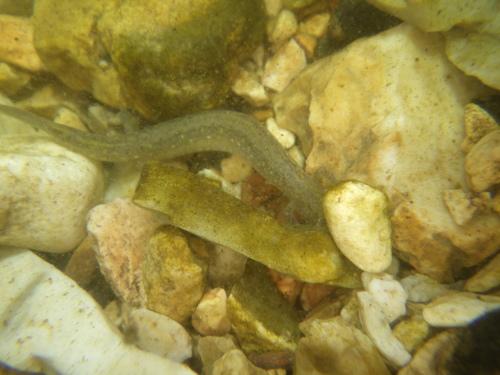
Close Relative (c) David Weisenbeck, some rights reserved (CC BY) · cc-by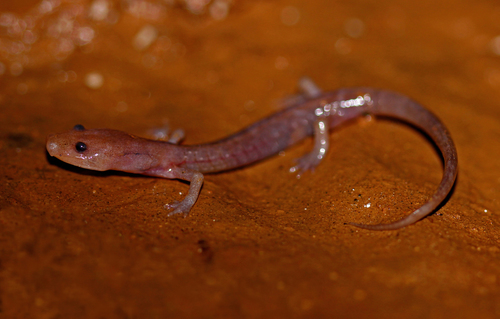
Close Relative (c) Peter Paplanus, some rights reserved (CC BY) · cc-by
Help improve the field guideSomething wrong?
Checking your Fauna account…Report a name, category, or profile issue for review.