
Bird · GBIF taxon 9149595
Downy Woodpecker
Dryobates pubescensDowny woodpeckers navigate tree trunks and slender branches with remarkable agility, using stiff tail feathers for support while probing bark crevices for hidden insects. During winter, they regularly join mixed foraging flocks alongside chickadees and nuthatches, benefiting from safety in numbers. Males display a small bright red patch on the back of the head, setting them apart from females.
Forest BirdCavity NesterInsectivore
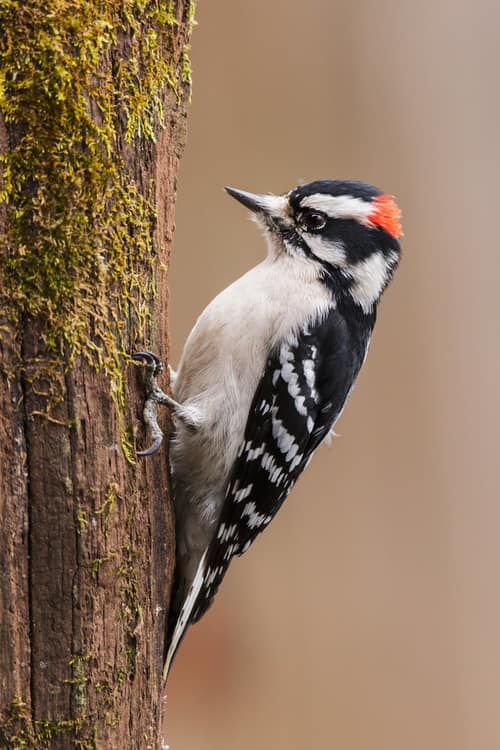
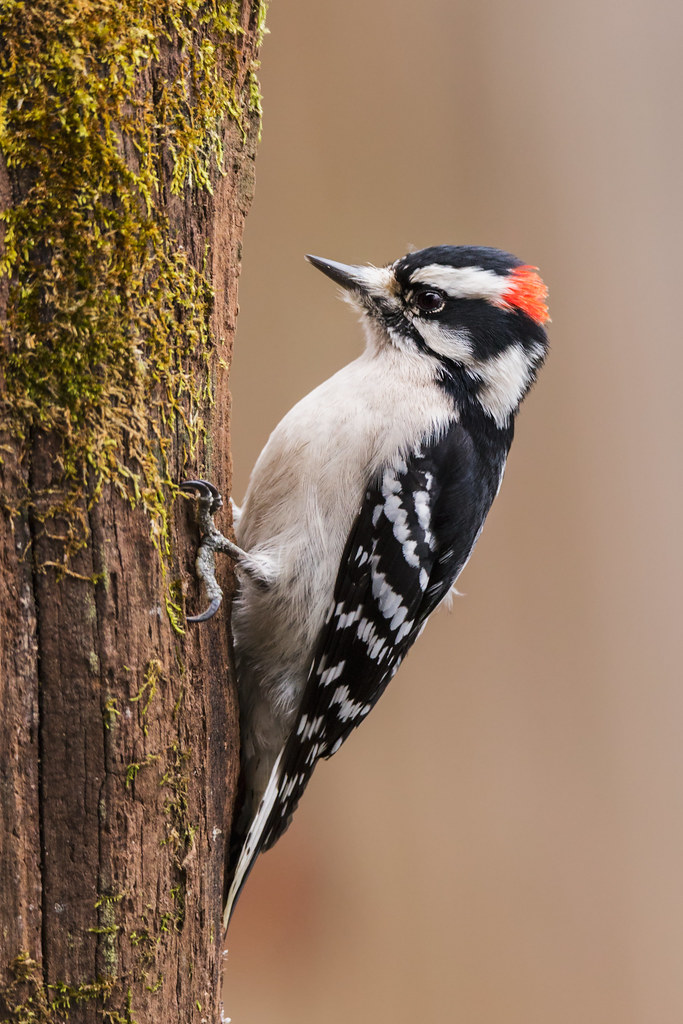
—observations
—countries
—peak records
Least ConcernConservation statusIUCN Red List categoriesLCNTVUENCREWEXLeast ConcernRed List categories, explained →
Diet & prey
- Beetle Larvae
- Ants
- Caterpillars
Predators
- Hawks
- Owls
- Domestic Cats
ThreatsSnag removal, habitat clearing, window strikes, domestic cats
HabitatsDeciduous forests, mixed woodlands, orchards, parks, suburban yards
Life span3–5 years
Size / weightNot available
Classification
- OrderPiciformes
- FamilyPicidae
- GenusDryobates
- SpeciesDryobates pubescens
Range data is not available yet.
Interaction riskLow
- Low
- Moderate
- High
- Very high
- Why interaction risk is low
- Safe to observe at a normal distance.
Responsible observation
- Feeder Setup: Offer suet blocks or black oil sunflower seeds during winter months to attract foraging pairs.
- Cavity Trees: Retain dead standing trees and snags in yard areas to provide vital nesting habitat.
- Identification Tip: Measure bill length against head width to distinguish it from the larger hairy woodpecker.
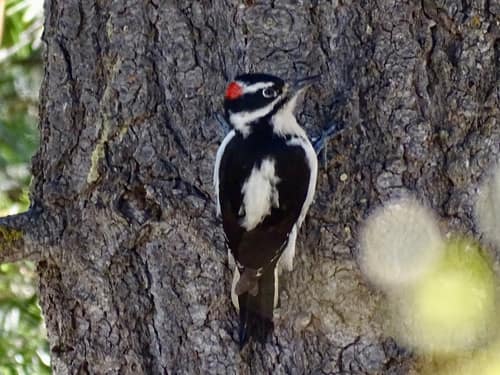
Look-Alike (c) CK2AZ, some rights reserved (CC BY), uploaded by CK2AZ · cc-by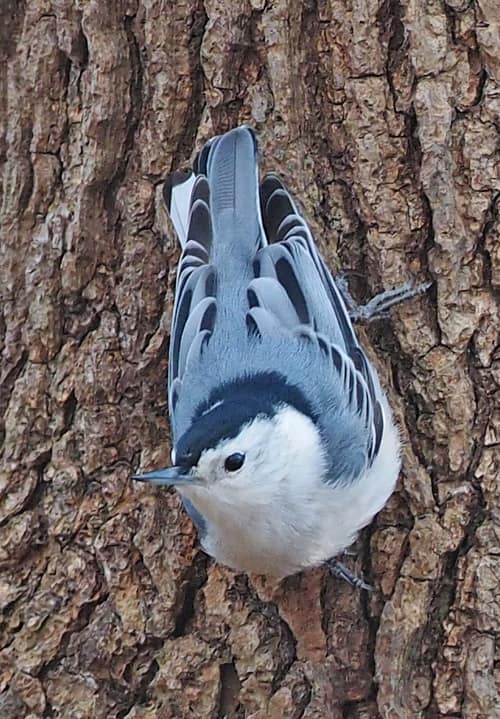
Frequent Companion (c) Judy Gallagher, some rights reserved (CC BY) · cc-by
Competitor "Red bellied Woodpecker" by Manjith Kainickara *manjithkaini.net* is licensed under CC BY-SA 2.0. To view a copy of this license, visit https://creativecommons.org/licenses/by-sa/2.0/. · cc-by-sa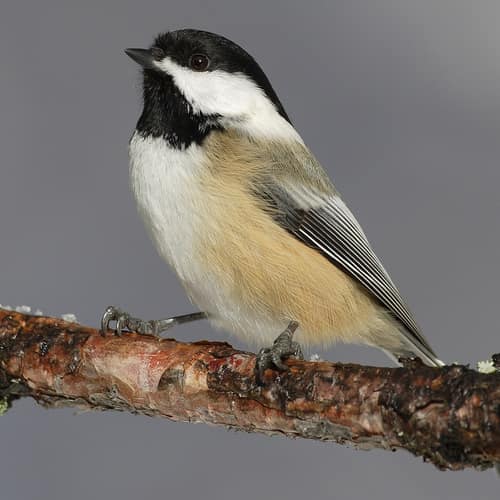
Flock Mate No machine-readable author provided. Mdf assumed (based on copyright claims). / CC BY-SA 3.0 · cc-by-sa
Keep collecting in Fauna
Found in Collections
Ecosystem chain Pro
Secret Garden
Downy Woodpecker is found in this collection. Identify it in Fauna to fill this slot and continue your progress.
Unlock to track progress
Help improve the field guideSomething wrong?
Checking your Fauna account…Report a name, category, or profile issue for review.