
Reptile · GBIF taxon 9142689
Rock Rattlesnake
Crotalus lepidusAlso known as Banded Rock Rattlesnake, Mottled Rock Rattlesnake, Blue Rattlesnake
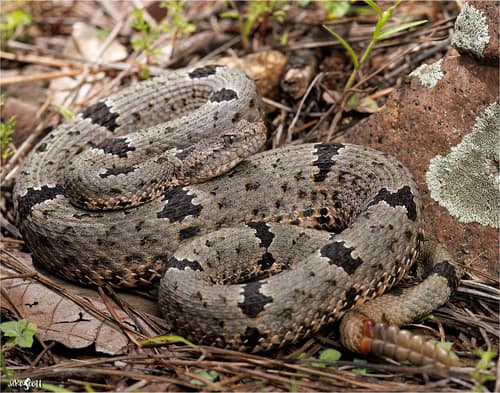
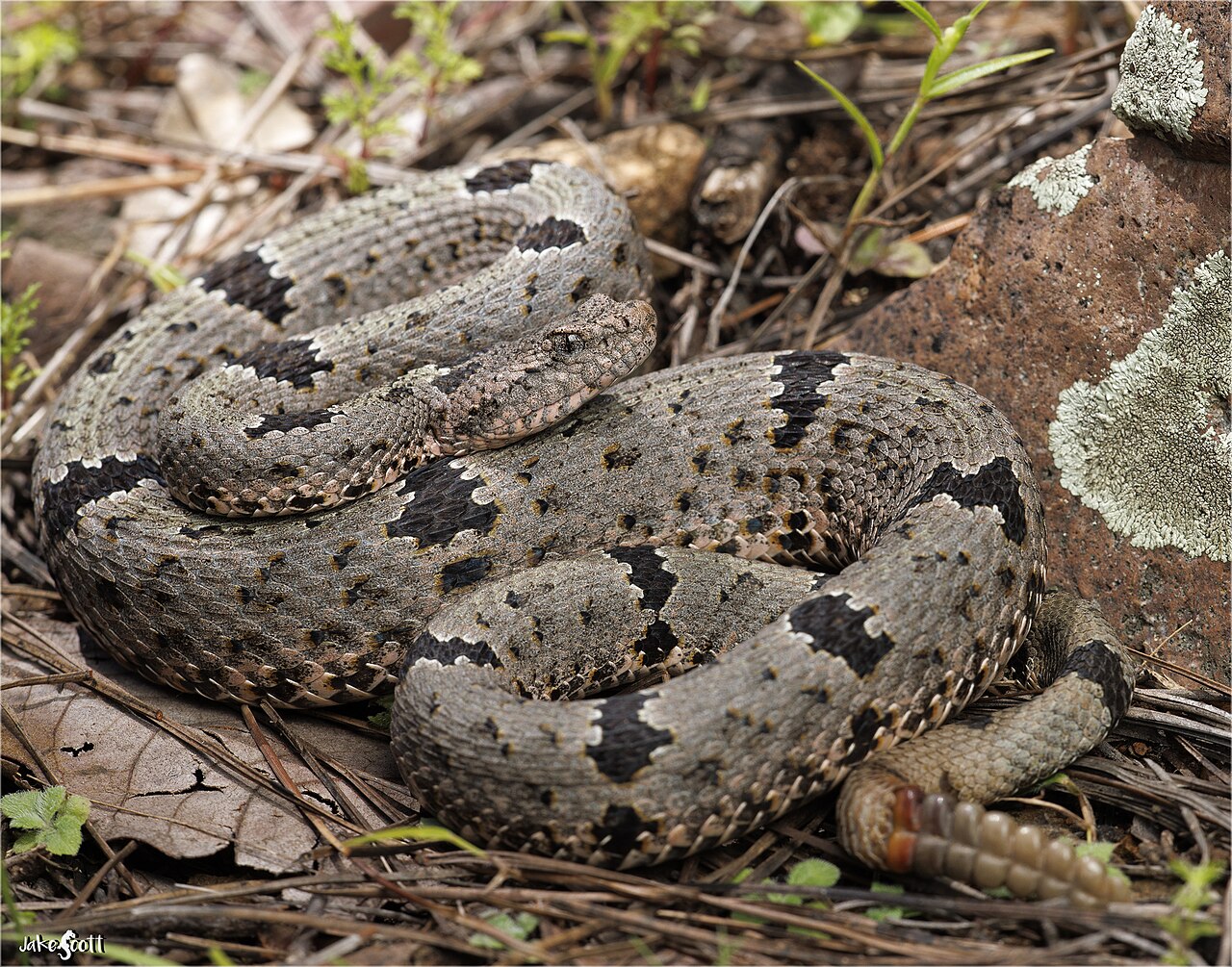
Rock rattlesnakes rely on remarkable crypsis, matching the limestone, granite, and volcanic rock scree of their mountain habitats with shades of slate grey, soft pink, or bluish-green. These small, secretive pit vipers spend warm days sunning near deep rock crevices before hunting lizards and small mammals at dusk. When approached, they often remain motionless, trusting their camouflage over rattling to avoid detection.
VenomousReptileCamouflage
—observations
—countries
—peak records
Least ConcernConservation statusIUCN Red List categoriesLCNTVUENCREWEXLeast ConcernRed List categories, explained →
Diet & prey
- Spiny lizards
- Pocket mice
- Treefrogs
Predators
- Hawks
- Kingsnakes
- Roadrunners
ThreatsIllegal collecting, habitat loss, and road mortality
HabitatsRocky slopes, talus fields, canyons, and pine-oak woodlands
Life span15–20 years
Size / weightNot available
Classification
- FamilyViperidae
- SpeciesCrotalus lepidus
Range data is not available yet.
Interaction riskVery high
- Low
- Moderate
- High
- Very high
- Why interaction risk is very high
- Potently venomous pit viper; maintain a distance of at least two meters and never handle.
- Why it is dangerous
- Injects potent hemotoxic venom that destroys tissue and causes severe swelling, pain, and potential systemic damage.
- How to recognize a risky encounter
- Look for a small grey, bluish, or pinkish snake with distinct dark crossbands and a rattle.
- What to do
- Never touch or corner; back away slowly and allow the snake a clear escape route.
Responsible observation
- Watch where you place hands: Check rock ledges and deep crevices visually before reaching onto them.
- Give space on trails: Step back slowly if you see or hear a rattlesnake buzzing among rocks.
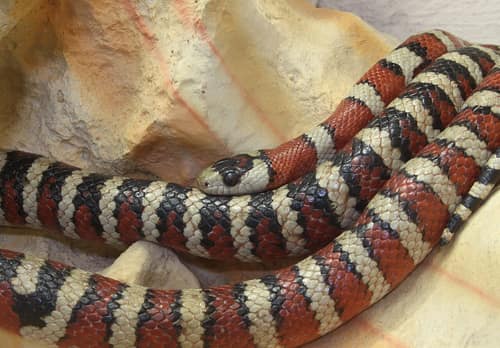
Predator Holger Krisp / CC BY 3.0 · cc-by Image unavailable
Close Relative 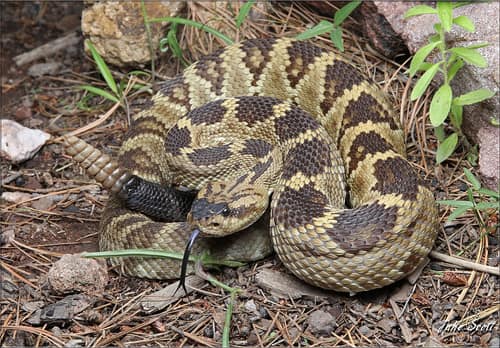
Close Relative Caudatejake / CC BY-SA 4.0 · cc-by-sa
Help improve the field guideSomething wrong?
Checking your Fauna account…Report a name, category, or profile issue for review.