
Reptile
Gaboon Viper
Bitis gabonicaAlso known as Gaboon Adder, Butterfly Adder, Forest Puff Adder
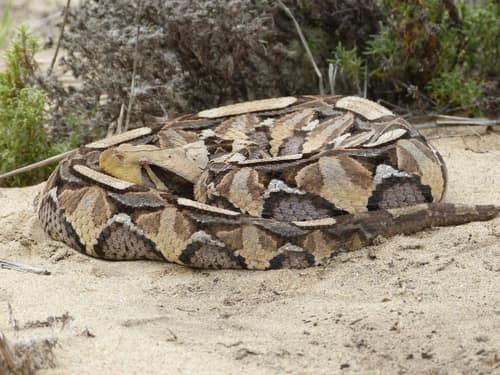
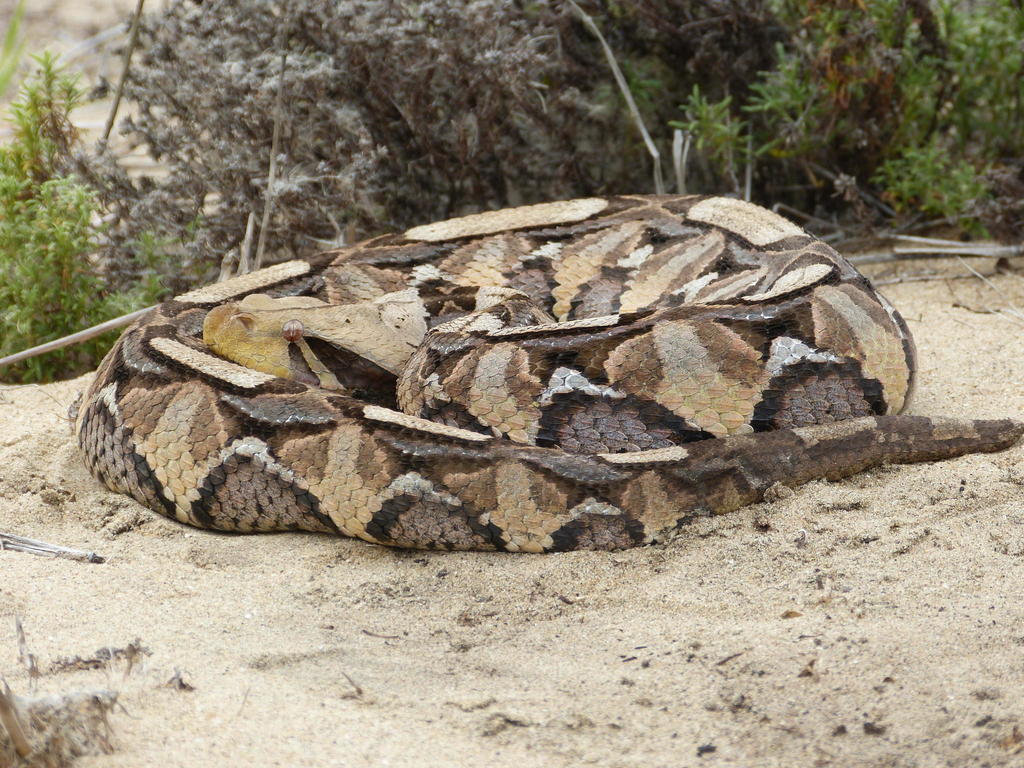
Blending seamlessly into tropical forest leaf litter, Gaboon vipers feature intricate geometric patterns of buff, brown, and purple that render them almost invisible. They remain motionless for days while awaiting passing prey, then deliver a strike of astonishing speed and precision. Equipped with fangs reaching up to five centimeters long and massive venom glands, these heavy-bodied snakes hold prey firmly until their potent venom takes full effect.
VenomousCamouflageAmbush Predator
—observations
—countries
—peak records
VulnerableConservation statusIUCN Red List categoriesLCNTVUENCREWEXVulnerableRed List categories, explained →
Diet & preyRodents, Ground birds, Toads
Predators
- Eagles
- Leopards
- Large monitor lizards
ThreatsDeforestation, habitat fragmentation, human persecution
HabitatsRainforests, humid woodlands, thickets
Life span15–20 years
Classification
- FamilyViperidae
- GenusBitis
- SpeciesBitis gabonica
Range data is not available yet.
Interaction riskVery high
- Low
- Moderate
- High
- Very high
- Why interaction risk is very high
- Possesses massive fangs and high venom yield; observe from a safe distance and never approach.
- Why it is dangerous
- Produces massive volumes of cytotoxic venom delivered through fangs up to 5 cm long, causing severe necrosis, tissue damage, and potential fatality.
- How to recognize a risky encounter
- Distinguished by a broad triangular head, small nose horns, and a striking geometric pattern of tan, purple, and brown that blends into leaf litter.
- What to do
- Never approach or attempt to move this snake, and step back slowly if spotted on the forest floor.
- What to notice
- Recognized by its immense width, heavy-bodied build, and intricate leaf-mimicking camouflage on the forest floor.
- Support conservation
- Maintain a respectful distance and leave leaf litter intact to preserve its microhabitat.
Responsible observation
- Watch Your Step: Scan forest leaf litter carefully before stepping off established trails in rainforest environments.
- Keep Distance: Stay several meters away if spotted, as their strike range is surprisingly long despite a sluggish appearance.
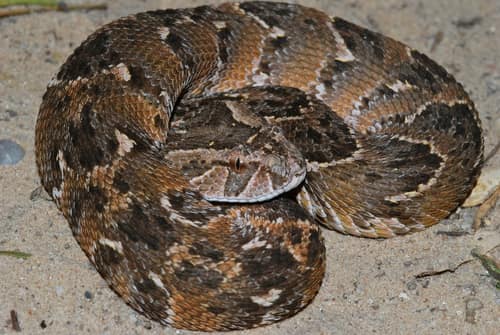
Close Relative (c) Bernard DUPONT, some rights reserved (CC BY-SA) · cc-by-sa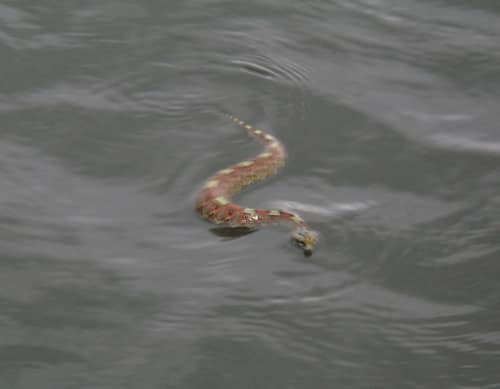
Close Relative (c) Lucy Keith-Diagne, some rights reserved (CC BY) · cc-by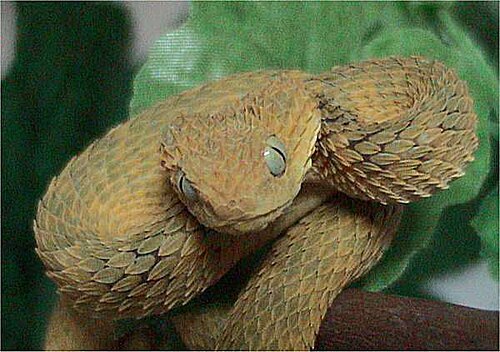
Family Relative LA Dawson / CC BY 2.5 · cc-by
Help improve the field guideSomething wrong?
Checking your Fauna account…Report a name, category, or profile issue for review.