
Mammal · GBIF taxon 9067454
Crash bandicoot
Crash bandicootAlso known as Eastern Barred Bandicoot, Tasmanian Barred Bandicoot, Gunn's Bandicoot
Eastern barred bandicoots are small, solitary marsupials recognizable by the pale, transverse stripes across their hindquarters and their slender, tapered snouts. They emerge at dusk to forage across open grasslands, using their keen sense of smell and sturdy foreclaws to unearth subterranean invertebrates, leaving behind distinctive conical diggings. Once widespread across southeastern Australia and Tasmania, mainland populations now rely heavily on predator-proof reserves and island sanctuaries following intense pressure from introduced carnivores.
MarsupialNocturnalGround-Dwelling


Licensed referenceWikimedia Commons / Public domain · cc0
—observations
—countries
—peak records
VulnerableConservation statusIUCN Red List categoriesLCNTVUENCREWEXVulnerableRed List categories, explained →
Diet & prey
- Beetle Larvae
- Earthworms
- Crickets
Predators
- Red Fox
- Feral Cat
- Barn Owl
ThreatsPredation by red foxes and feral cats, habitat fragmentation, and vehicle collisions
HabitatsNative grasslands, grassy woodlands, pastures, and predator-free island sanctuaries
Life span2–4 years in the wild
Size / weightNot available
Classification
- FamilyPeramelidae
- SpeciesCrash bandicoot
Range data is not available yet.
Interaction riskLow
- Low
- Moderate
- High
- Very high
- Why interaction risk is low
- May scratch or nip if cornered or handled; observe quietly from a respectful distance.
- Why it is dangerous
- Possesses sharp claws adapted for digging and small, pointed teeth that can break skin if restrained.
- How to recognize a risky encounter
- Recognize by the arched back, prominent hindquarter stripes, long snout, and bounding gait.
- What to do
- Do not attempt to touch or catch; allow animals to forage unhindered and keep domestic pets away.
- What to notice
- Identified by three to five pale bars running crosswise over a grey-brown rump, with a white belly and feet.
- Support conservation
- Keep dogs leashed, refrain from using harsh artificial lights, and report sightings to local wildlife authorities.
Responsible observation
- Observation: Scan quiet grassland edges and reserves at dusk using a red-filtered light to minimize disturbance.
- Gardening: Maintain dense native groundcover and avoid rodenticides if living near bandicoot habitat.
- Pet Care: Confine domestic cats indoors and restrain dogs at night to protect foraging bandicoots.
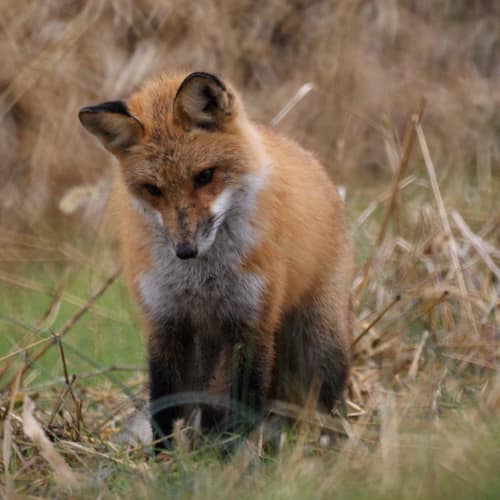
Predator "Red Fox" by Mike's Birds is licensed under CC BY-SA 2.0. To view a copy of this license, visit https://creativecommons.org/licenses/by-sa/2.0/. · cc-by-sa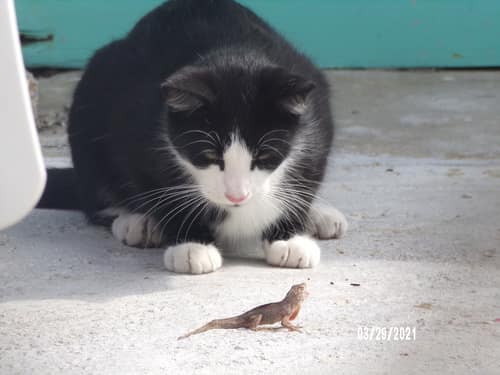
Predator (c) chloe ⋆˚꩜。, some rights reserved (CC BY-SA) · cc-by-sa Image unavailable
Close Relative 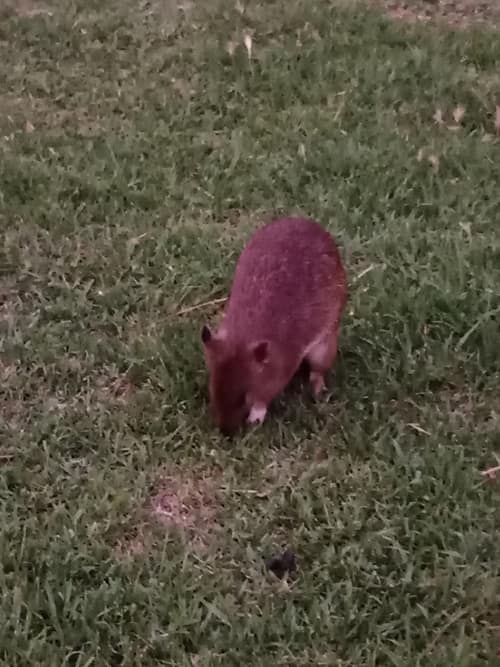
Same Family (c) Patrick Connolly, some rights reserved (CC BY) · cc-by
Help improve the field guideSomething wrong?
Checking your Fauna account…Report a name, category, or profile issue for review.