
Plant
Rawirinui
Kunzea robustaAlso known as Kānuka, White Tea-tree
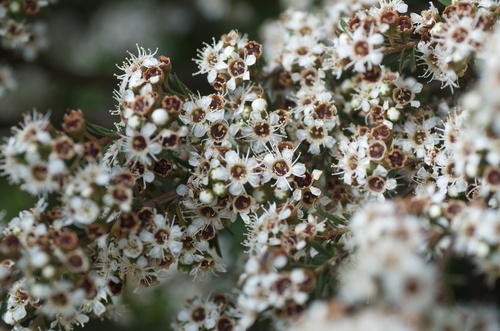
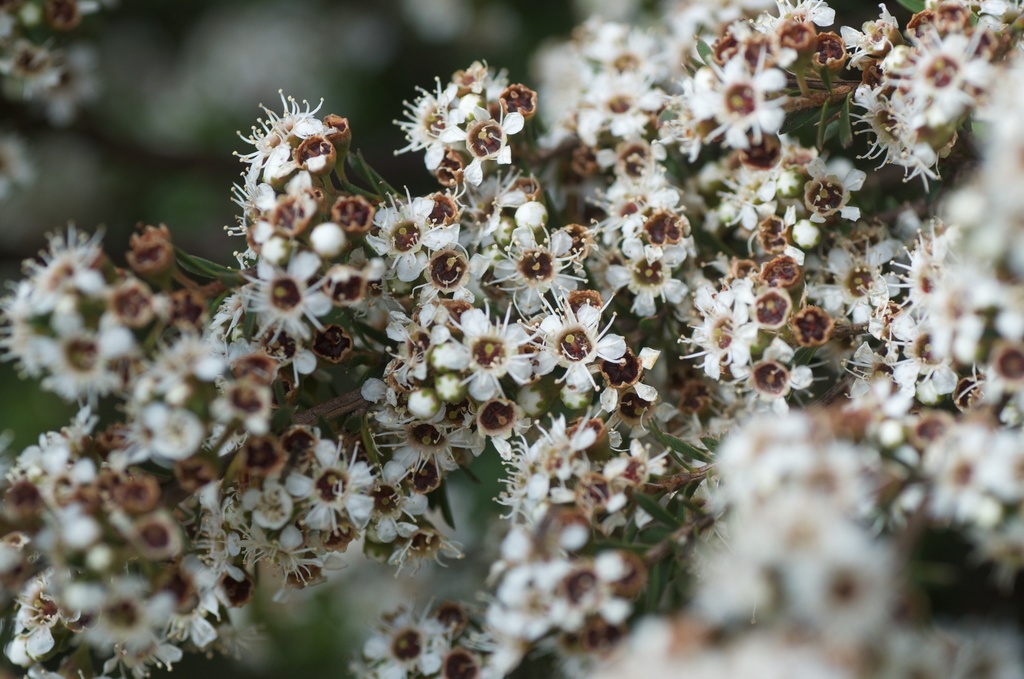
Rawirinui stands as a foundational pioneer tree across New Zealand, rapidly clothing exposed hillsides and nurturing the return of native temperate forest. During the height of summer, entire hillsides turn snowy white under millions of small, fragrant blossoms that produce copious nectar for native birds, geckos, and solitary bees. Over several decades, its light, dappled canopy creates the ideal sheltered understory for slow-growing forest giants like rimu and totara to take root.
Pioneer SpeciesEndemicFragrant
—observations
—countries
—peak records
Least ConcernConservation statusIUCN Red List categoriesLCNTVUENCREWEXLeast ConcernRed List categories, explained →
Diet & preyAutotrophic (Photosynthetic)
Predators
- Common Brushtail Possum (Trichosurus vulpecula)
- Feral Goat (Capra hircus)
- Red Deer (Cervus elaphus)
ThreatsMyrtle rust infection, agricultural clearance, and grazing by non-native mammals
HabitatsRegenerating forest, coastal scrub, lowland shrubland, and river margins
Life span80–150 years
Classification
- FamilyMyrtaceae
- SpeciesKunzea robusta
Range data is not available yet.
Interaction riskLow
- Low
- Moderate
- High
- Very high
- Why interaction risk is low
- Safe to observe at a normal distance.
Responsible observation
- Leaf Texture: Gently rub the soft foliage to release an herbal, resinous aroma distinct from mānuka.
- Bloom Identification: Look for clusters of small white flowers branching from leaf axils rather than solitary blooms.
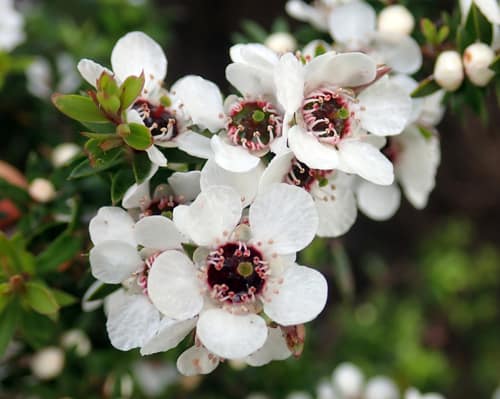
Ecological Partner no rights reserved, uploaded by Peter de Lange · cc0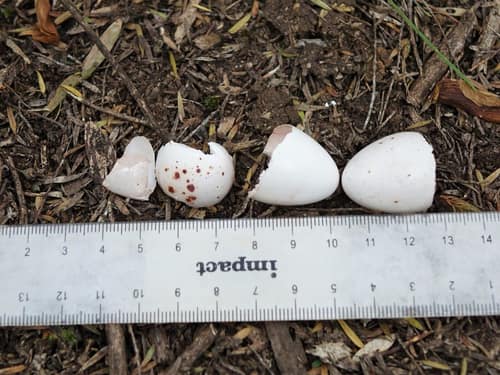
Pollinator (c) Jacqui Geux, some rights reserved (CC BY), uploaded by Jacqui Geux · cc-by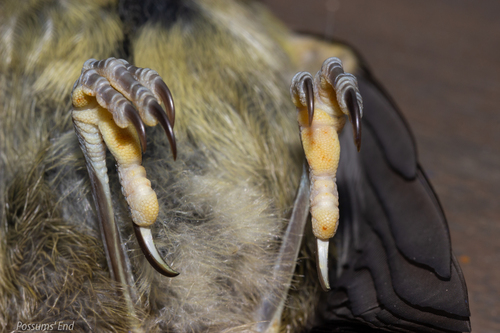
Pollinator (c) Possums' End, some rights reserved (CC BY), uploaded by Possums' End · cc-by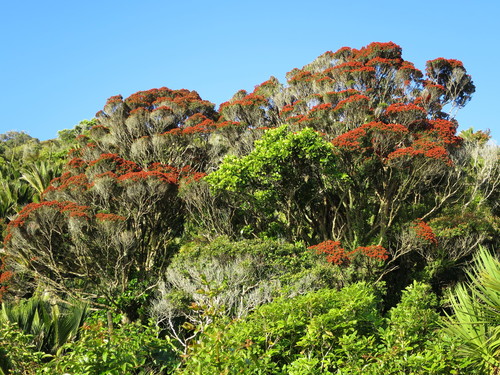
Same Family (c) Alice Shanks, some rights reserved (CC BY), uploaded by Alice Shanks · cc-by
Help improve the field guideSomething wrong?
Checking your Fauna account…Report a name, category, or profile issue for review.