
Reptile
Egyptian Spiny-tailed Lizard
Uromastyx aegyptiaAlso known as Egyptian Mastigure, Dab Lizard, Egyptian Spiny-tailed Agama
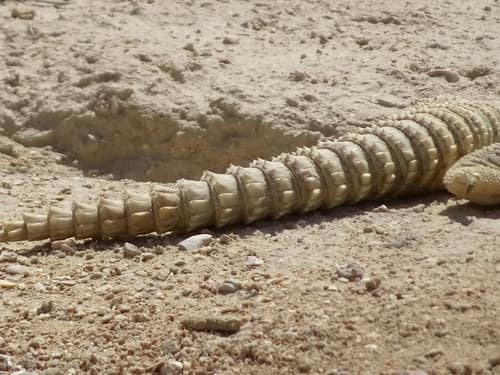
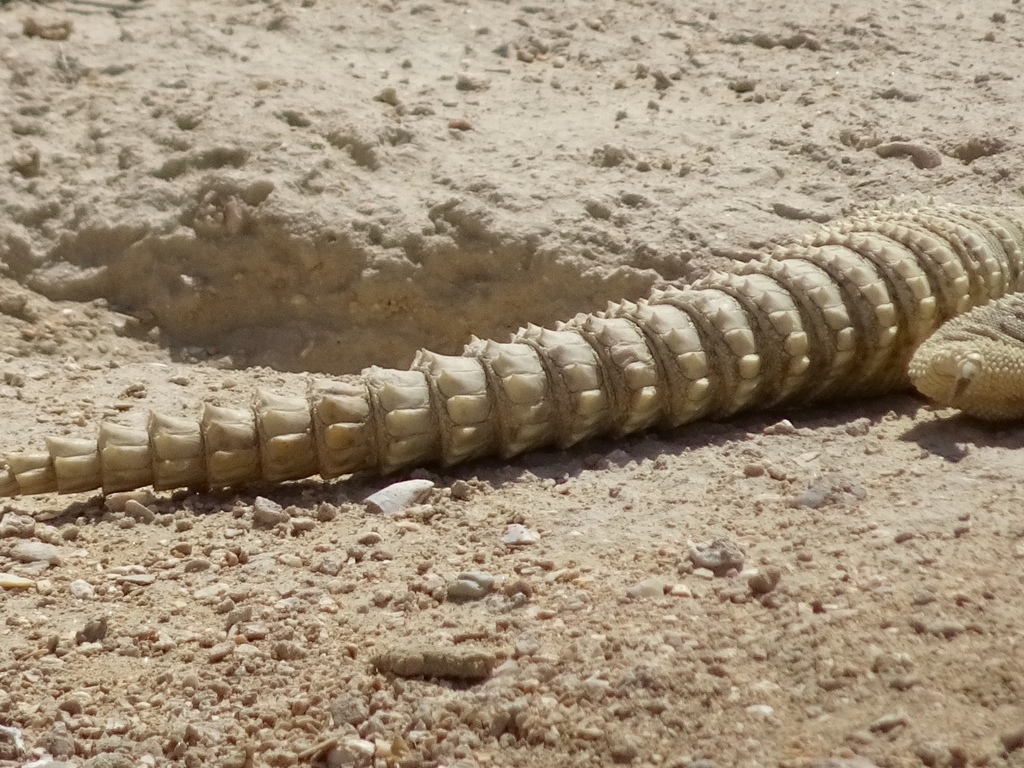
Egyptian spiny-tailed lizards are massive desert reptiles that excavate deep, extensive burrow systems in stony arid plains and gravel deserts. They rely on their heavily spined tails to wedge themselves tightly inside rock crevices or burrows when threatened. Adaptations like changing skin color from dark grey in cool mornings to pale beige in midday heat help them efficiently regulate body temperature across harsh environments.
Desert-DwellingHerbivorousBurrowing
—observations
—countries
—peak records
VulnerableConservation statusIUCN Red List categoriesLCNTVUENCREWEXVulnerableRed List categories, explained →
Diet & preyDesert Grasses, Succulent Leaves, Wild Seeds
Predators
- Desert Monitors
- Golden Eagles
- Desert Foxes
ThreatsHabitat destruction, illegal pet trade collection, and local hunting
HabitatsStony deserts, gravel plains, and rocky plateaus
Life span20–30 years
Classification
- FamilyAgamidae
- SpeciesUromastyx aegyptia
Range data is not available yet.
Interaction riskLow
- Low
- Moderate
- High
- Very high
- Why interaction risk is low
- Delivers powerful tail whips and bites if grabbed; observe peacefully from a distance.
- What to notice
- Recognizable by its massive build, dull greyish-brown skin, and thick tail covered in thorny whorls.
- Support conservation
- Keep a distance of several meters and refrain from disturbing burrow sites or surrounding vegetation.
Responsible observation
- Burrow Awareness: Avoid stepping near burrow entrances to prevent collapsings that trap the lizard.
- Distance Observing: Use binoculars during warm mid-morning hours when lizards emerge to bask.
- No Handling: Never attempt to pull a lizard from its retreat to avoid severe scratches.
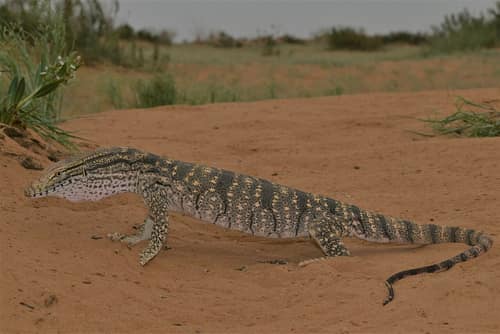
Predator Marius Burger / CC0 · cc0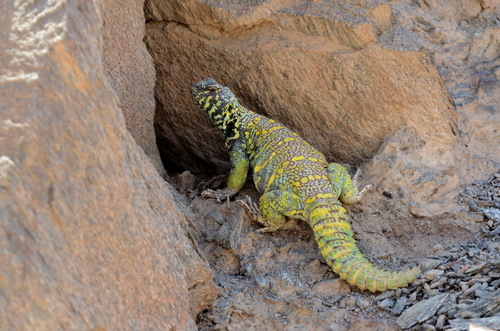
Close Relative (c) עוזי פז, some rights reserved (CC BY) · cc-by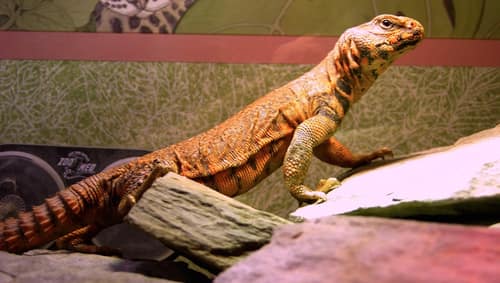
Close Relative (c) Squamata55, some rights reserved (CC BY) · cc-by
Help improve the field guideSomething wrong?
Checking your Fauna account…Report a name, category, or profile issue for review.