
Reptile · GBIF taxon 8945077
Prairie Rattlesnake
Crotalus viridisAlso known as Great Plains Rattlesnake
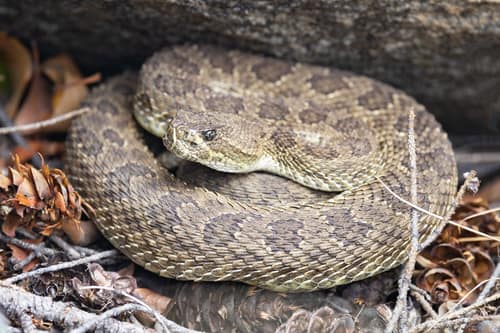
Prairie Rattlesnakes are stout pit vipers patterned with brown blotches on a tan, olive, or greenish background. A heavy body, dark tail rings, and a segmented tail rattle help distinguish adults from a safe distance.
rattlesnakepit vipergrassland

—observations
—countries
—peak records
Least ConcernConservation statusIUCN Red List categoriesLCNTVUENCREWEXLeast ConcernRed List categories, explained →
Diet & prey
- mice
- voles
- ground squirrels
Predators
- hawks
- eagles
- mammalian carnivores
ThreatsDeliberate killing, road mortality, habitat conversion, den disturbance, and collection
HabitatsPrairie, dry grassland, rocky slopes, shrubland, badlands, and burrow-rich open country
Life spanOften fifteen to twenty years, with some individuals surviving longer
Size / weightNot available
Classification
- FamilyViperidae
- SpeciesCrotalus viridis
Range data is not available yet.
Interaction riskVery high
- Low
- Moderate
- High
- Very high
- Why interaction risk is very high
- Venom can cause life-threatening injury; keep far away and treat every suspected bite as an emergency.
- Why it is dangerous
- A bite can inject medically significant venom that damages tissue and disrupts blood and cardiovascular function.
- How to recognize a risky encounter
- Look from far away for a blotched stout body, triangular head, facial pit, and segmented rattle.
- What to do
- Never approach or capture; after a bite call emergency services, stay still, and avoid cutting, suction, ice, or tourniquets.
- What to notice
- Confirm the segmented tail rattle and brown-blotched stout body only from well beyond striking distance.
- Support conservation
- Give the snake room to retreat, never disturb a den, and keep precise den locations private.
Responsible observation
- Respond: Stop, locate the snake visually, and back away slowly without stepping closer.
- Prevent: Watch foot placement near rocks, burrows, tall grass, and warm trail edges.
Help improve the field guideSomething wrong?
Checking your Fauna account…Report a name, category, or profile issue for review.