
Invertebrate · GBIF taxon 8944914
Tuzoia burgessensis
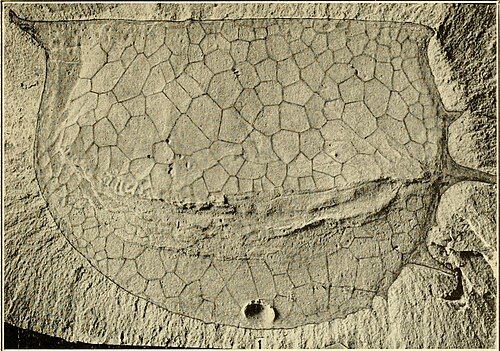
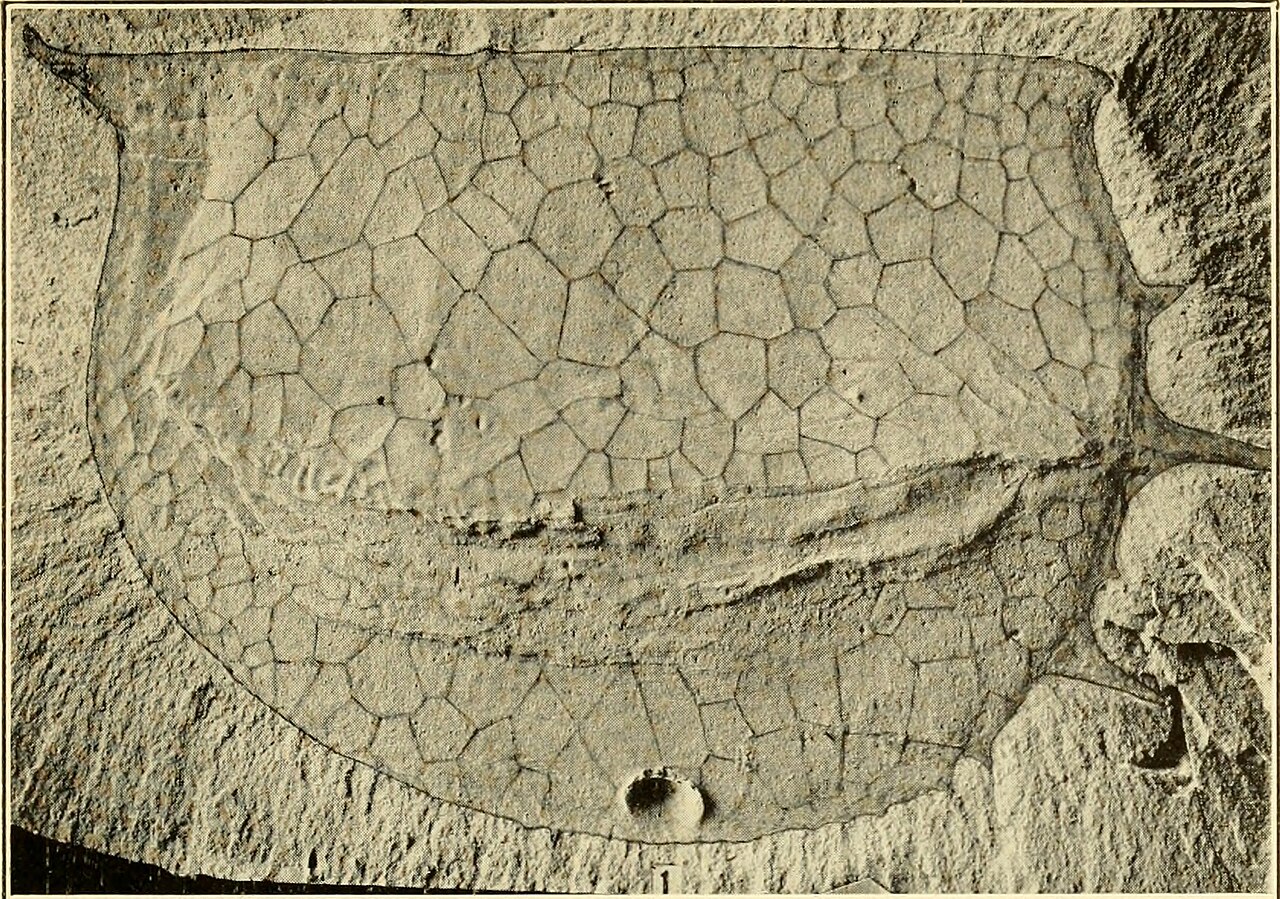
Tuzoia burgessensisTuzoia burgessensis was an enigmatic bivalved arthropod that swam and scavenged across the Cambrian seafloor over 500 million years ago. Its prominent, reticulated carapace shielded soft appendages and stalked eyes while providing hydrodynamic lift as it propelled itself above muddy marine substrates. Known from the fossil-rich deposits of the Burgess Shale, this ancient arthropod played a versatile ecological role as both an active swimmer and benthic predator or scavenger.
FossilPrehistoricMarine
Licensed referenceCharles Elmer Resser / CC0 · cc0
—observations
—countries
—peak records
ExtinctConservation statusIUCN Red List categoriesLCNTVUENCREWEXExtinctRed List categories, explained →
Diet & prey
- Marine worms
- Small soft-bodied invertebrates
- Organic detritus
Predators
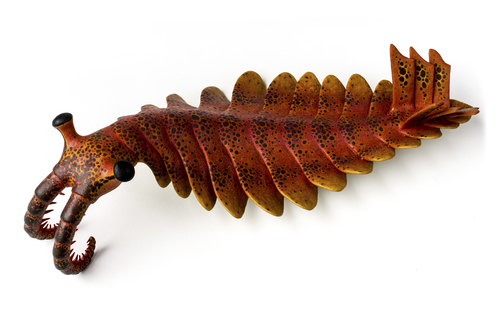
- Anomalocaris canadensis
- Titanokorys gainesi
ThreatsNatural prehistoric extinction
HabitatsCambrian marine waters and benthic seafloors
Life spanUnknown
Classification
- FamilyTuzoiidae
- GenusTuzoia
- SpeciesTuzoia burgessensis
Range data is not available yet.
Interaction riskLow
- Low
- Moderate
- High
- Very high
- Why interaction risk is low
- Extinct fossil species; safe to handle in fossil form.
Responsible observation
- Fossil Viewing: Look for the distinctive mesh-like net pattern preserved on the carapace in museum displays.
- Protected Sites: Observe Burgess Shale fossils in situ only on authorized guided park tours where collecting is prohibited.
Predator (c) anonymous, some rights reserved (CC BY-SA) · cc-by-sa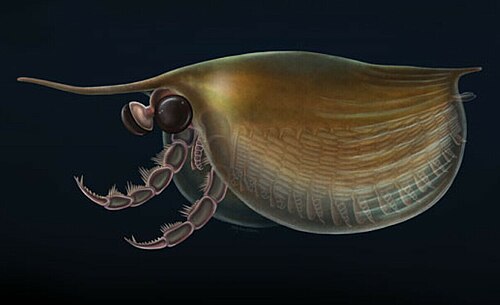
Ecological Neighbor Holly Sullivan (artwork) Caixia Zhang, Yu Liu, Javier Ortega-Hernández, Joanna M. Wolfe, Changfei Jin, Huijuan Mai, Xianguang Hou, Jin Guo and Dayou Zhai (paper) / CC BY 4.0 · cc-by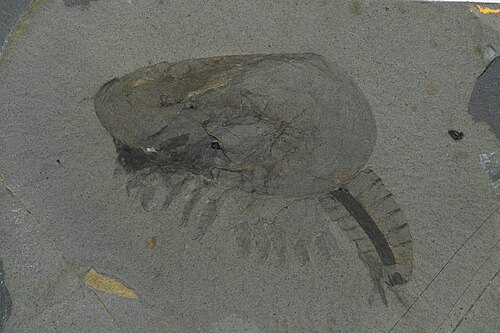
Ecological Neighbor Jean-Bernard Caron / CC0 · cc0
Help improve the field guideSomething wrong?
Checking your Fauna account…Report a name, category, or profile issue for review.