
Fungus · GBIF taxon 8908488
Collared Parachute
Marasmius rotulaAlso known as Pinwheel Mushroom, Little Wheel, Horse Hair Fungus, Pinwheel Marasmius
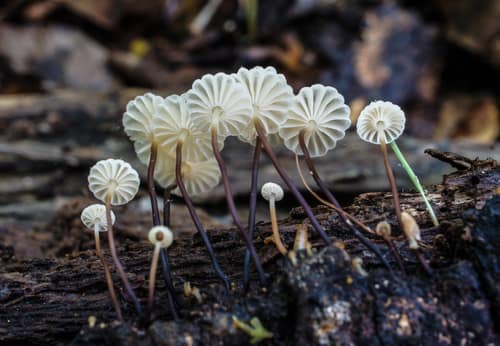
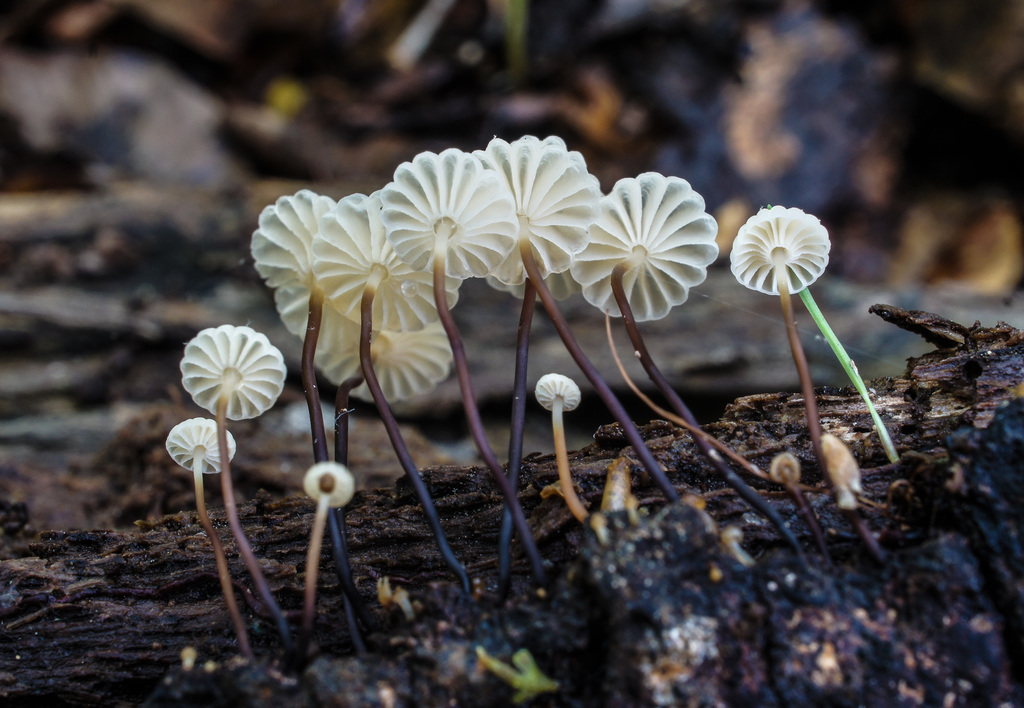
Collared parachutes sprout in dense clusters along decaying hardwood twigs after warm summer rains. Their delicate, paper-white caps feature crisp radial pleats and a unique collar beneath where the gills join around a dark, wiry stem. Capable of shriveling during dry spells and reviving fully after rain, these tiny decomposers play a vital role breaking down leaf litter and forest debris.
SaprophyticWoodlandTiny
 1 / 7
1 / 7—observations
—countries
—peak records
Not EvaluatedConservation statusIUCN Red List categoriesLCNTVUENCREWEXNot Evaluated — not placed on the risk ladderRed List categories, explained →
Diet & prey
- Decomposing wood, twigs, and leaf litter
Predators
- Insects
- Slugs
- Mites
ThreatsDeforestation and intense forest floor clearing
HabitatsDeciduous forests and mixed temperate woodlands
Life spanFruiting bodies last several weeks; mycelium lives indefinitely
Size / weightNot available
Classification
- OrderAgaricales
- FamilyMarasmiaceae
- GenusMarasmius
- SpeciesMarasmius rotula
Range data is not available yet.
Interaction riskLow
- Low
- Moderate
- High
- Very high
- Why interaction risk is low
- Many edible mushrooms have toxic look-alikes; never eat wild fungi based on app identification alone.
Responsible observation
- Look Closely: Scan small fallen hardwood twigs and fallen branches after warm summer rains.
- Check the Stem: Look for the distinctive black, wire-like stem supporting the pleated white cap.
- Observe the Collar: Use a hand lens to view the free collar where gills attach around the stem.
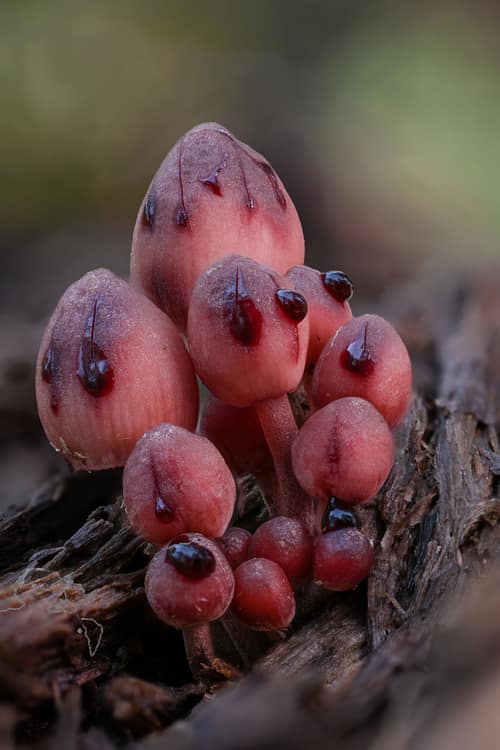
Frequent Companion (c) Alan Rockefeller, some rights reserved (CC BY), uploaded by Alan Rockefeller · cc-by Image unavailable
Similar Species 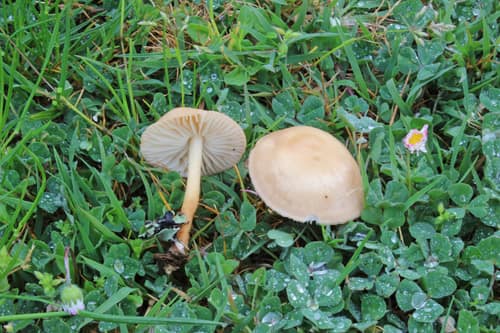
Close Relative (c) Davide Puddu, some rights reserved (CC BY), uploaded by Davide Puddu · cc-by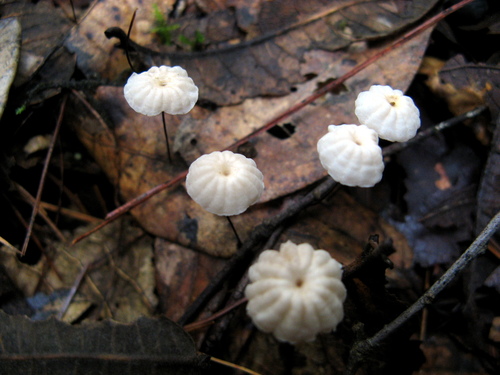
Close Relative (c) Alan Rockefeller, some rights reserved (CC BY), uploaded by Alan Rockefeller · cc-by
Help improve the field guideSomething wrong?
Checking your Fauna account…Report a name, category, or profile issue for review.