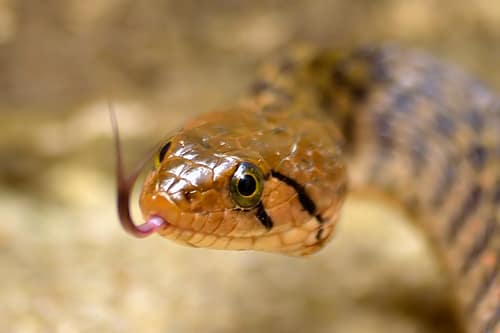
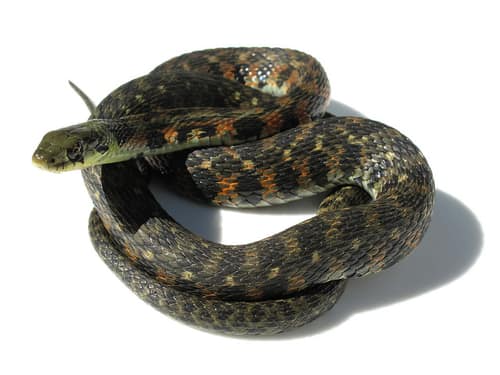
Red-necked keelbacks feature an olive-green body with a striking bright orange or red patch directly behind the head. Uniquely among snakes, they possess both venom glands for biting and special skin glands on the neck that store defensive poisons harvested from eating toxic toads. They are frequently found active during the day near ponds, streams, and flooded rice fields where amphibians are abundant.
Possesses potent rear-fanged venom causing life-threatening blood clotting issues; observe strictly from a distance.
Why it is dangerous
Duvernoy's gland secretions contain potent metalloproteinases that cause severe systemic hemorrhaging and life-threatening disseminated intravascular coagulation.
How to recognize a risky encounter
Look for a bright red or orange collar on the neck contrasted against an olive body with heavily keeled scales and dark checkerboard patterning.
What to do
Back away slowly if encountered near water; never attempt to capture, pin, or handle wild keelbacks.
Responsible observation
Distance First: Maintain at least three meters of distance to ensure safe photography without provoking a response.
Watch Neck Flaring: When threatened, it flattens its neck to display its bright red skin glands as a clear warning sign.
Never Handle: Rear-fanged envenomations usually occur during handling or restraint, so keep hands off completely.

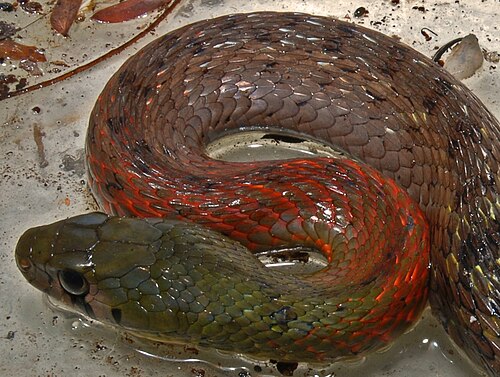
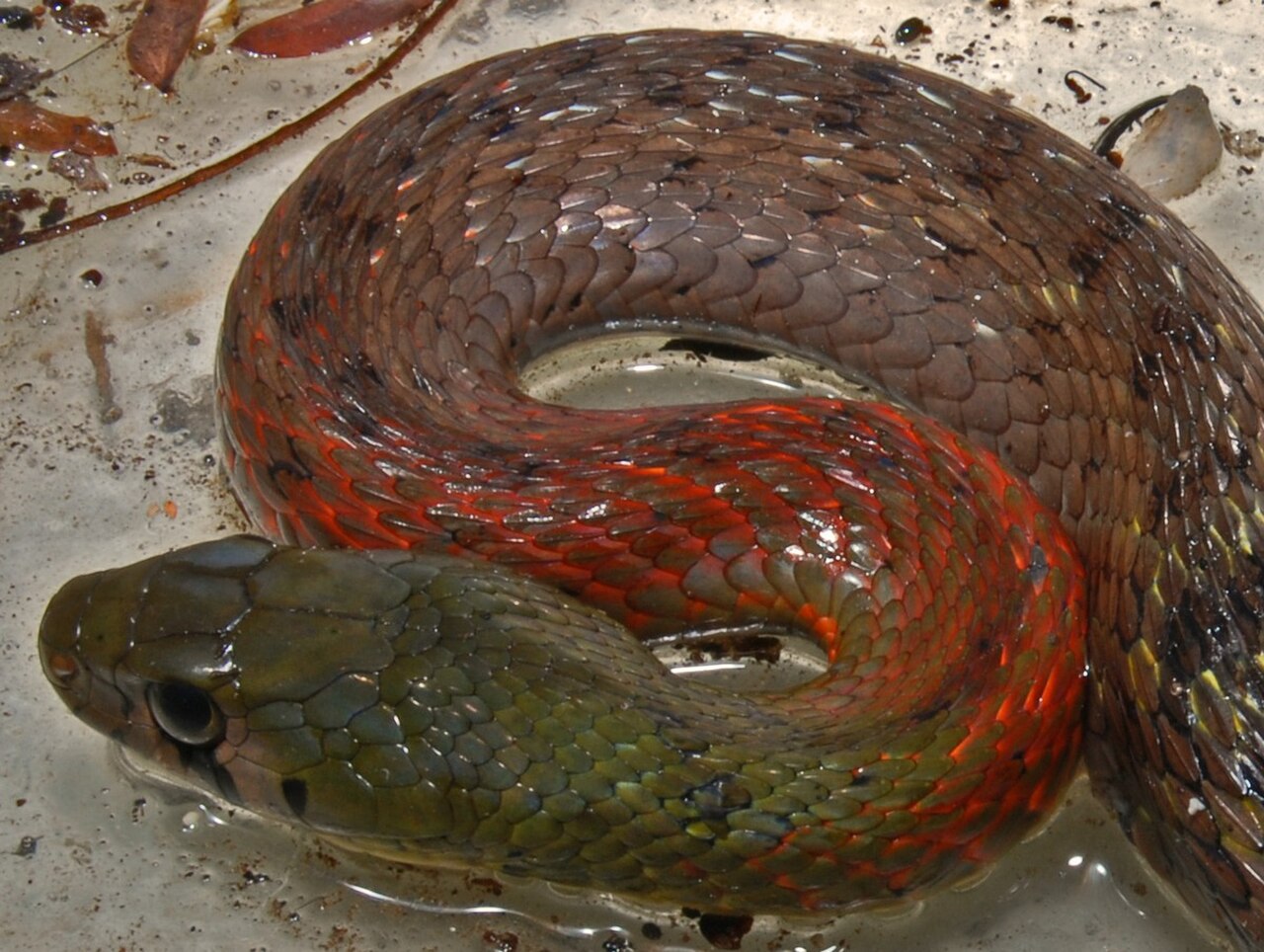
 Image unavailable