
Reptile
Puff Adder
Bitis arietansAlso known as African Puff Adder, Common Puff Adder
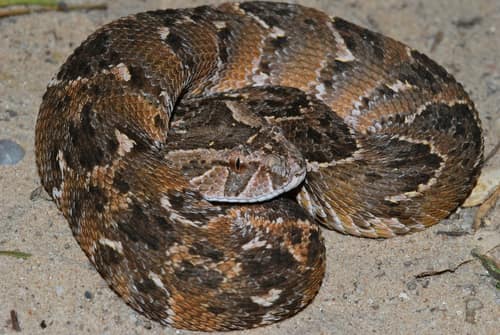
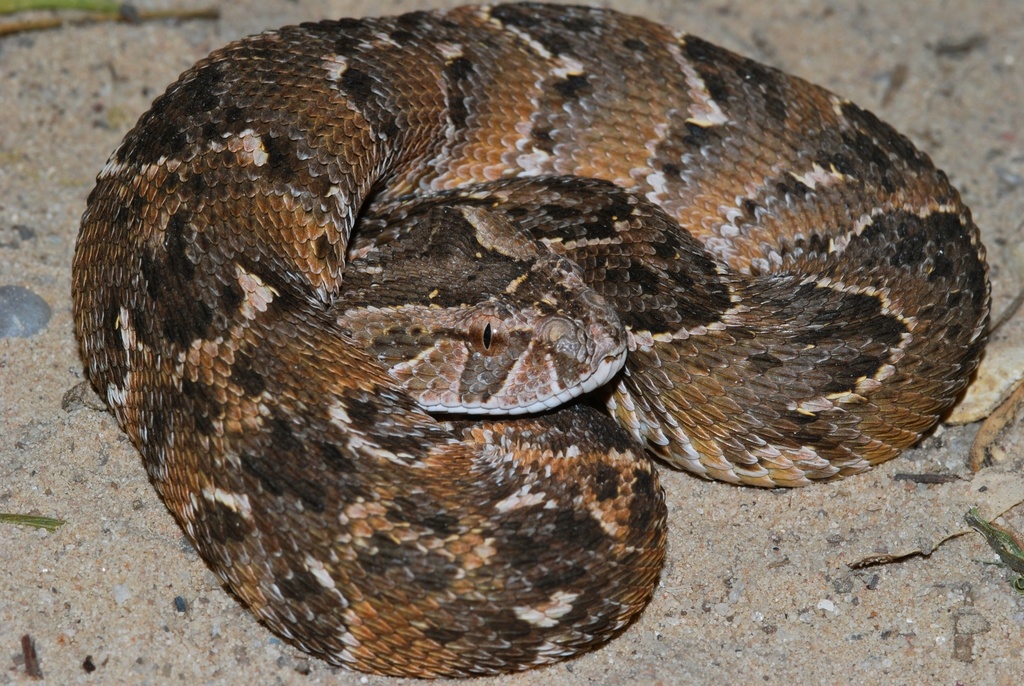
Puff adders rely on extraordinary camouflage to blend seamlessly into leaf litter and dry grass, remaining perfectly motionless for weeks while awaiting prey. When threatened, they inflate their bodies and exhale with a loud, warning hiss that can be heard from meters away. Their lightning-fast strike speed and potent cytotoxic venom make them one of Africa's most medically significant reptiles.
VenomousCamouflagedAmbush Predator
—observations
—countries
—peak records
Least ConcernConservation statusIUCN Red List categoriesLCNTVUENCREWEXLeast ConcernRed List categories, explained →
Diet & preyRodents, Lizards, Toads
Predators
- Snake Eagles
- Honey Badger
- Mongooses
ThreatsHuman persecution, road mortality, and local habitat loss
HabitatsSavannahs, grasslands, open woodlands, and rocky hillsides
Life span10–15 years in the wild
Classification
- FamilyViperidae
- SpeciesBitis arietans
Range data is not available yet.
Interaction riskVery high
- Low
- Moderate
- High
- Very high
- Why interaction risk is very high
- Possesses potent cytotoxic venom; maintain a safe distance and never attempt to handle or corner one.
- Why it is dangerous
- Cytotoxic venom causes severe tissue necrosis, intense swelling, localized cell destruction, and potential limb loss if untreated.
- How to recognize a risky encounter
- Recognized by a thick, heavy body with dark chevron patterns pointing backward toward the tail and a blunt triangular head.
- What to do
- Freeze immediately upon seeing or hearing one, locate the snake, and slowly retreat at least three meters backward.
Responsible observation
- Watch Your Step: Scan ground cover thoroughly when walking in grass, as these thick snakes remain stationary rather than fleeing.
- Listen for Warnings: Give immediate space if you hear a deep, repeated exhalation or puffing sound from dry vegetation.
- Give Clear Clearance: Step back at least three meters upon spotting one, as their strike distance covers up to half their body length.
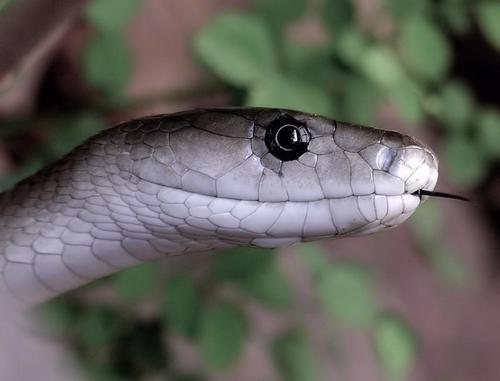
Competitor (c) Wynand Uys, some rights reserved (CC BY), uploaded by Wynand Uys · cc-by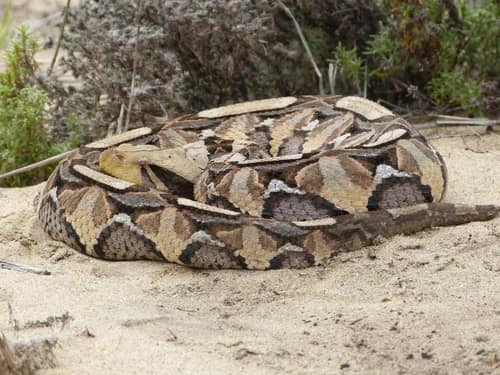
Close Relative (c) Nick Schaller, some rights reserved (CC BY), uploaded by Nick Schaller · cc-by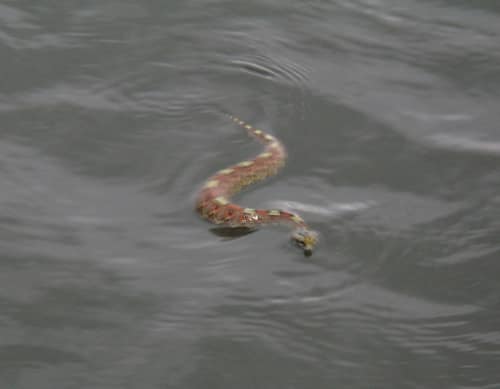
Close Relative (c) Lucy Keith-Diagne, some rights reserved (CC BY) · cc-by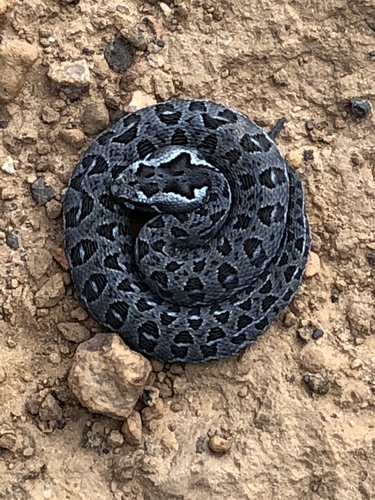
Close Relative (c) Dave U, some rights reserved (CC BY-SA), uploaded by Dave U · cc-by-sa
Help improve the field guideSomething wrong?
Checking your Fauna account…Report a name, category, or profile issue for review.