
Amphibian
Borneo Flying Frog
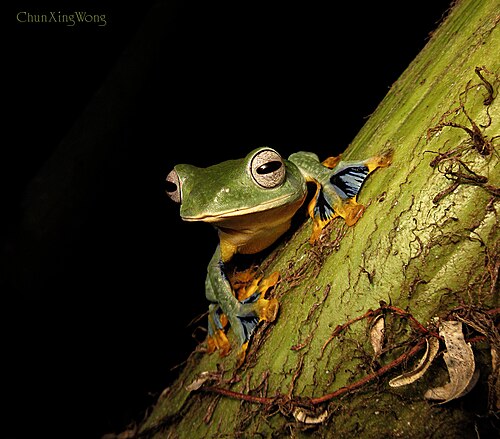
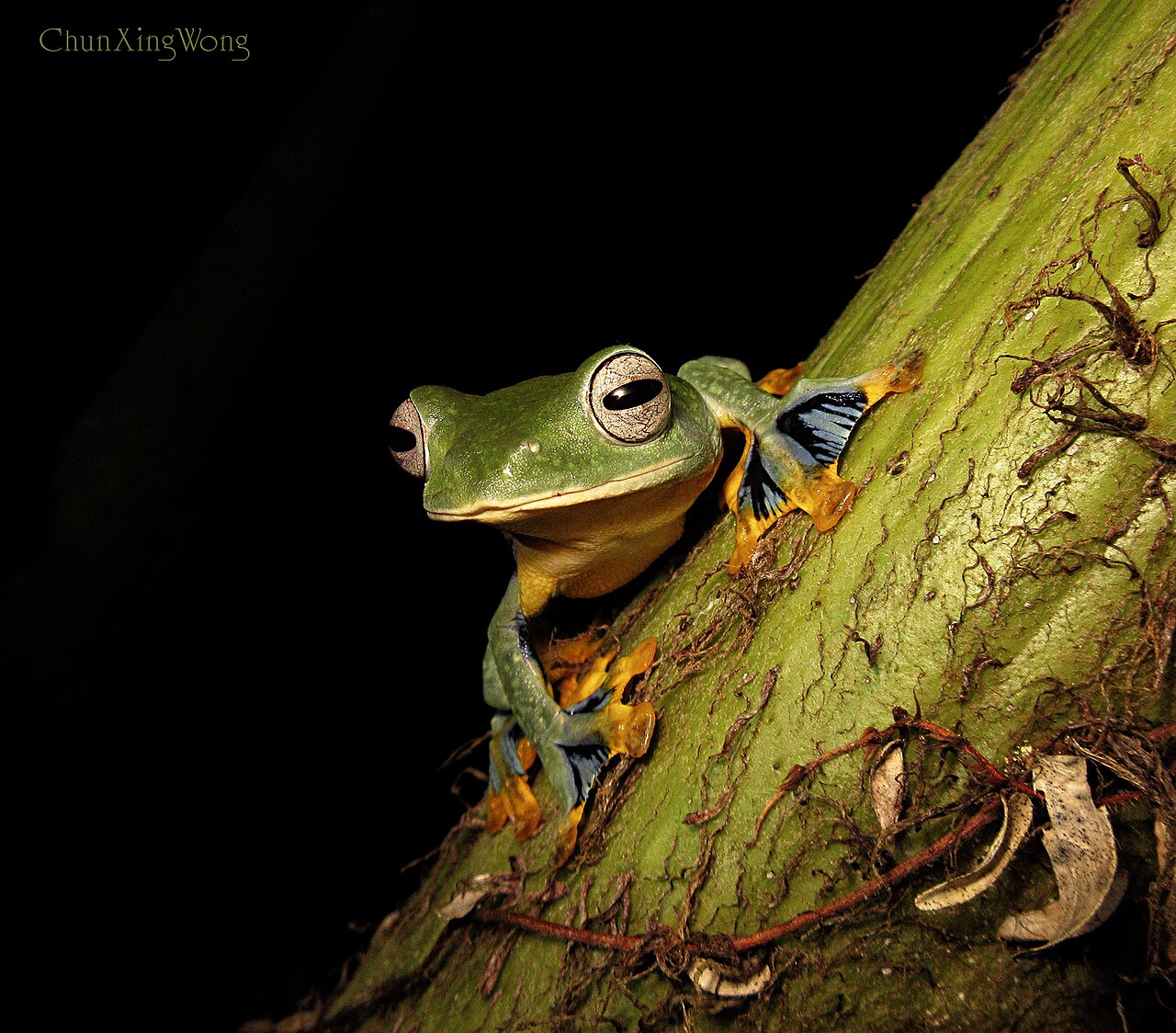
Rhacophorus borneensisBorneo flying frogs spend their lives high in the humid canopy of pristine dipterocarp rainforests, descending to lower vegetation primarily to breed. Using extensively webbed feet and lateral skin flaps, they glide effortlessly between tree trunks and foliage in search of prey. Females construct suspended foam nests on overhanging leaves above forest pools, allowing newly hatched tadpoles to drop directly into the water below.
ArborealNocturnalColorful
—observations
—countries
—peak records
Data DeficientConservation statusIUCN Red List categoriesLCNTVUENCREWEXData Deficient — not placed on the risk ladderRed List categories, explained →
Diet & preyMoths, Crickets, Beetles
Predators
- Vine snakes
- Tree vipers
- Civets
ThreatsDeforestation, logging, and habitat fragmentation
HabitatsPrimary lowland and hill rainforest canopies
Life span5–10 years
Classification
- FamilyRhacophoridae
- SpeciesRhacophorus borneensis
Range data is not available yet.
Interaction riskLow
- Low
- Moderate
- High
- Very high
- Why interaction risk is low
- Safe to observe at a normal distance.
- What to notice
- Look for vivid green dorsal skin bordered with intricate black-and-yellow lateral markings and broad, fully webbed hands and feet.
- Support conservation
- Observe entirely hands-off from trail margins and avoid touching the skin or disturbing fragile suspended foam nests.
Responsible observation
- Spotting Location: Search dense vegetation surrounding clean, standing rainforest pools after heavy dusk rains.
- Lighting Caution: Use low-intensity red headlamps to inspect foliage without startling active gliders.
- Habitat Protection: Avoid shaking low branches or disturbing foam nests attached to leaf undersides.
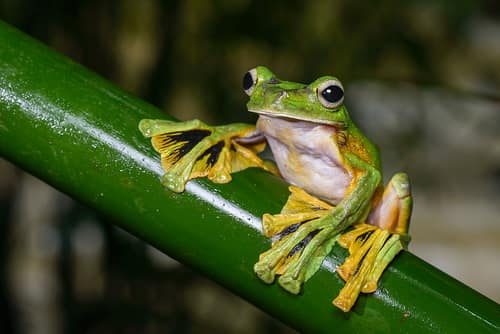
Same Genus Rushenb / CC BY-SA 4.0 · cc-by-sa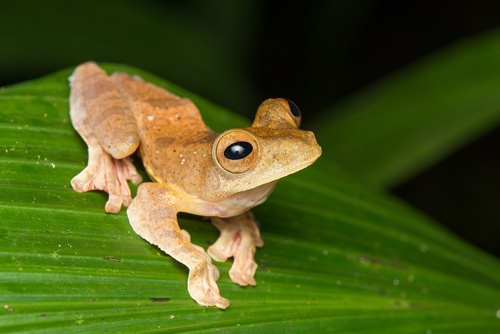
Same Genus (c) Taxon Expeditions, some rights reserved (CC BY-SA), uploaded by Taxon Expeditions · cc-by-sa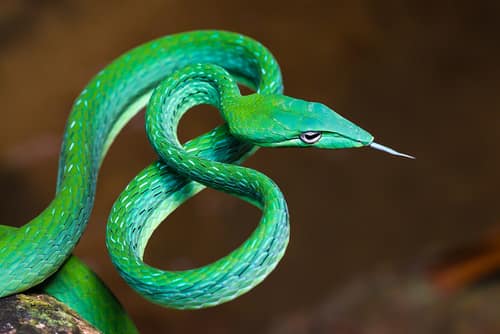
Predator Rushenb / CC BY-SA 4.0 · cc-by-sa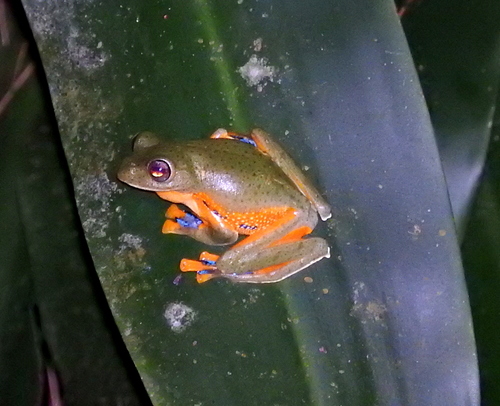
Close Relative (c) Subir B. Shakya, some rights reserved (CC BY), uploaded by Subir B. Shakya · cc-by
Help improve the field guideSomething wrong?
Checking your Fauna account…Report a name, category, or profile issue for review.