
Species
Tanystropheus longobardicus
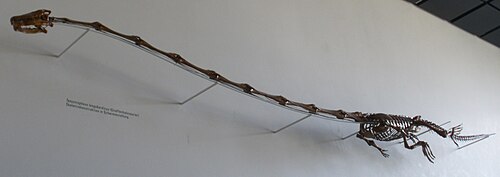
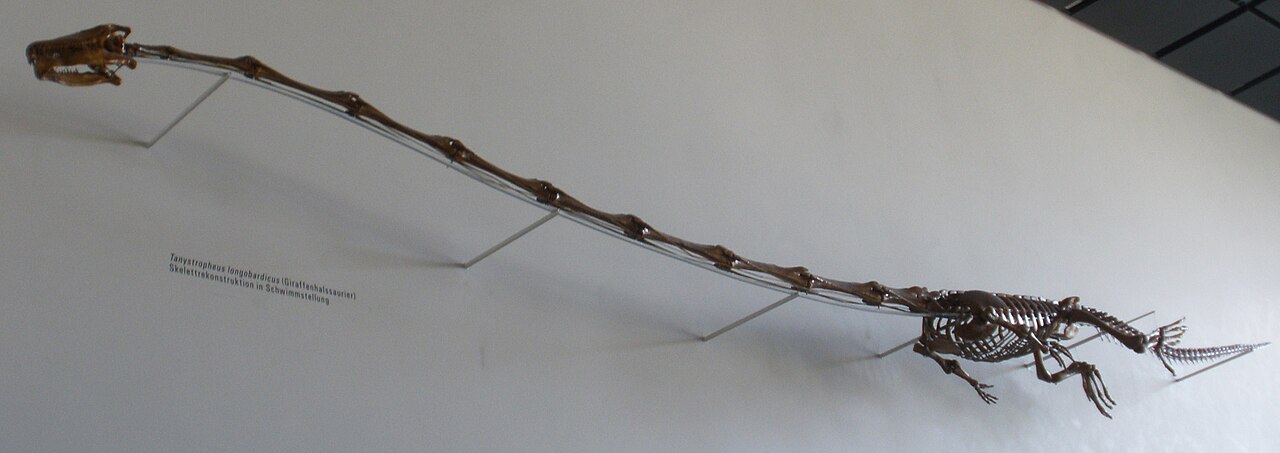
Tanystropheus longobardicusTanystropheus longobardicus possessed one of the most extreme body plans in vertebrate history, dominated by a stiffened neck exceeding the combined length of its body and tail. Composed of merely 13 hyper-elongated vertebrae bound by rod-like cervical ribs, this remarkable neck was held relatively rigid rather than flexing like a snake. Fossils from the marine deposits of Monte San Giorgio indicate it lived along shallow Tethyan coastlines, ambushing small cephalopods and fish with swift darts of its narrow, toothy head.
PrehistoricMarine ReptileTriassic
—observations
—countries
—peak records
ExtinctConservation statusIUCN Red List categoriesLCNTVUENCREWEXExtinctRed List categories, explained →
Diet & preySmall bony fish, Soft-bodied coleoids, Crustaceans
Predators
- Large marine reptiles (such as Nothosaurus)
- Prehistoric predatory fish (such as Saurichthys)
ThreatsExtinct during the Triassic Period
HabitatsCoastal marine lagoons, shallow seas, and coastal shorelines
Life spanUnknown
Classification
- FamilyTanystropheidae
- SpeciesTanystropheus longobardicus
Range data is not available yet.
Interaction riskLow
- Low
- Moderate
- High
- Very high
- Why interaction risk is low
- Extinct species known only from fossil remains; completely safe to observe in museum collections.
Responsible observation
- Museum etiquette: Observe mounted fossil specimens and casts without touching delicate matrix surfaces.
- Fossil observation: Look closely at the neck vertebrae to spot the slender, needle-like cervical ribs.
 Image unavailable
Predator Competitor 
Close Relative Ghedoghedo / CC BY-SA 3.0 · cc-by-sa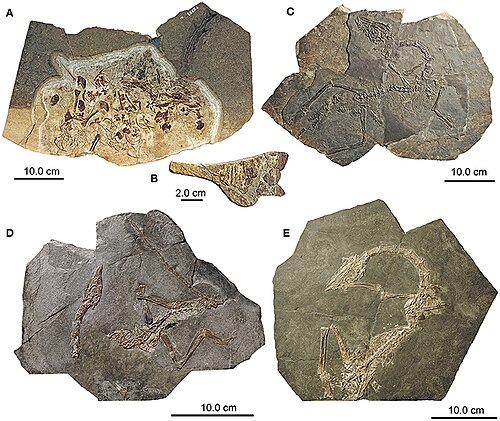
Same Family Vivien P. Jaquier, Nicholas C. Fraser, Heinz Furrer, and Torsten M. Scheyer / CC BY 4.0 · cc-by
Help improve the field guideSomething wrong?
Checking your Fauna account…Report a name, category, or profile issue for review.