
Amphibian
Ventastega curonica
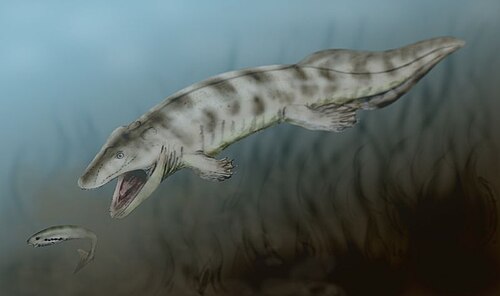
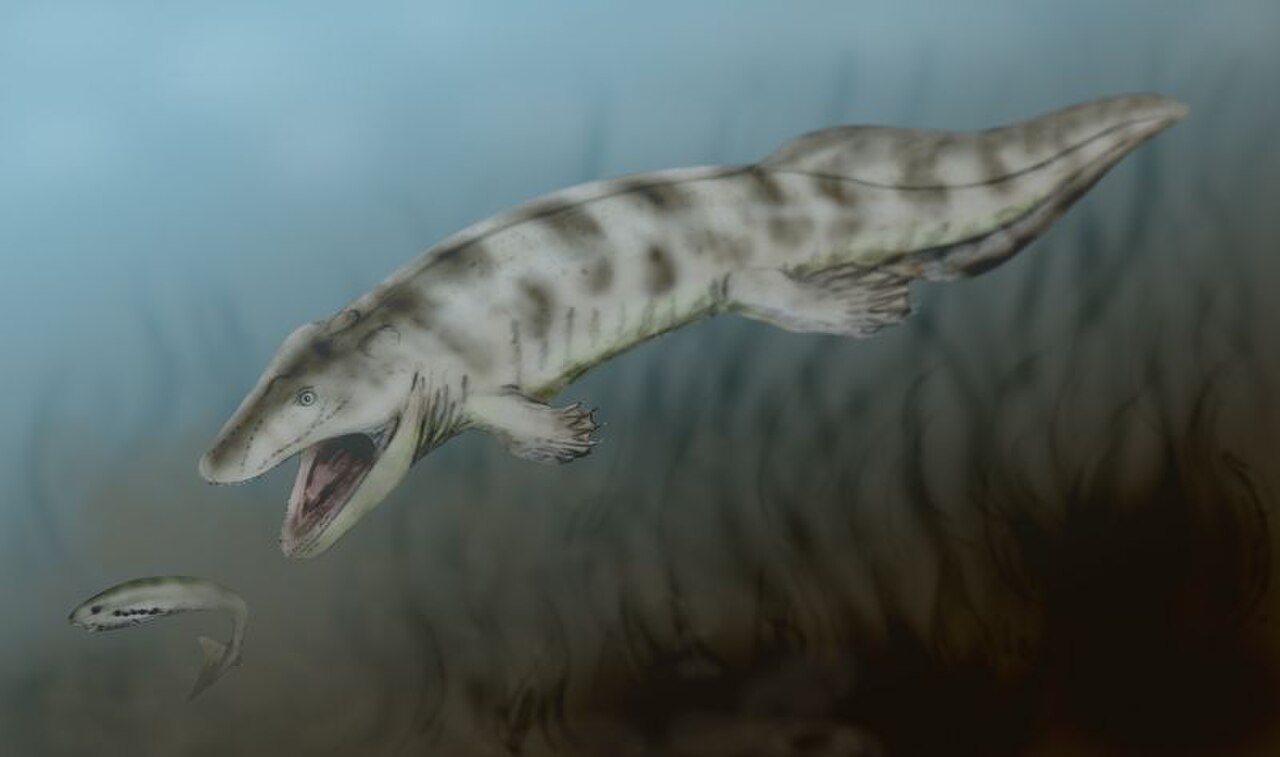
Ventastega curonicaVentastega curonica cruised shallow brackish lagoons and river deltas during the Late Devonian, hunting fish with a broad, toothy snout lined with fangs. As an early stem tetrapod, it retained extensive fish-like traits including a sensory canal system in the skull bones and robust limbs built more for paddling through murky water than walking on dry ground. Fossil discoveries from Latvian sandstones have helped palaeontologists map out the anatomical transition from aquatic lobe-finned fishes to four-limbed vertebrates.
PrehistoricCarnivoreAquatic
—observations
—countries
—peak records
ExtinctConservation statusIUCN Red List categoriesLCNTVUENCREWEXExtinctRed List categories, explained →
Diet & preySmall bony fishes, Acanthodians, Aquatic invertebrates
Predators
- Large sarcopterygian fishes
- Placoderms
ThreatsLate Devonian extinction events and changing coastal ecosystems
HabitatsShallow tidal lagoons, estuaries, and river channels
Life spanUnknown (estimated 10–25 years)
Classification
- FamilyBaphetidae
- SpeciesVentastega curonica
Range data is not available yet.
Interaction riskLow
- Low
- Moderate
- High
- Very high
- Why interaction risk is low
- Extinct prehistoric species known only from Late Devonian fossil remains.
Responsible observation
- Museum Collections: Observe prepared fossil skull and limb elements at national natural history museums.
- Field Research: Look for exposed Famennian stage sandstones along riverbanks in western Latvia.
 Image unavailable
Stem Tetrapod Stem Tetrapod 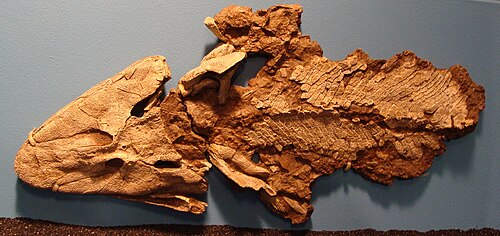
Elpistostegalian Eduard Solà / CC BY-SA 3.0 · cc-by-saClose Relative
Help improve the field guideSomething wrong?
Checking your Fauna account…Report a name, category, or profile issue for review.